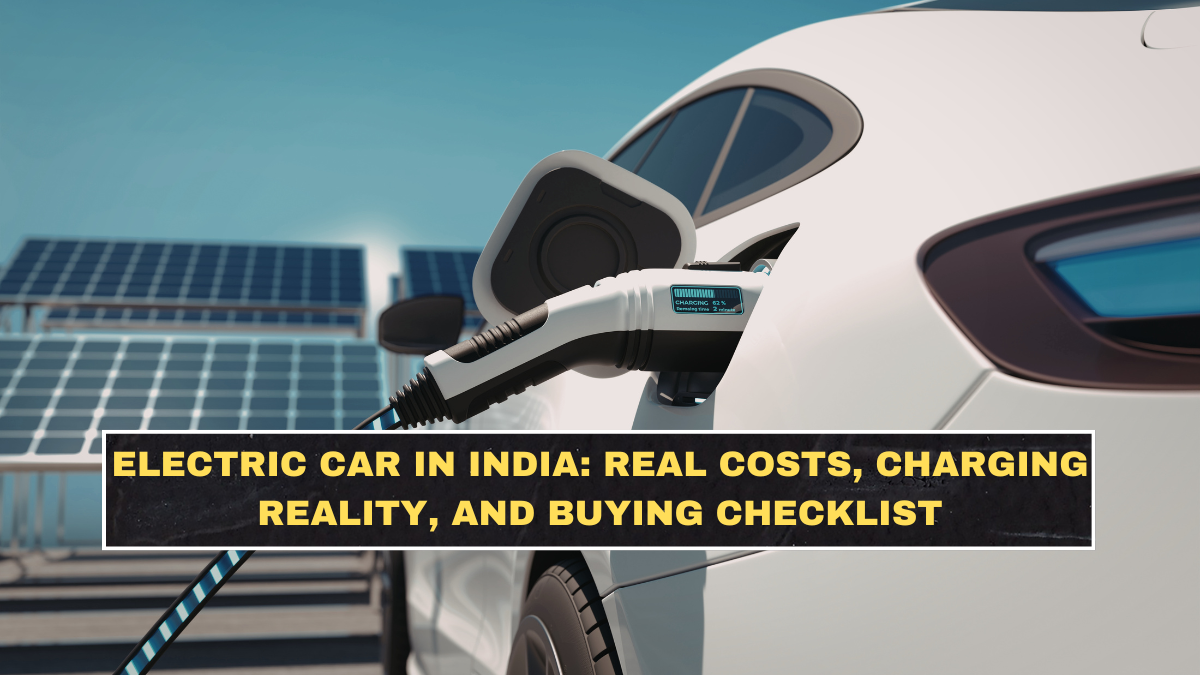
Electric cars are everywhere right now—ads, social media, news—but most buyers are still confused about one thing: is it actually practical in India today?
Between charging concerns, real running costs, and government subsidies, the decision isn’t as simple as “EV is cheaper.” If you don’t understand the ground reality, you’ll either overpay or regret your purchase later.
This guide cuts through the hype and gives you clear answers—what it really costs, how charging actually works in India, and whether an electric car fits your daily usage.
Why Electric Cars Are Growing in India
Electric vehicles (EVs) are gaining traction due to:
-
Rising petrol and diesel prices
-
Government incentives under EV policies
-
Increasing urban usage where daily driving distance is predictable
-
Expansion of charging infrastructure in major cities
However, adoption is still uneven—urban areas are far ahead of rural regions.
Real Cost of Owning an Electric Car
| Cost Factor | Electric Car | Petrol/Diesel Car |
|---|---|---|
| Initial Price | Higher | Lower |
| Running Cost | Lower (per km) | Higher (fuel cost) |
| Maintenance | Lower (fewer moving parts) | Higher |
| Battery Replacement | Expensive (long-term factor) | Not applicable |
The biggest mistake buyers make is only comparing running cost and ignoring upfront price and battery cost.
Charging Reality in India (No Hype Version)
Charging is the biggest concern—and for good reason.
| Charging Type | Time Required | Where Used |
|---|---|---|
| Home Charging | 6–10 hours | Daily overnight charging |
| Fast Charging | 30–90 minutes | Highways, public stations |
Reality:
-
Home charging works best for most users
-
Public charging is still limited in many areas
-
Fast charging is not always available everywhere
If you don’t have reliable home charging, buying an EV becomes inconvenient.
Range Anxiety: Real vs Perception
Range anxiety means fear of running out of charge.
-
Most EVs offer 200–400 km range
-
Daily city usage is usually 30–50 km
So for city users, range is usually not a problem.
The real issue is long-distance travel, where charging infrastructure becomes critical.
Government Subsidies and Benefits
India offers incentives under schemes like:
-
FAME (Faster Adoption and Manufacturing of Electric Vehicles)
-
State-level subsidies (vary by state)
-
Lower road tax and registration fees
These reduce upfront cost but don’t eliminate it completely.
When Buying an Electric Car Makes Sense
You should consider EV if:
-
Your daily driving is predictable (city use)
-
You have access to home charging
-
You want lower running cost over time
You should avoid EV if:
-
You travel long distances frequently
-
Charging access is limited
-
You expect instant refueling like petrol
What Most Buyers Get Wrong
-
Assuming EV is always cheaper
-
Ignoring charging setup before buying
-
Overestimating long-distance usability
-
Buying based on trend, not need
This is where most regret comes from.
What to Check Before Buying
-
Battery range vs your daily usage
-
Availability of charging (home + nearby)
-
Total cost (not just running cost)
-
Service and support network
Skipping these checks leads to bad decisions.
Conclusion
Electric cars in India are practical—but only for the right type of user. They offer lower running costs and better efficiency, but come with limitations around charging and long-distance travel.
If you buy based on hype, you’ll regret it. If you buy based on usage and clarity, it can be a smart long-term decision.
FAQs
Are electric cars cheaper to run in India?
Yes, running cost per km is lower than petrol/diesel.
How long does it take to charge an EV?
6–10 hours for home charging, 30–90 minutes for fast charging.
Is charging infrastructure good in India?
Improving, but still limited in many areas.
What is range anxiety?
Fear of running out of battery charge.
Should I buy an EV in India now?
Only if it matches your usage and charging availability.
Click here to know more.