Delhi is not starting from scratch on EVs. The original Delhi EV Policy was notified in 2020 and aimed for 25% of new vehicle registrations to be electric by 2024. The Delhi Transport Department still presents that goal on its official EV policy page, and the older policy was formally extended until March 31, 2026, or until EV Policy 2.0 is notified, whichever came first.
What is changing now is the policy model. Recent reporting on Delhi Budget 2026 says the government is moving toward an “EV Policy 2.0” with a scrappage-first approach instead of relying mainly on direct purchase subsidies. That is a meaningful shift because it suggests Delhi now wants EV incentives to do two jobs at once: push cleaner vehicle adoption and accelerate the removal of older, more polluting vehicles from the road.
What “Scrappage-First” Actually Means
Most buyers hear “new EV policy” and assume it means another subsidy announcement. That is too simplistic. The draft direction reported in March 2026 points to incentives being linked more directly to scrapping older petrol and diesel vehicles before moving into a new EV. In plain terms, Delhi appears to be trying to reward replacement, not just purchase. That matters in a city where overage vehicle removal is already a major pollution-control issue.
Delhi’s latest Economic Survey helps explain the logic. It says the number of registered vehicles in Delhi reached about 87.61 lakh by March 19, 2026, up 7.93% from the previous year. It also notes that Delhi has already deregistered more than 66 lakh overage vehicles under existing legal rules, yet total vehicle numbers continue to rise. That is the core policy problem: simply banning or deregistering old vehicles does not automatically shrink traffic or pollution pressure if newer vehicles keep replacing them at scale.
What Buyers Could Actually Get
The draft and current coverage suggest that EV Policy 2.0 may continue major tax relief while tightening how purchase-linked benefits are structured. Reported features include 100% exemption from road tax and registration fees for eligible EVs, especially those under a certain ex-showroom price threshold, potentially through 2030. Some reports also mention direct scrappage-linked benefits for private cars, two-wheelers, and other categories, but because this is still reported as a draft/policy direction rather than a final notified rule, buyers should treat the exact benefit structure as provisional for now.
That distinction matters. Too many auto articles present draft incentives like they are already guaranteed. They are not. What looks much more solid right now is the direction: Delhi wants to keep EVs financially attractive, but with stronger emphasis on replacing dirtier older vehicles and extending tax relief rather than simply handing out broad subsidy support in the old format.
Table: What Delhi EV Policy 2.0 Seems to Change
| Policy area | Earlier approach | 2026 direction | What it means for buyers |
|---|---|---|---|
| Main incentive logic | Stronger focus on EV adoption support | More scrappage-linked incentives | Buyers replacing old vehicles may benefit more. |
| Tax treatment | EV-friendly under existing policy | Reported continuation of road tax and registration fee waivers | Upfront ownership costs may stay lower for eligible EVs. |
| Old vehicle phase-out | Separate pollution and overage enforcement | More directly tied to EV purchase logic | Policy may push replacement faster. |
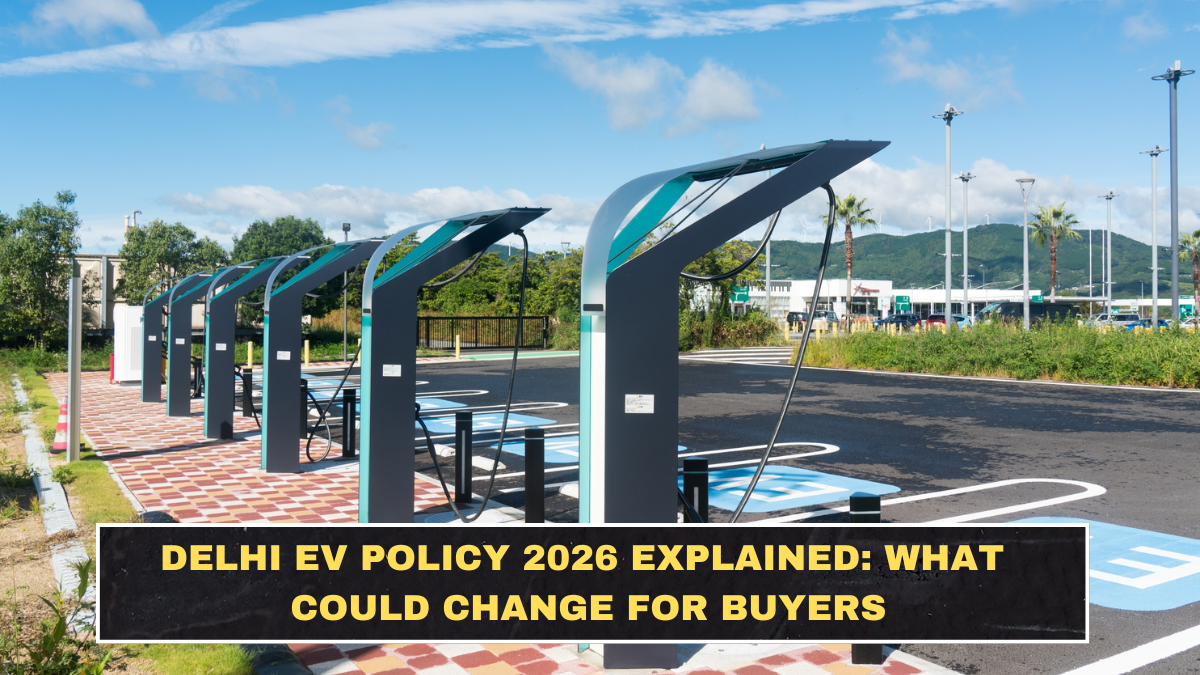
| Charging infrastructure | Expansion under earlier EV strategy | Still a central issue, but infrastructure gaps remain | Buying an EV is easier than using one everywhere. |
| Public mobility | EV adoption plus public transport work | Faster e-bus rollout in parallel | Delhi is treating EVs as both private and public mobility strategy. |
The Charging Problem Buyers Should Not Ignore
This is where most pro-EV coverage turns dishonest. Owning an EV in Delhi is not the same as using one comfortably beyond familiar routes. A recent Times of India report on a Delhi-to-Jaipur EV road trip described non-functional chargers, fragmented apps, poor support, and unreliable route planning despite strong home-charging confidence inside Delhi. That gap matters because policy optimism is easy; charger reliability is harder.
Delhi has clearly expanded EV infrastructure over the past few years, and even industry summaries note strong charging growth alongside rising EV penetration. But on-ground charging consistency still appears uneven, especially outside predictable urban routines. So buyers thinking about an EV in 2026 should not ask only, “What subsidy will I get?” They should ask, “Can I charge this easily where I actually drive?” That is the smarter question.
Why Public Transport Matters to This Policy Too
Another mistake is treating Delhi’s EV policy as only a private-car story. It is not. On March 20, 2026, Delhi flagged off 300 more electric buses, and reporting said the government wants to expand the bus fleet much further by 2028–29. That suggests Delhi’s EV strategy is not just about helping richer households buy cleaner cars. It is also tied to public transport electrification and urban mobility planning.
That broader framing matters for buyers because city policy shapes infrastructure priorities. A government that is putting weight behind buses, charging, and fleet turnover is more likely to keep EV transition as a central mobility theme rather than a short-lived subsidy campaign. The policy may change form, but the direction is still clearly pro-electrification.
What Buyers Should Watch Closely Now
The most important thing is notification status. The earlier policy extension officially ran to March 31, 2026 or until EV Policy 2.0 was notified. So buyers should watch for the final notified version rather than relying on headlines alone. Second, they should look carefully at eligibility rules, vehicle price caps, scrappage conditions, and how the benefit is claimed. Draft-era excitement is worthless if the final rule narrows your category.
Third, buyers should be realistic about use case. If your daily driving is city-based and home or workplace charging is available, Delhi remains one of the stronger EV environments in India. But if you depend on frequent intercity driving, the charging experience may still be more fragile than policy headlines suggest. Ignoring that reality is how buyers end up disappointed.
Conclusion
Delhi EV Policy 2026 looks less like a simple subsidy refresh and more like a strategic reset. The city appears to be moving toward a scrappage-first model, continued tax relief, and stronger integration between pollution control and EV adoption. That could make the policy more targeted and more serious, especially in a city still dealing with rising vehicle counts and large numbers of end-of-life vehicles.
For buyers, the takeaway is straightforward. Do not chase headlines about incentives alone. Watch the final notification, understand whether scrappage conditions apply to you, and assess charging practicality before buying. Delhi is clearly staying committed to electric mobility. The real question is whether the next policy phase makes EV ownership cleaner on paper only, or easier in daily life too.
FAQs
Is Delhi EV Policy 2.0 officially notified?
As of the currently available official extension order, the earlier EV policy was extended until March 31, 2026 or until EV Policy 2.0 is notified, whichever is earlier. Recent March 2026 reporting discusses the new framework, but buyers should still verify the final notification details.
What is the biggest proposed change in Delhi’s new EV policy?
The biggest reported shift is toward a scrappage-first incentive model, where benefits are tied more closely to replacing older polluting vehicles with EVs.
Will buyers still get tax benefits on EVs?
Current reporting on the draft direction says eligible EVs may continue to receive road tax and registration fee waivers, though final notified conditions matter.
Is charging infrastructure in and around Delhi good enough yet?
Inside Delhi, the situation is better than before, but real-world reporting still shows charging reliability gaps, especially on longer intercity routes.