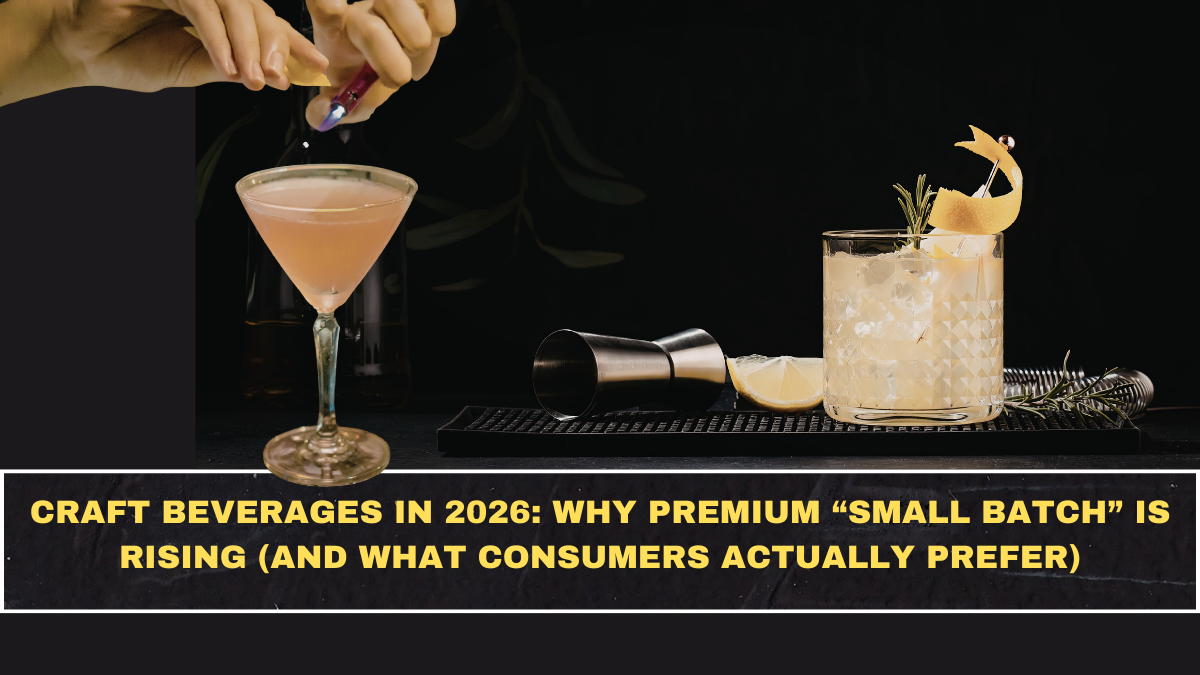
Craft beverages in 2026 are no longer a niche indulgence reserved for enthusiasts or special occasions. They have entered everyday consumption patterns, reshaping how people think about alcohol, mixers, non-alcoholic alternatives, and even functional drinks. What stands out is not just the rise in availability, but the shift in intent. Consumers are not drinking more; they are drinking more deliberately, with stronger preferences and clearer expectations.
This movement toward craft is driven by fatigue with uniform taste and mass-produced sameness. People want beverages that feel considered, distinctive, and tied to a story or method they can understand. In 2026, premiumization does not mean excess. It means fewer drinks, better choices, and a sense that what you consume reflects personal taste rather than habit.
Why Craft Beverages Are Gaining Ground in 2026
Consumers have grown skeptical of generic brands that promise quality but deliver predictability. Craft beverages offer contrast by emphasizing variation, origin, and intentional production choices.
Rising awareness around ingredients, sourcing, and processing has influenced purchasing decisions. People want to know what goes into their glass and why it tastes the way it does.
In 2026, craft succeeds because it feels transparent in a market saturated with marketing claims.
The Meaning of “Premium” Has Changed
Premium no longer signals luxury pricing alone. It signals care, control, and restraint.
Small-batch production suggests attention to detail, even if scale eventually grows. Consumers associate it with authenticity rather than scarcity.
In 2026, premium means thoughtfully made, not aggressively priced.
Taste Over Strength: A Clear Shift
Flavor complexity matters more than alcohol percentage. Consumers are choosing balance, aroma, and mouthfeel over intensity.
This has boosted interest in lighter spirits, botanical blends, and low-alcohol or alcohol-free craft options.
Taste exploration replaces consumption volume as the main motivator.
The Rise of Non-Alcoholic and Low-Alcohol Craft Drinks
Non-alcoholic craft beverages are no longer substitutes; they are categories of their own. Consumers expect flavor depth, not compromise.
People choose these drinks for social inclusion, health balance, or personal preference, not restriction.
In 2026, opting out of alcohol no longer means opting out of experience.
Local Identity and Regional Preferences
Craft beverages thrive on locality. Regional flavors, water profiles, and cultural preferences influence taste.
Consumers trust local producers more because they feel accountable and visible.
In 2026, local identity adds credibility that global branding struggles to replicate.
Packaging as a Signal, Not Decoration
Packaging communicates intent. Minimal, informative labels outperform flashy designs.
Consumers read labels for process details, ingredient lists, and origin cues.
In 2026, packaging supports trust rather than distraction.
Why Consumers Are Willing to Pay More (Sometimes)
People pay more when value is clear. Transparency around ingredients, production, and flavor profile justifies higher prices.
However, price sensitivity remains. Premium must feel earned, not assumed.
Craft beverages succeed when they explain why they cost more.
Occasion-Based Drinking Drives Choices
Consumption is increasingly situational. Weekday drinks differ from social gatherings or celebrations.
Craft beverages align well with this mindset by offering variety without excess.
In 2026, people buy for moments, not stockpiling.
The Role of Education in Craft Adoption
Tastings, explanations, and guided discovery build loyalty. Consumers enjoy learning why something tastes different.
Brands that educate without lecturing build stronger connections.
Understanding enhances enjoyment and repeat purchase.
What Consumers Actually Avoid
Overcomplicated flavor claims turn people off. Too many descriptors feel artificial.
Inconsistent batches damage trust quickly. Craft does not excuse unpredictability.
In 2026, clarity beats cleverness.
How Big Brands Are Responding
Large beverage companies are acquiring or incubating craft labels.
However, consumers remain alert to authenticity dilution.
Craft credibility depends on maintaining process integrity even after scaling.
Why Craft Is Not a Fad
Craft beverages align with broader consumer values: intention, moderation, and experience.
These values extend beyond alcohol into food and lifestyle choices.
In 2026, craft reflects a mindset, not a trend cycle.
Conclusion: Craft Is About Choice, Not Status
Craft beverages in 2026 are rising because they respect consumer intelligence. People want drinks that feel made, not manufactured; considered, not optimized. Premiumization works when it enhances experience without demanding excess.
The future of craft belongs to brands that prioritize taste clarity, honest communication, and consistency. Consumers are not chasing labels or price tags. They are choosing beverages that fit their lives, their values, and their moments. In that sense, craft is less about drinking differently and more about choosing consciously.
FAQs
Why are craft beverages becoming more popular in 2026?
Because consumers value taste, transparency, and intention over mass-produced consistency.
Does craft always mean expensive?
No, premium pricing works only when value and quality are clearly communicated.
Are non-alcoholic craft drinks taken seriously now?
Yes, they are treated as full experiences, not compromises.
What matters most to craft beverage buyers?
Flavor balance, ingredient clarity, and production transparency.
Do consumers prefer local craft brands?
Often yes, because local identity increases trust and relatability.
Is the craft trend temporary?
No, it reflects long-term shifts in consumption behavior and values.