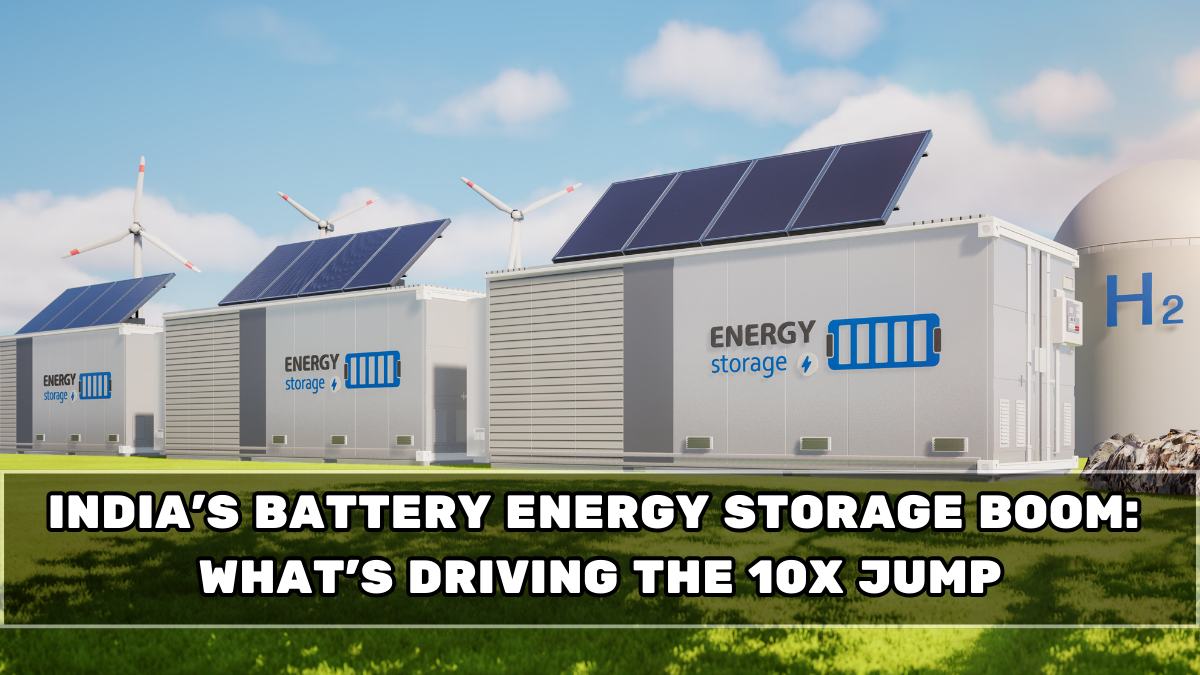
India’s power sector is entering a decisive phase in 2026, and battery storage has moved from pilot projects to core infrastructure. The surge in battery energy storage in India is not accidental—it’s the missing link between renewable generation and round-the-clock power reliability. As solar and wind capacity expanded rapidly, the need to store excess energy became unavoidable.
This year marks a turning point where storage is no longer treated as optional. Utilities, grid operators, and policymakers are aligning incentives to scale storage quickly and reduce dependence on fossil-based balancing power.

Why Battery Storage Is Suddenly Critical
Renewables are intermittent by nature. Solar peaks during the day; wind is seasonal. Without storage, excess generation is wasted and shortages persist at peak demand. Battery systems solve this by absorbing surplus power and releasing it when needed, stabilising the grid.
In 2026, grid reliability—not just capacity—has become the priority. Storage enables that reliability.
Capacity Targets and the Scale-Up
India is targeting a rapid jump in installed storage capacity, moving toward multi-GWh deployments rather than scattered pilots. This scale changes economics, procurement models, and execution timelines.
| Metric | 2026 Direction |
|---|---|
| Installed capacity | Rapid rise toward 5 GWh+ |
| Project size | Utility-scale deployments |
| Use cases | Peak shaving, grid balancing |
Larger projects reduce per-unit costs and accelerate adoption.
Policy Support Driving Adoption
Policy clarity is one of the biggest drivers in battery energy storage India 2026. Clear procurement frameworks, viability gap support, and grid-integration norms have reduced uncertainty for developers and financiers.
| Policy Lever | Impact |
|---|---|
| Long-term tenders | Revenue visibility |
| Grid integration rules | Operational certainty |
| Renewable pairing | Higher utilisation |
This alignment has unlocked capital that was previously hesitant.
Where Projects Are Coming Up
Storage projects are increasingly paired with solar and wind parks, especially in high-renewable states. Urban load centres are also seeing interest, where storage can defer expensive grid upgrades.
These projects focus on practical grid needs, not experimental setups, which improves execution confidence.
Why Investors Are Paying Attention
For investors, battery storage offers predictable demand tied to grid needs rather than consumer cycles. Revenue models linked to availability and performance reduce volatility.
As costs decline and project sizes grow, storage is moving closer to infrastructure-grade returns—an attractive proposition in a volatile energy market.
What This Means for Renewables
Without storage, renewable penetration hits a ceiling. With storage, renewables can replace conventional peaking power and support higher grid stability.
This shift directly accelerates India’s clean energy goals while reducing curtailment losses.
Challenges That Still Remain
Despite momentum, challenges persist. High upfront costs, supply-chain dependence, and recycling considerations require careful planning. Execution capacity must scale alongside policy ambition.
However, these challenges are now manageable obstacles, not deal-breakers.
What to Watch Going Forward
Key signals to watch include tender sizes, duration of storage contracts, and performance benchmarks. Execution quality will matter more than announcements.
The next phase will separate serious infrastructure players from opportunistic entrants.
Conclusion
The battery energy storage boom in India 2026 represents a structural upgrade to the power system. Driven by policy clarity, grid necessity, and renewable scale, storage is becoming indispensable. The 10x jump is less about ambition and more about inevitability—storage is now the backbone of India’s clean energy transition.
FAQs
Why is battery storage important for India?
It enables reliable renewable power and grid stability.
How much storage capacity is India targeting?
Projects are scaling toward 5 GWh and beyond.
What policies support battery storage?
Long-term tenders, grid rules, and renewable pairing incentives.
Are these projects commercially viable?
Yes, with improving economics and stable revenue models.
What are the main challenges?
Upfront costs, supply chains, and execution scale-up.
Click here to know more.