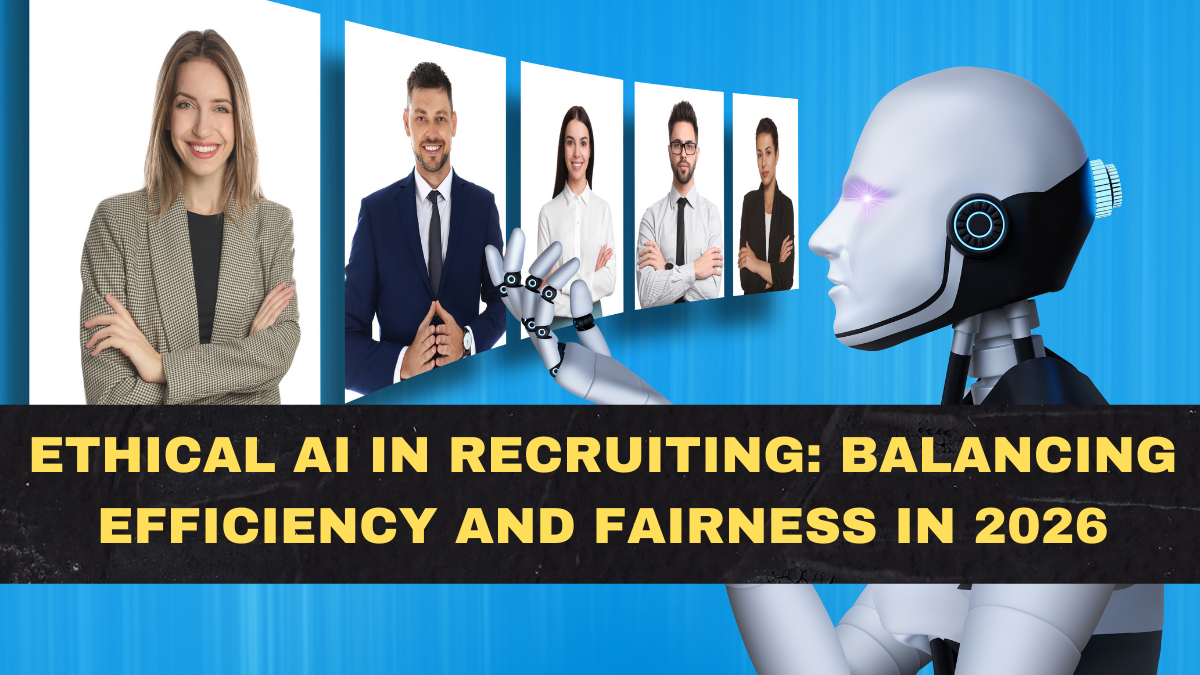
The rise of AI recruiting ethics in 2026 is not a philosophical debate — it’s an operational necessity. AI is now embedded across hiring workflows, from resume screening to candidate ranking and interview scheduling. Used well, it speeds up hiring and reduces human inconsistency. Used poorly, it quietly scales bias at machine speed.
Efficiency is not the problem. Blind efficiency is.
Why AI Became Central to Recruiting
Recruiting at scale became unsustainable with purely human processes. AI stepped in to manage volume and complexity.
Key drivers include:
• High applicant volumes
• Demand for faster hiring cycles
• Cost pressure on HR teams
• Need for standardized screening
This is where HR tech moved from optional to essential.
Where Bias Creeps Into AI Hiring Systems
AI doesn’t invent bias — it inherits it.
Common sources of bias in hiring AI:
• Historical hiring data reflecting inequality
• Proxy variables masking protected traits
• Over-optimization for past “successful” profiles
• Lack of diverse training datasets
Unchecked systems reinforce exclusion.
Why Transparency Matters in AI Recruiting
Opaque systems undermine trust — internally and externally.
Transparency requires:
• Clear explanation of AI’s role
• Human oversight at decision points
• Documented criteria and weighting
• Candidate visibility into processes
Ethical hiring depends on explainability, not mystery.
Human Oversight Is Non-Negotiable
AI should support decisions, not make them alone.
Effective oversight includes:
• Humans reviewing AI recommendations
• Manual audits of screening outcomes
• Escalation paths for edge cases
• Final hiring authority remaining human
This balance defines responsible AI recruiting ethics.
How Bias in Hiring Can Be Reduced With Proper Design
AI can actually reduce bias when built intentionally.
Bias-mitigating practices include:
• Diverse and representative training data
• Regular bias audits
• Removing sensitive proxy features
• Outcome monitoring across demographics
Design choices matter more than algorithms.
Why Fairness Must Be Measured, Not Assumed
Fairness isn’t a feeling — it’s a metric.
Organizations now track:
• Selection rate disparities
• Drop-off patterns across groups
• Interview progression equity
• Offer acceptance differences
Measurement turns ethics into accountability.
The Legal and Reputational Stakes in 2026
Regulators are catching up fast.
Risks include:
• Compliance violations
• Discrimination claims
• Brand damage
• Loss of candidate trust
Ignoring AI recruiting ethics is a liability.
What Candidates Expect From AI-Driven Hiring
Candidates don’t reject AI — they reject opacity.
Modern expectations include:
• Clear communication
• Opportunity to appeal decisions
• Respectful, timely feedback
• Fair evaluation criteria
Ethical systems improve candidate experience, not just compliance.
How HR Teams Are Adapting Their Roles
HR professionals are becoming system stewards, not just recruiters.
New responsibilities include:
• Evaluating vendor ethics
• Monitoring algorithm performance
• Interpreting AI outputs
• Advocating fairness internally
This evolution elevates HR’s strategic role.
Why Ethics Improves Hiring Outcomes
Ethical systems don’t slow hiring — they improve it.
Benefits include:
• Better talent diversity
• Stronger employer brand
• Higher quality hires
• Reduced turnover risk
Fairness and performance are not opposites.
What Responsible AI Recruiting Looks Like in Practice
Responsible recruiting combines speed with judgment.
It means:
• AI for screening, humans for decisions
• Transparency by default
• Continuous bias evaluation
• Accountability at every stage
This is the standard AI recruiting ethics sets in 2026.
Conclusion
AI has permanently changed how hiring works. The question in 2026 is not whether to use AI, but how responsibly it’s used. Strong AI recruiting ethics ensure that HR tech accelerates opportunity instead of narrowing it.
Efficiency without fairness is risk. Ethics turns AI into an advantage.
FAQs
What is AI recruiting ethics?
It’s the responsible use of AI in hiring to ensure fairness, transparency, and accountability.
Can AI reduce bias in hiring?
Yes, when designed and monitored intentionally with diverse data and oversight.
Who is responsible for ethical AI hiring?
Organizations remain fully responsible, even when using third-party tools.
Do candidates dislike AI in recruitment?
No — they dislike opaque, unfair systems without explanation.
Is ethical AI required by law?
Regulations are increasing, making ethical practices both a legal and business necessity.