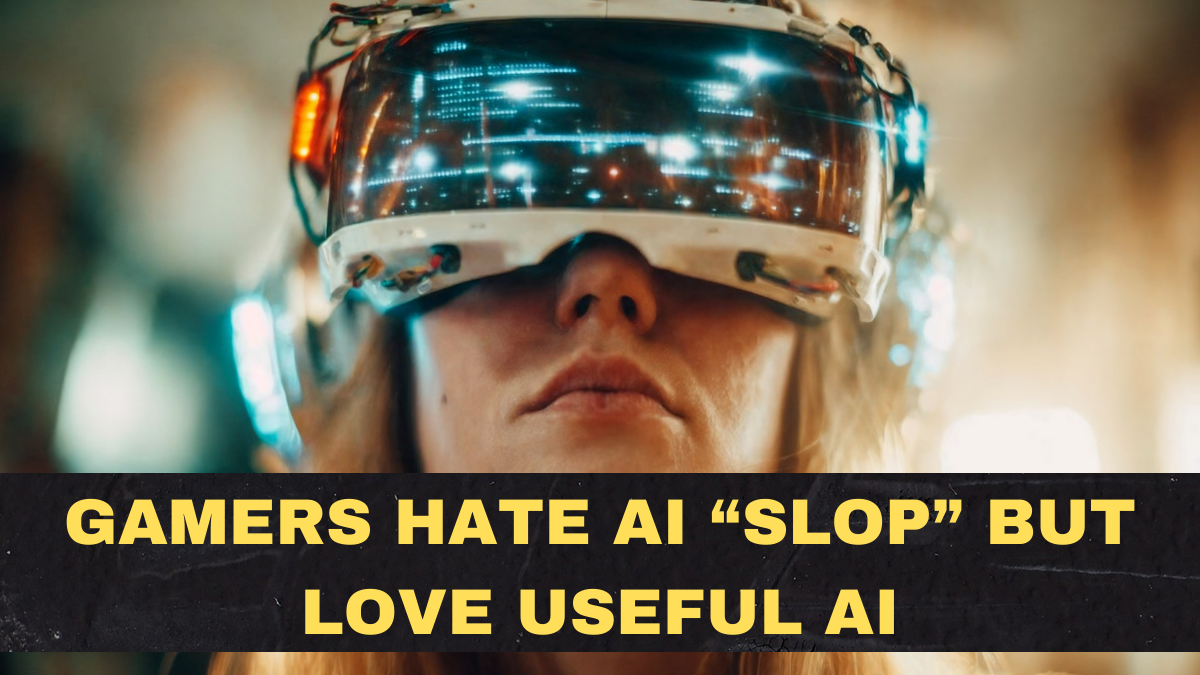
The rise of AI gaming skepticism is one of the most revealing cultural signals inside the gaming industry in 2026. Players are no longer reacting with blind enthusiasm to artificial intelligence. Instead, they are drawing sharp boundaries between what they consider useful innovation and what they dismiss as “AI slop.”
This contradiction defines the moment. Gamers loudly reject AI-generated art, voices, and narratives that feel cheap, soulless, or disrespectful to creative labor. At the same time, they enthusiastically embrace AI that improves performance, testing, accessibility, moderation, and gameplay balance.
In 2026, gamers do not hate AI. They hate bad AI used in the wrong places.
Why Gamer Backlash Against AI Is Growing Louder
The backlash has clear roots.
The strongest triggers include:
• AI-generated assets replacing artists
• Synthetic voices replacing actors
• Procedural writing replacing writers
• Unlicensed training data
• Low-effort content flooding platforms
Players now associate “AI slop” with:
• Cheap visuals
• Recycled textures
• Incoherent dialogue
• Repetitive environments
• Soulless NPC behavior
This creates fear of:
• Creative degradation
• Job displacement
• Franchise dilution
• Ethical violations
• Loss of artistic identity
In 2026, gamer backlash is not anti-technology.
It is pro-creativity and pro-quality.
What Gamers Mean When They Say “AI Slop”
The term now has a specific meaning.
“AI slop” refers to:
• Low-effort generated assets
• Automated quest writing
• Generic dialogue systems
• Copy-paste procedural worlds
• Voice cloning without consent
These systems:
• Reduce production cost
• Increase content volume
• Lower creative standards
• Blur authorship
• Break immersion
Players detect slop instantly because:
• Art lacks intention
• Dialogue lacks personality
• Worlds feel repetitive
• Characters feel hollow
In 2026, the fastest way to lose trust is to:
• Advertise AI content as innovation
When players see it as shortcutting craft.
Why Useful AI Is Quietly Winning Acceptance
At the same time, useful AI thrives.
Gamers strongly approve of AI that:
• Improves performance
• Enhances accessibility
• Stabilizes servers
• Detects cheating
• Balances gameplay
• Fixes bugs faster
Popular accepted uses include:
• AI anti-cheat systems
• Matchmaking optimization
• Latency prediction
• Crash detection
• Automated QA testing
• Toxicity moderation
These systems:
• Do not touch creative output
• Improve fairness
• Protect competitive integrity
• Enhance experience
• Reduce frustration
In 2026, gamers welcome AI when:
• It works behind the scenes
• It respects creativity
• It improves play
How AI Ethics Became Central to Gaming Culture
Ethics now dominate discourse.
Players demand:
• Consent from voice actors
• Credit for training data
• Transparency in asset creation
• Disclosure of AI usage
• Human oversight
Key controversies include:
• Voice cloning without permission
• Style imitation of living artists
• Uncredited dataset scraping
• Replacing human roles quietly
Communities now organize:
• Boycotts
• Review bombing
• Public campaigns
• Developer pressure
In 2026, AI ethics is no longer abstract.
It directly affects:
• Purchase decisions
• Brand loyalty
• Franchise trust
Why Studios Are Splitting AI Strategy in Two
Studios now follow a dual approach.
They use AI heavily for:
• QA testing
• Performance optimization
• Tool automation
• Asset management
• Pipeline acceleration
But limit AI sharply in:
• Story writing
• Character creation
• Voice acting
• Key art
• World building
This separation protects:
• Brand identity
• Creative integrity
• Public trust
• Legal safety
The most successful studios now:
• Hide infrastructure AI
• Highlight human creativity
• Communicate ethical standards
• Disclose usage clearly
In 2026, AI strategy is no longer technical.
It is reputation management.
How Competitive Gaming Is Embracing AI Without Controversy
Esports adopts AI fastest.
Key accepted uses include:
• Cheat detection
• Smurf identification
• Matchmaking fairness
• Replay analysis
• Player coaching tools
These improve:
• Integrity
• Skill development
• Spectator experience
• Tournament stability
Players support these systems because:
• They protect competition
• Do not affect creative content
• Improve fairness
• Reduce toxicity
In 2026, competitive gaming proves:
• AI succeeds best where rules and metrics dominate
Not where storytelling and emotion live.
Why Accessibility AI Is Becoming Universally Loved
Accessibility is the strongest acceptance category.
AI helps with:
• Real-time captions
• Audio description
• Input assistance
• Vision enhancement
• Cognitive support
These features:
• Expand audience
• Improve inclusion
• Enhance comfort
• Reduce barriers
Gamers strongly support accessibility AI because:
• It increases fairness
• Does not replace creators
• Improves human experience
In 2026, accessibility AI is viewed as:
• Ethical
• Necessary
• Positive
And faces almost no backlash.
How Community Moderation Is Using AI Successfully
Online toxicity remains severe.
AI now moderates:
• Voice chat
• Text chat
• Player behavior
• Harassment detection
• Threat escalation
These systems:
• Act in real time
• Reduce human moderation burden
• Improve safety
• Protect minors
Players accept moderation AI because:
• It improves environment
• Protects communities
• Does not affect gameplay
In 2026, AI moderation is one of the few areas with:
• Broad player approval
Why Generative AI Remains the Most Controversial Use Case
Generative AI divides the industry.
Problems include:
• Ownership ambiguity
• Style theft accusations
• Creative deskilling
• Content homogenization
• Ethical gray zones
Players fear:
• Franchise identity erosion
• Loss of handcrafted detail
• Corporate shortcuts
• Art becoming disposable
Studios now limit generative AI to:
• Internal prototyping
• Early concept exploration
• Placeholder assets
They avoid:
• Final content generation
• Marketing use
• Narrative creation
In 2026, generative AI remains:
• Technically impressive
• Socially radioactive
How This Tension Is Reshaping Game Development Culture
Culture is shifting.
Studios now:
• Publish AI usage policies
• Add ethical review boards
• Consult unions
• Engage communities
• Disclose pipelines
Developers increasingly:
• Defend creative roles
• Protect voice talent
• Preserve authorship
• Separate tools from art
This creates:
• Slower adoption
• Higher standards
• Better trust
• Clearer boundaries
In 2026, gaming becomes the first industry to:
• Actively regulate creative AI culturally
Before governments step in.
Why This Contradiction Will Define Game Tech for Years
Structural forces ensure longevity:
• AI capability growth
• Creative labor protection
• Community influence
• Ethical awareness
• Franchise sensitivity
Future adoption will focus on:
• Infrastructure AI
• Accessibility tools
• Performance systems
• QA automation
• Moderation engines
While creative AI remains:
• Limited
• Heavily regulated
• Human-supervised
In 2026, gaming sets the template:
• AI is welcome as servant
• Rejected as creator
Conclusion
The rise of AI gaming skepticism captures the defining tension of 2026 game technology. Gamers fiercely reject AI “slop” that cheapens creativity, replaces artists, or erodes identity. At the same time, they actively embrace AI that improves fairness, performance, accessibility, and community health.
This contradiction is not confusion.
It is clarity.
In the future of gaming, AI will not replace imagination.
It will support:
• Stability
• Fairness
• Inclusion
• Quality
The winners will be studios that understand one rule clearly.
Use AI to make games better.
Never use AI to make games emptier.
And that distinction may determine which franchises survive the AI era at all.
FAQs
What is AI gaming skepticism?
It is the growing distrust of AI-generated creative content in games, combined with acceptance of AI used for infrastructure, testing, and moderation.
Why do gamers dislike AI-generated art and voices?
Because it often feels low quality, ethically questionable, and disrespectful to human creators.
Which AI uses are gamers okay with?
Anti-cheat systems, matchmaking, accessibility tools, moderation, QA testing, and performance optimization.
Is AI replacing game developers?
No. Most studios use AI to assist infrastructure, not replace creative roles.
Will creative AI ever be accepted in games?
Possibly in limited, transparent, and ethically sourced use cases, but human creativity will remain central.
Click here to know more.