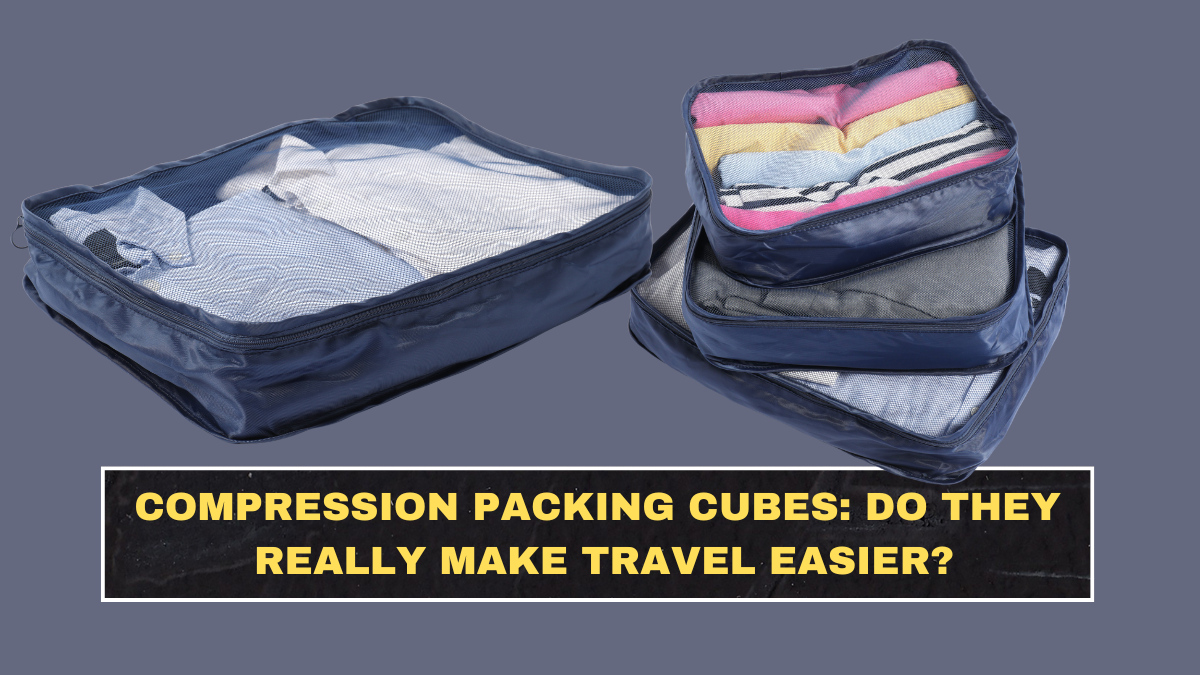
Compression packing cubes keep trending because they promise two things travelers always want: more space and less chaos. Recent 2026 packing coverage from Condé Nast Traveler and Travel + Leisure shows they are now treated as mainstream packing tools rather than niche organization accessories, especially for travelers trying to stay carry-on-only or keep checked bags more controlled.
The first thing to get straight is this: compression packing cubes are useful, but they are not magic. They do not shrink your belongings into nothing, and they do not fix bad packing judgment. What they do well is cut down bulk from soft clothing, keep categories separated, and make unpacking less messy. That is why travelers keep buying them. The weak buyer mistake is expecting them to create space for unlimited overpacking.
What Are Compression Packing Cubes?
Compression packing cubes are zippered fabric organizers with an extra compression zipper that lets you first fill the cube, then compress the contents further to reduce bulk. Condé Nast Traveler’s 2026 guide explains the difference clearly: standard packing cubes mainly organize, while compression cubes add a second zipper that squeezes down thicker items like sweaters, jackets, and scarves. Forbes’ 2025 packing cube roundup makes the same point, noting that compression-style cubes reduce the air space between garments and help them pack more efficiently.
That difference matters more than people think. A normal cube is mostly an organizer. A compression cube is an organizer plus a bulk-management tool. The category keeps growing because travelers increasingly want both at once, especially now that bag rules, carry-on pressure, and packing complexity keep getting tighter.
Do Compression Packing Cubes Really Save Space?
Yes, but within limits. They work best on soft, squishable clothing like T-shirts, sweaters, underwear, leggings, and lighter layers. Travel + Leisure’s December 2025 packing hacks coverage said compression cubes are one of the best ways to cut down on bulk and make room for more items, while Forbes’ January 2026 piece highlighted compression zippers that create denser packs and reduce shifting inside the suitcase.
What they do not do is change the physics of hard items. Shoes, toiletries, jackets with structure, and awkward accessories still take up real space. That is where people fool themselves. They think compression cubes create “extra room” in a general sense, when in practice they mostly help by making clothing tighter, flatter, and easier to stack. If your bag is full of rigid items, the benefit will be more organization than actual compression.
When Do Compression Packing Cubes Help the Most?
They help most on trips where clothing bulk is the main problem. That includes colder-weather trips with knitwear and layers, carry-on-only packing, family packing systems, and longer stays where clothing categories need to stay organized. Condé Nast Traveler’s 2026 guides repeatedly emphasize that cubes make it easier to separate tops, bottoms, underwear, shoes, and dirty laundry, while also making repacking much easier on the return trip.
They are also especially useful for travelers who tend to rummage through a suitcase and destroy their own packing system by day two. That sounds minor, but it is one of the real reasons cubes earn repeat loyalty. They save space somewhat, but they save frustration even more. A bag that stays organized is easier to live out of, and that matters on real trips far more than influencer packing aesthetics.
| Situation | Do compression cubes help? | Why |
|---|---|---|
| Carry-on-only trip | Yes | Reduces clothing bulk and keeps items sorted |
| Cold-weather packing | Yes | Sweaters and layers compress better than thin summer clothing |
| Family or multi-stop travel | Yes | Easier to separate categories and repack quickly |
| Shoe-heavy or toiletry-heavy packing | Less | Hard items do not compress much |
| Chronic overpacking | Somewhat | Helps control bulk, but does not fix bad choices |
This is the honest table people need. Compression cubes are strongest when soft clothing is the problem. They are weaker when the real problem is that the traveler packed too many non-compressible items or never edited the packing list in the first place.
What Are the Biggest Benefits Beyond Space Saving?
Organization is the biggest hidden benefit. Condé Nast Traveler’s January 2026 guide says packing cubes help avoid the “shove everything in” method and make it easier to separate clean clothes from dirty ones, while Travel + Leisure’s April 2026 hacks coverage describes cubes as the foundation of a repeatable packing system that saves time and reduces overthinking.
That matters because travelers often focus too much on the word compression and ignore the day-to-day usability. A well-organized suitcase is easier to unpack in a hotel, easier to repack during a multi-city trip, and easier to live with when you are tired. Compression is useful. Organization is what makes the tool stick.
When Do Compression Packing Cubes Not Help Much?
They do not help much when the suitcase is already dominated by shoes, outerwear you plan to wear rather than pack, electronics, or bulky toiletry bags. They also become less useful if the traveler uses stiff, bulky cubes that do not fit the shape of the luggage well. Condé Nast Traveler’s coverage notes that some thinner or more flexible cubes work better because they can be shifted into odd corners, while overly rigid systems can waste space instead of saving it.
They also do not solve overweight luggage. This is another dumb assumption buyers make. Compression reduces volume, not mass. If you compress more clothes into one suitcase, you may fit more, but you can still end up with a bag that is too heavy for airline limits. Forbes’ 2026 packing advice framed compression as a way to pack denser, which is useful, but denser also means you need more discipline about weight.
How Should You Choose the Right Compression Packing Cubes?
Look for a set with multiple sizes, durable zippers, and enough flexibility to fit your luggage shape. Condé Nast Traveler’s 2026 guide says variety in sizes makes the process more seamless because every trip needs a different mix, and their editors also praised lighter, more malleable cubes that can fit into awkward parts of a packed bag. Forbes similarly notes that different designs serve different traveler needs, especially if compression and durability are both priorities.
The smarter buying logic is simple: do not buy the biggest set just because it looks comprehensive. Buy the set that matches your actual luggage size and trip style. Too many cubes can create their own clutter. A few good ones that fit your suitcase well are more useful than a giant pack of mismatched organizers you never use properly.
Are Compression Packing Cubes Worth It?
Yes, for most travelers who value organization and want modest space savings. The 2025–2026 travel coverage is pretty consistent on this: they help you pack more neatly, reduce clothing bulk, and make travel mornings easier because outfits and categories stay contained. That is real value, not just affiliate hype.
No, if you expect them to rescue undisciplined packing. They are a tool, not a loophole. If you bring the wrong clothes, too many shoes, or a pile of “just in case” nonsense, compression cubes will not turn that into smart packing. They make travel easier. They do not make bad judgment disappear.
Conclusion?
Compression packing cubes really can make travel easier, but not for the lazy reason most people assume. Their biggest strengths are better organization, less suitcase chaos, and some meaningful reduction in clothing bulk. They help most with soft garments, layered packing, and trips where staying organized actually matters. They help least when the real issue is rigid items or bad packing choices. Used properly, they are worth it. Used as a fantasy solution to overpacking, they are just zippered denial.
FAQs
Do compression packing cubes really save space?
Yes, mainly with soft clothing. They reduce bulk better than standard cubes, but they do not do much for rigid items like shoes or toiletry cases.
Are compression cubes better than regular packing cubes?
They are better if you want both organization and some bulk reduction. Regular cubes mainly organize, while compression cubes add a second zipper to squeeze clothing down further.
Can compression packing cubes make your luggage overweight?
Yes. They reduce volume, not weight, so packing more dense clothing into one bag can still push the suitcase over airline limits.
What is the biggest mistake people make with compression cubes?
Expecting them to fix overpacking by themselves. They work best when paired with a sensible packing list, not as permission to bring everything.
Click here to know more