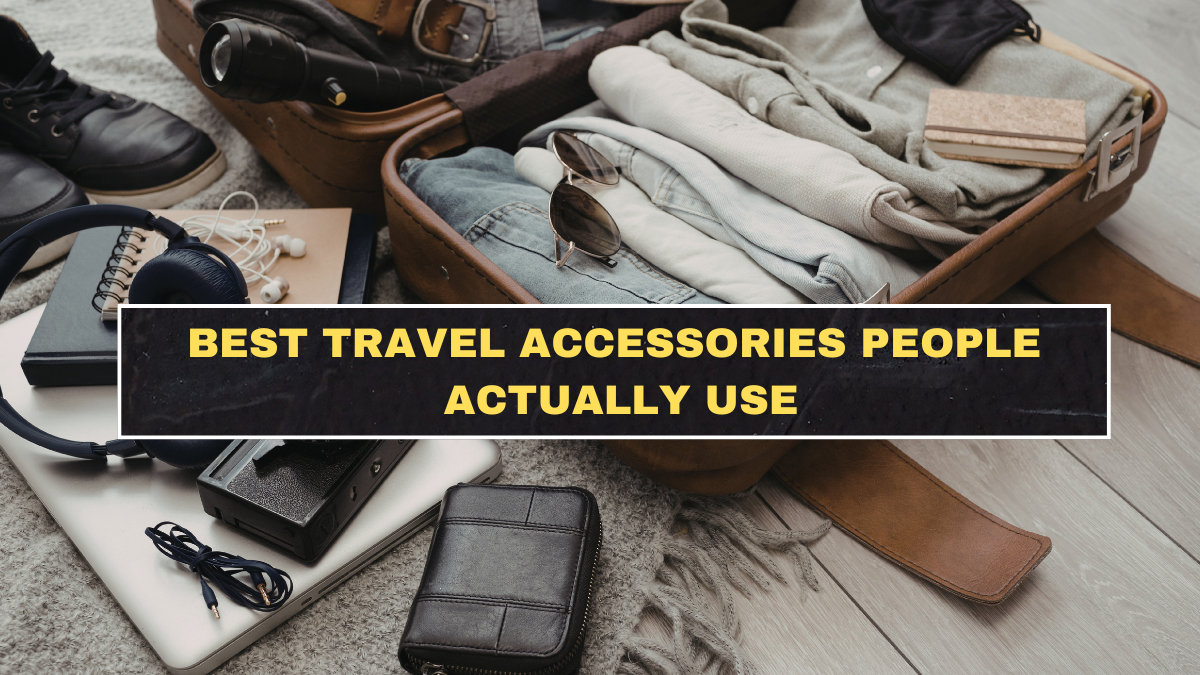
Most travel accessories are unnecessary. That is the truth people keep dodging. Airports and travel listicles are packed with junk that looks clever for five minutes and then sits untouched in your bag for the next five trips. The accessories people actually keep using are the ones that solve repeated problems: packing mess, dead devices, leaky toiletries, heavy bags, bad sleep on flights, and disorganized carry-ons. Current 2026 travel-gear coverage from Travel + Leisure keeps highlighting the same kinds of tools over and over, including packing cubes, hanging toiletry bags, travel bottles, voltage converters, luggage scales, and sling bags. That is a useful signal because these items keep surviving repeated testing and editor use rather than one-time hype.
There is also a practical airline reason to choose carefully. TSA says liquids in carry-on bags are limited to containers of 3.4 ounces or 100 milliliters placed in one quart-size bag, and TSA plus FAA guidance say spare lithium batteries and power banks must stay in carry-on baggage, not checked luggage. So the smartest travel accessories are often the ones that help you work with real airport rules instead of fighting them.
Which travel accessories do people actually keep using?
The most consistently useful ones are usually packing cubes, a hanging toiletry bag, leak-resistant travel bottles, a power bank, a luggage scale, a universal adapter or voltage converter when needed, and one well-designed personal-item bag. Travel + Leisure’s recent 2026 travel roundups specifically included compression packing cubes, travel bottles, a luggage scale, a hanging toiletry bag, and a voltage converter among current essentials. That is not random. Those products keep showing up because they reduce the most common travel annoyances without demanding extra effort.
The brutal reality is that “useful” in travel usually means boring. The accessory that saves your bag from chaos or keeps your phone charged matters more than the accessory that looks impressive in a packing video. If it does not make packing easier, airport movement smoother, or in-transit comfort better, it probably does not deserve space.
| Travel accessory | Why people keep using it | Problem it solves |
|---|---|---|
| Packing cubes | Keeps clothing organized and compact | Messy suitcase digging |
| Hanging toiletry bag | Makes bathroom setup easier | Counter clutter and leakage |
| Travel bottles | Helps follow carry-on liquid rules | Bulky full-size products |
| Power bank | Keeps devices alive in transit | Dead phone or boarding pass panic |
| Luggage scale | Helps avoid overweight bag fees | Guessing bag weight |
| Universal adapter or converter | Keeps devices usable abroad | Wrong plug type or voltage issue |
Why are packing cubes one of the few accessories almost everyone keeps?
Because they solve the same problem every trip. Travel + Leisure’s April 2026 essentials roundup specifically highlighted compression packing cubes as a way to maximize suitcase space, and frequent-flier recommendations in 2026 continue to favor products that keep bags organized rather than just stuffed.
Packing cubes also reduce a kind of travel irritation people underestimate: constant re-digging through luggage. That matters more than raw space savings. If shirts, underwear, sleepwear, and dirty laundry each have a clear zone, the suitcase stops becoming a disaster after day one. That is why people keep using cubes even when they are not trying to pack ultra-light. They are an organization tool first and a compression tool second.
Is a hanging toiletry bag really worth it?
Yes, for a lot of travelers. Travel + Leisure’s March 2026 travel-agent picks specifically recommended a hanging toiletry bag because hotel bathrooms often have limited counter space and awkward layouts. That is exactly the sort of repeated travel problem that a good accessory should fix.
This is also one of those products that sounds unnecessary until you use it in a cramped bathroom with nowhere to put anything. Then it stops sounding fancy and starts sounding obvious. A hanging bag keeps toiletries visible, reduces sink clutter, and usually makes unpacking faster. That is what actual usefulness looks like.
Which carry-on accessories matter most for airport rules?
Travel bottles, a clear liquids setup, and a properly packed power bank matter the most. TSA says liquids, aerosols, gels, creams, and pastes in carry-ons are limited to 3.4-ounce or 100-milliliter containers, all fitting in one quart-size bag. That alone makes travel bottles and organized toiletry packing practical, not optional, for carry-on travelers.
Power banks matter too, but people still pack them wrong. TSA and FAA both say spare lithium batteries and power banks must be kept in carry-on baggage, and FAA says they should be removed from a bag if that bag gets gate-checked. IATA’s 2026 traveler guidance also says never place spare batteries or power banks in checked baggage and notes that batteries up to 100 Wh are generally allowed in carry-on baggage, with larger ones subject to limits or airline approval.
Why do luggage scales and adapters keep making these lists?
Because baggage fees and plug problems are annoyingly common. Travel + Leisure’s 2026 roundup specifically included a luggage scale as a way to avoid hidden baggage fees, and that is exactly the kind of product that earns loyalty by preventing one expensive mistake.
Adapters and converters are similar. Travel + Leisure’s April 2026 list included a voltage converter aimed at European travel, which reflects a real issue for international travelers: even people who remember their charger often forget that plug types and voltage needs still matter for some devices.
The honest rule is simple: if one small tool can prevent a fee, a dead device, or an unusable appliance, it has more value than ten novelty accessories combined.
What travel accessories are usually overrated?
Most bulky “just in case” gear is overrated. So are products that create extra packing complexity instead of reducing it. Current travel-tech commentary in 2026 points out that travelers often carry too many chargers, cables, and accessories when the most useful items are usually the simplest ones that reduce clutter and keep essentials powered and accessible.
That means you should be suspicious of anything that sounds clever but does not solve a repeated problem. Travel gear becomes worth carrying only when it keeps earning its place after multiple trips. If it only seems useful in theory, it is probably dead weight.
What should travelers prioritize first?
Start with organization, power, and compliance. In real life, that means packing cubes, a toiletry setup that works with liquid rules, a power bank packed correctly, and one personal-item bag that keeps essentials easy to reach. Then add the trip-specific items like an adapter, converter, or sleep accessory depending on where and how you travel. TSA’s checklist guidance also reminds travelers to remove the 3-1-1 liquids bag during standard screening and keep electronics accessible, which again supports the idea that better organization beats more accessories.
The smartest travel bag is not the one with the most gadgets. It is the one with the fewest things that still solve the biggest problems.
Conclusion
The best travel accessories people actually use are the ones that make packing cleaner, airport rules easier, and travel days less annoying. In 2026, that still means packing cubes, a hanging toiletry bag, travel bottles, a properly packed power bank, a luggage scale, and the right adapter when needed. Current travel-gear coverage and official TSA and FAA guidance point toward the same conclusion: useful travel accessories are not about novelty. They are about repeated practical value. If the item does not make your trip smoother more than once, it probably does not belong in your bag.
FAQs
What is the most useful travel accessory for most people?
Packing cubes are one of the most consistently useful because they improve organization, reduce digging through luggage, and keep getting recommended in 2026 travel-gear roundups.
Can power banks go in checked luggage?
No. TSA and FAA both say spare lithium batteries and power banks must be carried in carry-on baggage, not checked luggage.
Do travel bottles still matter in 2026?
Yes, especially for carry-on travelers. TSA’s liquid rules still limit carry-on liquids to containers of 3.4 ounces or 100 milliliters in one quart-size bag, which makes travel-size bottles genuinely practical.
Is a hanging toiletry bag actually worth packing?
For many travelers, yes. Travel + Leisure’s 2026 travel-agent picks recommended one specifically because hotel bathrooms often lack enough counter space and easy organization.