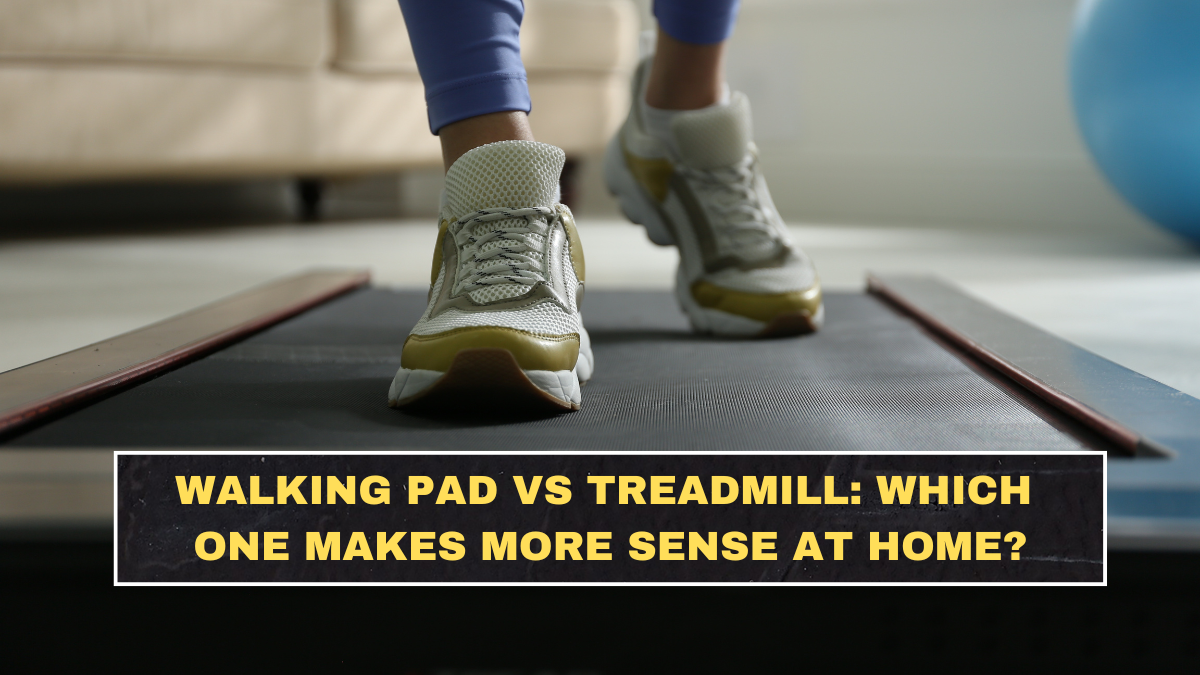
Walking pads are getting attention because they solve a real problem: people want to move more without turning their home into a full gym. But a walking pad and a treadmill are not interchangeable. Cleveland Clinic says walking pads are often more useful for beginners and more sedentary people trying to add movement, while traditional treadmills usually make more sense for people who want more structured exercise, higher speeds, and longer-term progression. At the same time, the CDC still says adults should get at least 150 minutes of moderate-intensity physical activity each week plus 2 days of muscle-strengthening activity, so the real question is not which machine is cooler. The real question is which one you will actually use enough to help you meet that baseline.
What is the actual difference between a walking pad and a treadmill?
A walking pad is usually smaller, lighter, and built mainly for walking, often at lower speeds and with a simpler design. A treadmill is usually larger, sturdier, and made for a wider range of activity, including brisk walking, jogging, and running. Cleveland Clinic’s comparison is blunt on this point: walking pads are better for light activity and convenience, while treadmills generally offer more features and workout flexibility. That means people who pretend the decision is only about price are missing the real difference, which is workout scope.
Which one is better for general health?
Both can help if they get you moving more consistently. Mayo Clinic says walking can help maintain a healthy weight, improve cardiovascular fitness, strengthen bones and muscles, improve mood and sleep, and reduce stress. CDC’s activity guidance also makes clear that moderate-intensity movement such as brisk walking counts toward weekly health targets. So for general health, the better machine is the one that increases your total activity with the least friction. For many inactive people, that may be a walking pad because it lowers the barrier to starting. For more active people, that may be a treadmill because it gives room to progress.
| Factor | Walking Pad | Treadmill |
|---|---|---|
| Best for | Light daily movement and beginners | Structured workouts and progression |
| Speed range | Usually lower | Much wider |
| Space needs | Smaller and easier to store | Larger and more permanent |
| Workout variety | Limited | Better for walking, jogging, and running |
| Desk use | Often better suited | Possible, but bulkier |
| Long-term training | More limited | Much stronger option |
Does a walking pad make more sense for most beginners?
Yes, often. Cleveland Clinic specifically says walking pads are probably more beneficial to beginning exercisers than to people who already train regularly. That matters because beginners usually do not need advanced incline programs or running features first. They need something easy enough to use without excuses. Mayo Clinic’s active-workstation reporting also supports the bigger idea here: active workstations can help people move more and even think better at work without hurting job performance. That makes walking pads especially attractive for people trying to reduce sitting time rather than train like runners.
When is a treadmill clearly the better choice?
A treadmill is the better choice if you want real cardio progression, higher-intensity training, jogging or running, or a machine that will still fit your goals a year from now. Cleveland Clinic’s comparison makes it clear that walking pads are not trying to replace treadmills for more advanced exercise. If you already enjoy workouts, want to increase speed and intensity, or expect your fitness level to rise, a treadmill usually makes more sense because it has more range. This is where people fool themselves. They buy the smaller machine because it feels easier, then outgrow it and act surprised.
Is a walking pad better for working from home?
Usually yes, if the goal is to move more during the day rather than do a formal workout. Cleveland Clinic’s “cozy cardio” guidance even lists walking on a treadmill or walking pad while watching a show as a practical low-pressure movement routine, and Mayo Clinic’s active-workstation reporting says these setups can help cut down sitting time at work. So if your main problem is being desk-bound for long hours, a walking pad often fits better because it is easier to place near a desk and easier to use in short bursts. That is a different job than a treadmill’s.
What about weight loss and fitness results?
Neither machine is magic. Mayo Clinic says walking and aerobic exercise can help maintain a healthy weight and lose body fat when combined with a healthy diet, and CDC says even some physical activity is better than none. So the honest answer is simple: both can support weight loss and fitness, but only if you use them consistently. A walking pad may help someone go from very sedentary to moderately active. A treadmill may help someone build more intense and longer workouts. The machine does not create results by itself. Your consistency does.
Which one is easier to stick with?
For many people, the walking pad wins on adherence because it is less intimidating and easier to fit into normal life. Cleveland Clinic’s comparison strongly suggests that walking pads are especially useful for people starting from a sedentary baseline. That lines up with a basic behavior truth: a smaller step you actually take is better than a bigger one you avoid. But there is a catch. If you get bored easily or need stronger workout intensity to stay engaged, a treadmill may actually be easier to stick with because it offers more variety and challenge.
So which one makes more sense at home?
A walking pad makes more sense if your real goal is to sit less, walk more, and make movement easier during work or while watching TV. A treadmill makes more sense if your real goal is structured exercise, faster walking, jogging, running, or long-term training flexibility. Cleveland Clinic’s guidance basically points to the same split: walking pads are excellent for convenience and beginner movement, while treadmills are stronger for people who want more robust exercise options. Stop pretending they are the same product. They are not. One is mainly a friction-reduction tool. The other is a fuller training machine.
Conclusion?
Walking pads make more sense at home for people who need a low-barrier way to move more and sit less. Treadmills make more sense for people who want a broader fitness tool with room to progress. If your current problem is inactivity, a walking pad may be the smarter buy. If your current problem is limited workout intensity or boredom, a treadmill is usually the better investment. The real mistake is buying for fantasy. Buy for the routine you will actually follow.
FAQs
Is a walking pad enough exercise?
It can be enough to help increase daily movement and contribute toward activity goals, especially for beginners, but CDC still recommends 150 minutes of moderate-intensity aerobic activity per week plus 2 days of strength training.
Is a treadmill better than a walking pad for weight loss?
Not automatically. Both can support weight loss if used consistently, but treadmills generally allow more intensity and progression, while walking pads may be easier for inactive people to use regularly.
Are walking pads good for working while walking?
They often are, especially for light movement during desk work. Mayo Clinic’s active-workstation reporting says active workstations can help people move more without hurting job performance.
Who should choose a walking pad first?
A walking pad usually makes more sense for beginners, people with limited space, and people trying to reduce sedentary time rather than train hard. Cleveland Clinic explicitly frames walking pads as especially useful for beginning exercisers.