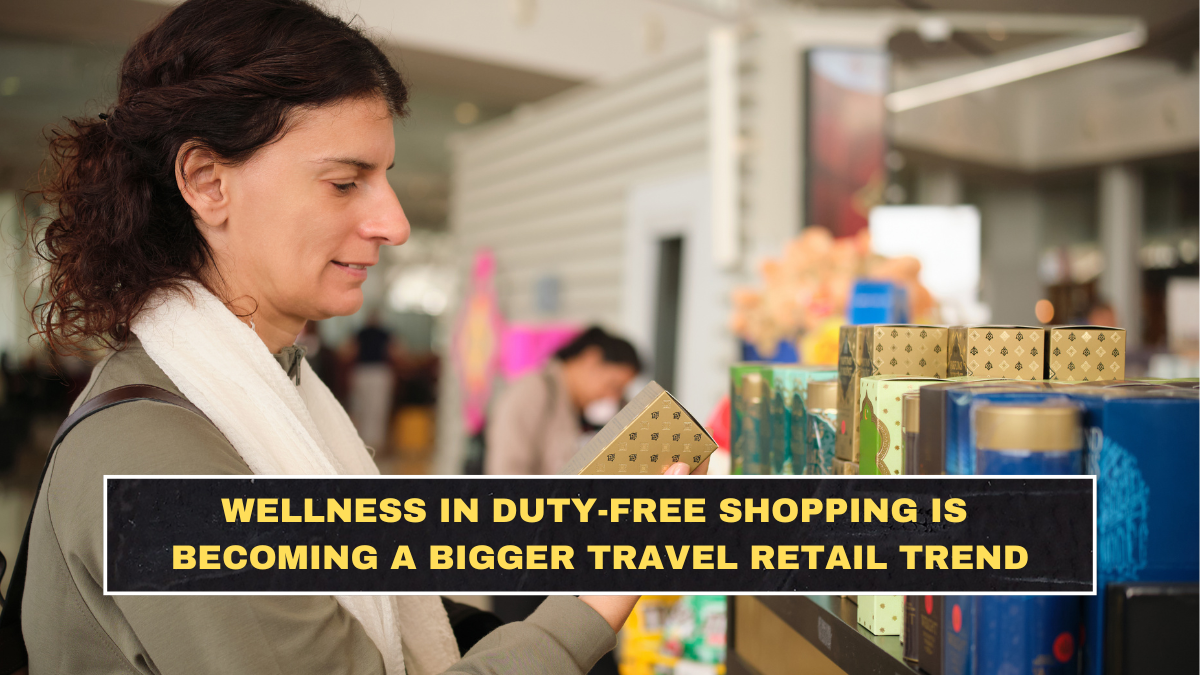
Wellness is getting bigger in duty-free because airport shopping is no longer just about liquor, tobacco, and last-minute perfume. Travel retail is expanding, and beauty is already one of its largest product groups. Recent market reporting says fragrance and cosmetics are expected to account for about 29% of duty-free retail share in 2026, while perfume and cosmetics make up roughly 28.5% of the broader travel retail market. That matters because wellness is not entering duty-free as a tiny side category. It is expanding out of the beauty business that already dominates the channel.
The deeper reason is behavioral. Travelers increasingly treat airport shopping as part of the trip, not as wasted time before boarding. When beauty, skincare, supplements, sleep aids, self-care kits, and recovery products fit that moment, “wellness” becomes easy to sell. This is especially true as travel itself is being reframed through self-care and beauty trends. Recent trend reporting tied beauty-focused travel to stronger shopping behavior at airports and local beauty retailers, including a finding that more than half of participants in one glowcation trend report bought cosmetics while traveling.
What does “wellness” actually mean in duty-free retail?
In this context, wellness usually means beauty, skincare, self-care, and personal-comfort purchases rather than hardcore health products. That can include skincare, body care, sleep-oriented items, recovery products, beauty tools, vitamins, clean-label personal care, and products designed to make travel feel less draining. A recent 2026 travel-retail trend summary argues that wellness is becoming mainstream in duty-free because beauty and personal care already lead the channel and are now widening into broader self-care behavior.
This is important because the category is not really about airports turning into pharmacies. It is about turning airport retail into a more polished lifestyle environment. Wellness in duty-free is basically beauty retail stretching into recovery, comfort, and travel-friendly self-care. That is why it fits so easily next to fragrance and skincare and why it feels commercially believable instead of forced.
Why are airports and duty-free stores leaning into this shift now?
Because the economics make sense. The duty-free and travel retail market is still growing fast, with one 2026 market report valuing the global duty-free and travel retail market at about $63.02 billion in 2026 and projecting it to reach $108.21 billion by 2030. Another market estimate puts duty-free retail alone at about $54.28 billion in 2026. When a retail channel is that large, operators need higher-margin, emotionally attractive categories that are easy to browse and impulse-buy. Wellness does exactly that.
Large travel retailers are clearly betting on scale and category refinement too. Avolta, one of the biggest global travel retailers, says it operates around 5,100 outlets across 70 countries and serves roughly 2.5 billion passengers. That kind of reach matters because it shows the channel has enough scale to test and roll out category shifts globally, including beauty and wellness-heavy store concepts.
What are travelers actually buying when wellness enters duty-free?
They are mostly buying products that feel useful, giftable, or indulgent without requiring much thought. Skincare, cosmetics, premium body care, sheet masks, travel-size self-care kits, and comfort-driven beauty purchases fit naturally into airport behavior because they are easy to carry, easy to justify, and often feel like a smarter purchase than another random souvenir. Delhi Duty Free’s own public storefront still shows beauty and perfume as core airport categories, which reflects how central beauty remains in the duty-free mix.
The travel trend angle strengthens that further. Skyscanner’s 2026 beauty-travel page says 38% of Gen Z travelers plan to seek out beauty treatments and skincare stores while traveling, and recent reporting on glowcations says more than half of participants buy cosmetics at airports or local beauty retailers. That means airport beauty shopping is no longer just opportunistic. For many travelers, it is already part of the itinerary.
What is really driving the wellness-in-duty-free trend?
| Driver | Why it matters in 2026 |
|---|---|
| Beauty already dominates travel retail | Wellness can grow out of an established buying habit |
| Impulse-friendly formats | Skincare, self-care, and beauty products are easy airport buys |
| Younger traveler behavior | Gen Z is more likely to shop beauty and self-care while traveling |
| Travel stress and recovery | Wellness products fit long-haul, jet-lag, and comfort needs |
| Premiumization | Airports want categories with higher margins and stronger lifestyle appeal |
This table explains the shift better than vague “wellness boom” language. The category works because it combines practical utility with emotional spending. Travelers feel they are buying something useful for the trip while retailers get a product mix that feels more premium than generic travel essentials. That is a strong retail combination.
Is this really a wellness trend, or just beauty retail with better branding?
Mostly both. A lot of what gets called “wellness” in duty-free is still beauty-led spending with cleaner language. Skincare, fragrance, cosmetics, and body care already had a strong foothold. What changed is that brands and retailers learned they can frame the same products around rest, recovery, glow, and self-care. That is not fake exactly, but it is still marketing.
At the same time, the trend does reflect a genuine travel behavior shift. Travelers increasingly want trips to feel restorative and identity-driven, and beauty-related travel patterns show that self-care and shopping are becoming more central to the travel experience. So yes, part of this is branding. But part of it is also travelers genuinely spending that way now.
Who is this trend really for?
This trend makes the most sense for beauty-conscious travelers, younger shoppers, and people already inclined to see shopping as part of the trip. Gen Z is especially relevant here, because Skyscanner’s 2026 beauty-travel reporting shows stronger intent among younger travelers to seek out treatments and skincare retail while away from home. That group is much more likely to see airport shopping as a curated self-care stop instead of a boring wait before boarding.
It makes less sense for travelers who only care about price and utility. Those shoppers may still buy basics, but they are not the ones expanding the category. Wellness in duty-free grows because enough travelers are willing to pay for feeling better, looking better, or treating the airport like part of the lifestyle experience. That is not rational minimalism. It is premium convenience with emotional payoff.
Conclusion
Wellness in duty-free shopping is becoming a bigger travel retail trend in 2026 because the numbers and the behavior now line up. Beauty already controls a large share of travel retail, the broader duty-free market is expanding, and younger travelers are increasingly shopping for beauty and self-care products as part of the travel experience. That gives airport retailers a clear reason to sell more wellness-coded products and gives travelers a category that feels indulgent, useful, and easy to buy on the move.
The blunt truth is that this is not some pure health revolution. It is beauty retail evolving into self-care retail inside one of the most impulse-friendly environments in the world. But that does not make it fake. It makes it commercially smart, and in 2026 that is enough to make the trend real.
FAQs
Is wellness a niche category in duty-free shopping?
No. Current 2026 retail analysis suggests it is becoming mainstream because it grows out of beauty and personal care, which already represent one of the largest product groups in travel retail.
Why are airports selling more skincare and self-care products?
Because beauty is already a major airport-shopping category, and travelers increasingly see skincare and self-care as useful, giftable, and travel-relevant purchases.
Which travelers are pushing this trend most?
Younger travelers, especially Gen Z, are helping drive it. Skyscanner’s 2026 beauty-travel reporting says 38% of Gen Z travelers plan to seek out beauty treatments and skincare stores while traveling.
Is wellness in duty-free really different from beauty shopping?
Partly. A lot of it is still beauty shopping, but the framing has expanded to include recovery, comfort, and broader self-care, which is why the category now feels bigger than just perfume and makeup.
Click here to know more