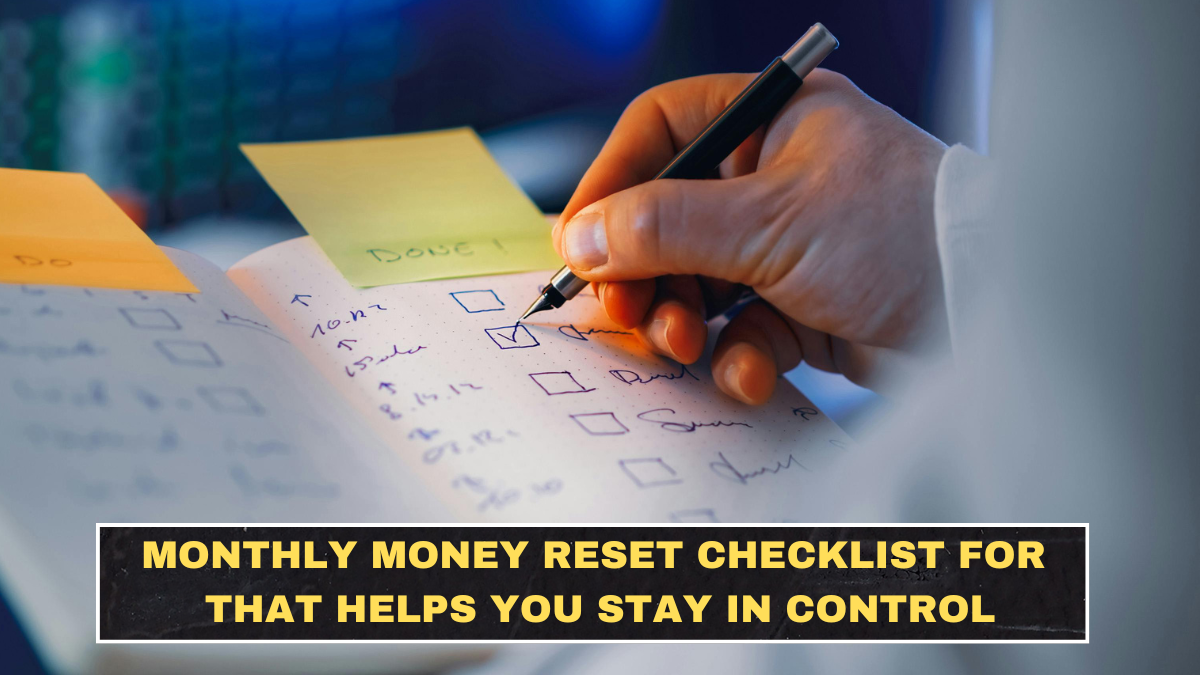
A monthly money reset sounds simple, but most people do not do it because they assume checking their bank app counts as financial control. It does not. Real control means reviewing bills, savings, spending leaks, and upcoming obligations before the next month starts spending your money for you. That matters more in 2026 because households are still dealing with cost pressure, uneven savings, and tighter room for error. The Federal Reserve reported in 2025 that only 55 percent of adults said they had three months of emergency savings, and 63 percent said they could cover a $400 emergency expense using cash or its equivalent.
That is why a money reset matters. It is not about becoming obsessed with spreadsheets. It is about building one repeatable monthly habit that catches problems early. If you do not review your cash flow, subscriptions, debt payments, savings transfers, and next month’s known expenses, you are not budgeting. You are just hoping the numbers behave. Hope is not a system.

Why does a monthly money reset matter more in 2026?
Because many households still do not have enough margin. The Federal Reserve’s latest household well-being data shows emergency resilience has improved from the worst periods, but it is still below the 2021 peak. That means millions of people are still one car repair, medical bill, or work disruption away from stress. A monthly review helps before that stress turns into late payments, revolving debt, or random financial damage.
Another reason is that spending drift is real. Grocery bills, subscriptions, transport, digital services, and irregular expenses creep up slowly, which makes them easy to ignore. BLS consumer expenditure data keeps showing how broad household spending is across categories, and that is exactly why monthly review beats vague “I should save more” thinking. You need to see where the money actually went, not where you imagined it went.
What should your monthly money reset checklist include?
Start with income, fixed bills, variable spending, savings, debt, and next month’s one-off expenses. That is the core. First, total all income that actually arrived, not what you expected. Second, list fixed costs such as rent, EMI, insurance, phone, internet, childcare, and minimum debt payments. Third, review variable categories like groceries, fuel, dining, and shopping. Fourth, check whether savings transfers actually happened. Fifth, write down unusual expenses coming next month, such as travel, school fees, gifts, renewals, or repairs.
The point is not perfection. The point is visibility. Most budget failures happen because people forget annual renewals, ignore small spending spikes, or act surprised by expenses that were completely predictable.
| Monthly reset step | What to review | Why it matters |
|---|---|---|
| Check income received | Salary, freelance, side income | Confirms real cash available |
| Review fixed bills | Rent, EMI, utilities, insurance | Prevents missed or duplicate payments |
| Audit variable spending | Groceries, fuel, eating out, shopping | Finds overspending patterns |
| Confirm savings transfer | Emergency fund, investments, sinking funds | Makes saving intentional |
| Plan next month’s extras | Renewals, travel, school, gifts, repairs | Stops surprise spending |
How should you review bills and spending without making it complicated?
Use one hour and one page. Pull your bank account, card statements, and UPI or wallet history. Then separate spending into three buckets: necessary, flexible, and waste. Necessary covers rent, utilities, groceries, transport, and basic debt payments. Flexible includes entertainment, eating out, clothing, and optional shopping. Waste includes forgotten subscriptions, duplicate purchases, delivery fees from laziness, and impulse spending you would not defend after five minutes of honest thinking.
This matters because most people do not have a math problem first. They have an avoidance problem. They do not want to look closely because they already know some of the spending was stupid. That is exactly why the reset works. It forces honesty before the next month repeats the same mess.
What money moves should happen during the reset?
Three moves matter most. First, pay yourself before spending drift takes over. If you are building emergency savings, move that money early, not at month-end. Second, review debt progress instead of just making minimum payments blindly. Third, create or update sinking funds for known future costs like insurance renewals, festivals, back-to-school spending, or annual subscriptions.
This is not theoretical. The Federal Reserve data showing that only 35 percent of non-retirees felt their retirement savings were on track is another sign that passive money habits are failing people. A monthly reset is the simplest way to make savings and debt reduction visible instead of accidental.
What mistakes ruin a monthly money reset?
The biggest mistake is making it too ambitious. If your system needs a perfect spreadsheet, color coding, and three finance apps, you probably will not keep doing it. Another mistake is reviewing spending without making a decision. If you notice food delivery is too high but change nothing, then the review was just financial entertainment.
The third mistake is ignoring small leaks because they look harmless alone. Subscriptions, bank charges, convenience fees, and random low-value purchases stack up. A reset works only when it leads to actions: cancel, reduce, automate, postpone, or plan.
Conclusion?
A monthly money reset in 2026 is not some trendy finance ritual. It is a basic survival habit for people who want fewer surprises and more control. With many households still lacking strong emergency savings, ignoring your monthly cash flow is careless, not relaxed. Review income, bills, spending leaks, savings, debt, and next month’s extra costs once a month. Do that consistently, and your money stops running you.
FAQs
How long should a monthly money reset take?
Usually 30 to 60 minutes is enough if you review income, bills, spending, savings, and next month’s known expenses in one sitting.
What is the most important part of a monthly money reset?
Checking actual spending and upcoming bills is usually the most important part, because that is where people catch leaks and prevent avoidable mistakes.
Should emergency savings be part of the monthly reset?
Yes. The Federal Reserve’s latest data shows many adults still do not have strong emergency savings, so checking progress monthly is practical, not optional.
Is a monthly money reset only for people struggling financially?
No. It is useful for anyone who wants more control over spending, savings, debt, and future expenses. People with stable income still lose money through drift, waste, and poor planning.