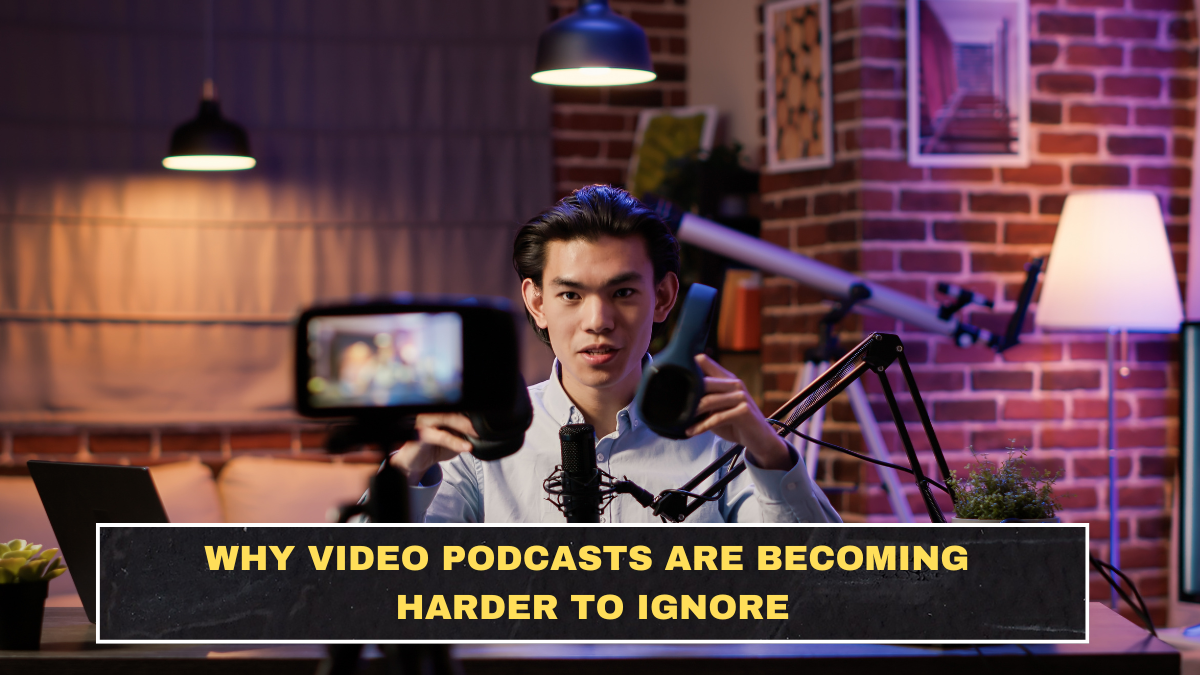
A lot of creators still treat video podcasts like an optional add-on to an audio show. That thinking is getting outdated. The market is moving in a different direction because audiences are clearly showing that they want both listening and watching, not one or the other. Recent research shows podcast audiences are at record highs, with monthly podcast consumption reaching 58% of Americans and weekly podcast consumption at 45%. Even more important, 57% of Americans have both listened to and watched a podcast, which destroys the lazy assumption that video is replacing audio. It is expanding the audience instead.
The platform data supports the same conclusion. YouTube said in February 2025 that podcast content on the platform had crossed 1 billion monthly active viewers, and it also stated that YouTube had become the most frequently used service for listening to podcasts in the U.S. That matters because it shows podcasts are no longer living only inside traditional podcast apps. They are now competing inside mainstream video discovery systems, search results, recommendations, TV screens, and creator ecosystems.
Why creators are shifting toward video
The biggest reason is simple: video creates more surfaces for discovery. Audio podcasts are strong for loyalty, but video podcasts are stronger for reach because they can live as full episodes, clips, Shorts, thumbnails, search results, suggested videos, and even TV viewing. YouTube reported that viewers watched over 400 million hours of podcasts monthly on living room devices in the prior year, which shows that podcast viewing is not just a phone habit anymore. It is becoming a television habit too. That changes the business value of the format.
Younger audiences are another major reason. Edison Research found that 84% of Gen Z monthly podcast listeners listen to or watch podcasts with a video component. Among that same group, 49% say video gives better understanding of tone and context, while 45% say it helps them feel more connected to the podcaster. That is not a minor preference. It means personality, reaction, body language, and visual chemistry now play a bigger role in audience retention and creator branding.
What the platform numbers actually say
The fastest way to understand the trend is to compare the signals from the biggest distribution platforms.
| Metric | What the data shows | Why it matters |
|---|---|---|
| YouTube podcast audience | More than 1 billion monthly active viewers of podcast content | Podcasts now have mass-market video reach, not niche audio-only reach |
| U.S. platform preference | 31% of weekly podcast listeners use YouTube most, vs 27% Spotify and 15% Apple Podcasts | YouTube is leading podcast consumption behavior in the U.S. |
| Spotify video scale | More than 250,000 video podcast shows and 170 million users have watched one | Spotify is also pushing video seriously, not treating it like an experiment |
| Spotify engagement | Global video podcast MAUs grew 40% year over year | Audience demand is still rising, not flattening |
| Creator monetization | Spotify said payouts for participating creators rose 300% year over year in January 2025 | Video podcasts are not just growing in views, but in business value |
YouTube vs Spotify is the wrong debate
Too many creators waste time asking which platform will “win.” That is the wrong question. The smarter question is what each platform does best. YouTube is stronger for discovery, search, recommendation, cross-format distribution, and long-tail visibility. Spotify is working harder on creator monetization and platform-native video consumption, and it has already reported that nearly 1 in 3 U.S. podcast monthly active users engage with video on the platform. It also said video podcast consumption grew more than 20% after the launch of its partner program, with some creators crossing $10,000 per month and top earners going well into six figures.
So the blunt truth is this: serious creators should stop thinking in platform loyalty terms. Video podcasts work best when the same core conversation becomes a multi-format publishing asset. One full episode can feed YouTube, Spotify, clips, Shorts, social snippets, search traffic, and brand deals. That is why the business model is getting harder to ignore. It is not just content anymore. It is content packaging.
How creators should use the format more strategically
The first mistake is assuming expensive production is the advantage. It is not. Clear audio, strong framing, recognizable hosts, and consistent publishing matter far more than cinematic overproduction. The second mistake is uploading long episodes without clip strategy. Video podcasts grow faster when creators break conversations into searchable moments, emotional reactions, contrarian opinions, and useful micro-topics that can travel independently across platforms.
Creators should also stop treating video as decoration. If people are watching, then visual behavior matters. Facial reactions, guest chemistry, set design, captions, titles, chaptering, and thumbnails all affect retention and click-through. On YouTube especially, a podcast is competing against every other form of entertainment on the homepage. That means “good conversation” alone is not enough. Packaging matters because discovery systems reward watch intent, not creator effort.
Conclusion
Video podcasts are growing because they match how modern audiences actually consume content: across listening, watching, search, clips, recommendations, and TV screens. The numbers are not subtle anymore. YouTube has crossed 1 billion monthly podcast viewers, Spotify has scaled video podcast inventory and engagement aggressively, and audience research shows video and audio are expanding the category together rather than canceling each other out.
For creators, the message is simple. If you still think podcasting is mostly an audio game, you are reading the market wrong. The smarter move is to build shows that can be heard, watched, clipped, searched, and monetized in more than one environment. That is why video podcasts are becoming harder to ignore, and why creators who understand distribution instead of just recording will have the clearer edge.
FAQs
Are video podcasts replacing audio podcasts?
No. Current research suggests the two formats are expanding the audience together rather than directly competing. A large share of people now both listen to and watch podcasts, which means creators benefit from offering both consumption options.
Is YouTube better than Spotify for video podcasts?
Not in every way. YouTube is stronger for discovery and broad reach, while Spotify is investing heavily in creator monetization and video engagement. The better strategy for most creators is to use both instead of choosing one blindly.
Why does Gen Z matter so much for video podcast growth?
Because younger audiences are helping shape future platform behavior. Edison found that 84% of Gen Z monthly podcast listeners engage with podcasts that have a video component, which shows strong demand for visual podcast experiences.
Do creators need a studio setup to start a video podcast?
No. They need strong audio, decent framing, good lighting, and a smart clipping strategy far more than a fancy studio. The real advantage comes from consistency, discoverable topics, and better distribution decisions, not from wasting money on equipment too early.