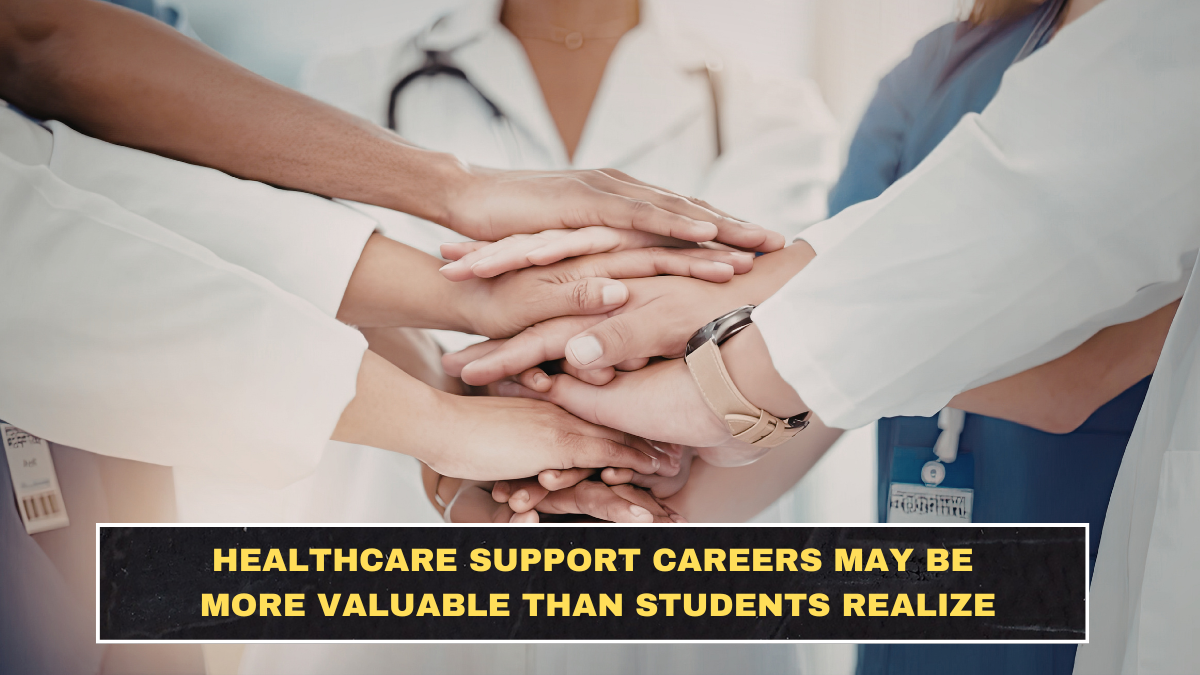
A lot of students still think healthcare means only doctor or nurse. That is shallow thinking. Modern healthcare runs on diagnostics, imaging, lab systems, therapy support, hospital operations, and allied-health roles that keep treatment moving. India’s healthcare hiring intent rose to 52% in H1 2025, up from H2 2024, driven by diagnostics, specialized care, and digital-health demand. At the same time, demand for Indian healthcare professionals is expected to double by 2030.
This matters because healthcare support is not a backup option anymore. It is becoming more important as hospitals expand, diagnostics scale up, and care systems become more technology-heavy. India’s diagnostic equipment market is projected to reach about ₹51,978 crore, or US$6 billion, by 2027, up from ₹34,652 crore, or US$4 billion, in 2023. The broader medical-technology sector is projected to reach about ₹4,33,150 crore, or US$50 billion, by 2030.
Why healthcare support and diagnostics deserve more attention
Students and parents often undervalue healthcare support because it lacks social prestige compared with MBBS. That is ego, not career logic. Hospitals cannot function properly without lab technicians, imaging teams, optometry professionals, operation theatre support, rehabilitation staff, and allied-health workers. The Union Budget 2026–27 explicitly backed this direction by planning to set up or upgrade Allied Health Professional Institutes in 10 disciplines to create nearly one lakh skilled professionals in five years. It also highlighted training 1.5 lakh caregivers.
This is a practical signal for students. When the government is planning large-scale allied-health expansion and the diagnostics market is growing, it means these careers are not marginal. They are part of where healthcare demand is moving.
Best careers in healthcare support and diagnostics
| Career path | Why it matters | Common route |
|---|---|---|
| Medical Lab Technology | Testing is central to diagnosis and treatment | BSc MLT, diploma |
| Radiology and Imaging | Imaging demand rises with hospital growth | BSc Radiology, imaging tech |
| Optometry | Eye-care services remain essential and scalable | Bachelor of Optometry |
| OT and anesthesia support | Surgical systems need trained technical support | Allied-health degree or diploma |
| Physiotherapy and rehab support | Recovery care and mobility support keep growing | BPT, rehab pathways |
| Hospital operations / admin | Larger healthcare systems need coordination | BHA, healthcare admin |
| Applied psychology / behavioral health support | Mental and behavioral care needs are growing | Psychology + healthcare support path |
| Elder care and caregiving | Aging population increases long-term care demand | Caregiving and allied-care programs |
Diagnostics and imaging are some of the clearest paths
Medical lab technology and radiology are two of the strongest examples because diagnosis increasingly depends on testing and imaging, not guesswork. As the diagnostic equipment market expands toward US$6 billion by 2027, the need for trained people who can run tests, handle equipment, and support interpretation becomes more practical.
This is where students fool themselves. They chase glamorous career labels and ignore fields where demand is actually visible. A student with the right training in lab systems or imaging can enter a growing part of healthcare without pretending the only respectable route is doctor status.
Allied health is getting stronger, not weaker
The Budget 2026–27 plan is especially important because it names selected disciplines such as optometry, radiology, anesthesia, operation-theatre technology, and applied psychology and behavioral health. That is unusually direct. It shows the healthcare system itself is acknowledging that support roles need scale, training quality, and more people.
Students should read that correctly. The opportunity is not only in treatment. It is also in support systems that make treatment possible. Healthcare is becoming more specialized, more equipment-driven, and more dependent on trained allied professionals.
What students should be careful about
Not every “medical” or “paramedical” course is worth joining. A weak institute with poor labs, no hospital exposure, and vague placement claims can still waste years. Before choosing any healthcare-support course, check these basics:
- practical lab or clinical exposure
- hospital linkage or internship support
- recognized curriculum and equipment training
- clear job role after completion
If the course sounds impressive but cannot answer those points, it is probably weak.
Conclusion
Healthcare support and diagnostics careers deserve more respect because they connect directly to how healthcare is expanding in India. Hiring intent is rising, allied-health training is being pushed at policy level, and the diagnostics and medical-devices markets are both growing. Medical lab technology, radiology, optometry, OT support, rehab, hospital operations, and caregiving all have stronger career logic than many students realize.
The real mistake is not choosing healthcare support. The real mistake is ignoring practical demand because the role sounds less glamorous than doctor talk.
FAQs
Are healthcare support careers really in demand?
Yes. India’s healthcare hiring intent rose to 52% in H1 2025, and demand for healthcare professionals is expected to double by 2030.
Which healthcare support field looks strongest right now?
Diagnostics and imaging look especially strong because the diagnostic equipment market is projected to reach US$6 billion by 2027, while allied-health expansion is also being pushed through policy.
Is allied health a good career option?
Yes. The Union Budget 2026–27 specifically targets nearly one lakh additional allied-health professionals over five years across 10 disciplines.
Can these careers grow without MBBS?
Yes. These are separate professional tracks. They depend more on technical training, clinical support skills, and hospital-system demand than on becoming a doctor.