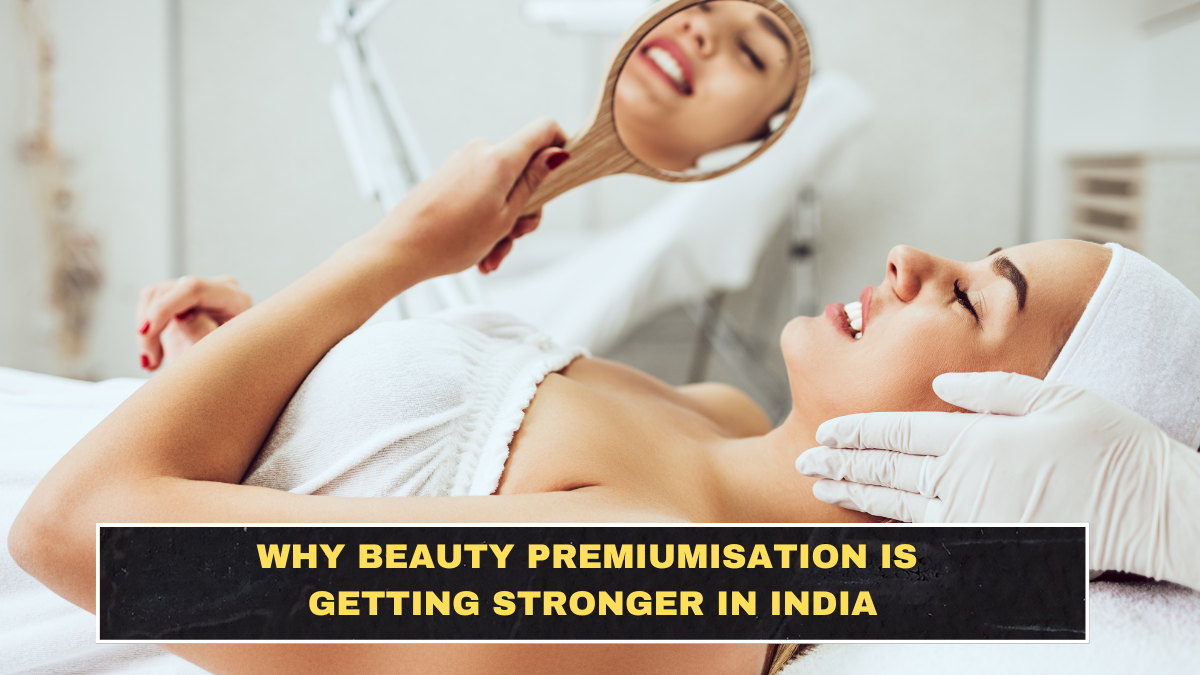
Beauty premiumisation in India is getting stronger because more consumers are no longer buying only on the basis of the lowest price. They are paying extra for better textures, stronger ingredients, better packaging, and brands that feel more effective or more aspirational. Euromonitor says premiumisation was one of the strongest trends in India’s beauty and personal care market in 2024, especially in skin care, fragrances, and colour cosmetics.
This does not mean India has suddenly become a luxury-only beauty market. That would be a stupid conclusion. The real shift is that more buyers are moving into premium and “masstige” ranges, where products feel upgraded but are still somewhat reachable. Economic Times reported in March 2026 that India’s beauty and personal care market was estimated at $27 billion in FY25 and is projected to reach $39 billion by FY30, with online beauty growing quickly through Gen Z shoppers, content commerce, and wider access.

What Is Actually Driving This Shift
A few forces are doing most of the work here:
- rising willingness to pay for visible results in skincare and beauty
- wider access to international and prestige brands online and offline
- stronger beauty discovery through influencers and content commerce
- younger buyers treating beauty as identity and self-care, not just utility
- growing demand for ingredient-led and science-led products
Euromonitor’s APAC consumer data showed 49% of Asia Pacific consumers were willing to pay 10% to 50% more for beauty products with scientific formulations. That matters because India’s beauty upgrade story is not only about status. It is also about perceived performance. Buyers increasingly want products that sound more targeted, more advanced, and more credible.
The Numbers Behind the Trend
| Indicator | Latest signal | Why it matters |
|---|---|---|
| India beauty and personal care market, FY25 | $27 billion | Shows the category is already large and still expanding fast |
| India beauty and personal care market, FY30 forecast | $39 billion | Confirms multi-year growth runway |
| India beauty trend in 2024 | Premiumisation was among the strongest trends | Shows trading up is not a fringe behavior |
| APAC consumers willing to pay 10%–50% more for scientific formulations | 49% | Supports ingredient-led premium buying behaviour |
| Nykaa beauty customer reach | 42 million cumulative customers | Shows scale of digital beauty access in India |
| Nykaa Q2 FY26 revenue growth | 25% YoY | Suggests continued momentum in beauty-led digital retail |
Why Skincare Is at the Center of Premiumisation
Skincare is the clearest example because buyers are more willing to believe in “results” there. A premium lipstick can feel indulgent, but a premium skincare product can be sold as effective, necessary, and part of a routine. That makes it easier for brands to push consumers upward. Euromonitor says premiumisation in India was especially visible in skin care, and Mintel’s India beauty research summaries also point to cleaner ingredients and more sophisticated skincare demand.
This is also why ingredient-led marketing keeps getting stronger. Buyers are responding to actives, formulations, and claims that sound more scientific. If a product looks like it offers more than basic moisturising or cleansing, consumers are often willing to spend more. That is not always rational, but it is absolutely happening.
Why Tier 2 and Tier 3 Demand Matters
A lot of people still think premium beauty growth in India is only a metro-city story. That is outdated thinking. Economic Times Retail reported in September 2025 that India’s beauty market is being supported not just by premiumisation but also by rising demand from Tier 2 and Tier 3 cities. That matters because a premium trend becomes far more powerful when it spreads beyond the biggest urban pockets.
Digital platforms are a huge reason for that. Nykaa says it has cumulatively served over 42 million customers, and its investor materials continue to position it around premium beauty consumers in India. Wider online access lowers the distance between aspiration and purchase.
What This Means for Buyers and Brands
For buyers, premiumisation means beauty shopping is becoming more layered. People are mixing mass products with one or two upgraded items they believe deliver better results. For brands, the opportunity is obvious, but so is the risk. McKinsey’s 2025 beauty outlook says value scrutiny is becoming more important globally, with 54% of executives identifying uncertain consumer appetite or restricted spending as a major risk. In plain words, brands can push premium products, but they still need to prove value.
Conclusion
Beauty premiumisation is getting stronger in India because consumers are becoming more selective, more informed, and more willing to pay for products that feel better, smarter, or more effective. The trend is strongest in skincare, fragrance, and colour cosmetics, and it is being amplified by online access, influencer-led discovery, and rising demand beyond metro cities.
The honest takeaway is simple: Indian beauty buyers are not blindly spending more. They are trading up where they believe value, identity, or performance improves. Brands that confuse hype with value will lose. Brands that make premium feel useful, not just expensive, will keep winning.
FAQs
What is beauty premiumisation in India?
Beauty premiumisation means consumers are shifting from basic low-cost products toward higher-value or more aspirational beauty products, especially in skincare, fragrances, and cosmetics.
Is premium beauty growing in India?
Yes. Multiple 2025–2026 reports point to strong growth in India’s overall beauty market, with premiumisation identified as a major trend and the full market projected to grow from $27 billion in FY25 to $39 billion by FY30.
Why are Indian consumers paying more for beauty products?
They are paying more for better ingredients, stronger product claims, improved experience, and aspirational brand value. Ingredient-led and scientific formulations are a major part of this shift.
Is this trend limited to metro cities?
No. Industry reporting shows Tier 2 and Tier 3 demand is also helping drive India’s beauty market upward, which makes the premiumisation trend broader than just big-city luxury buying.