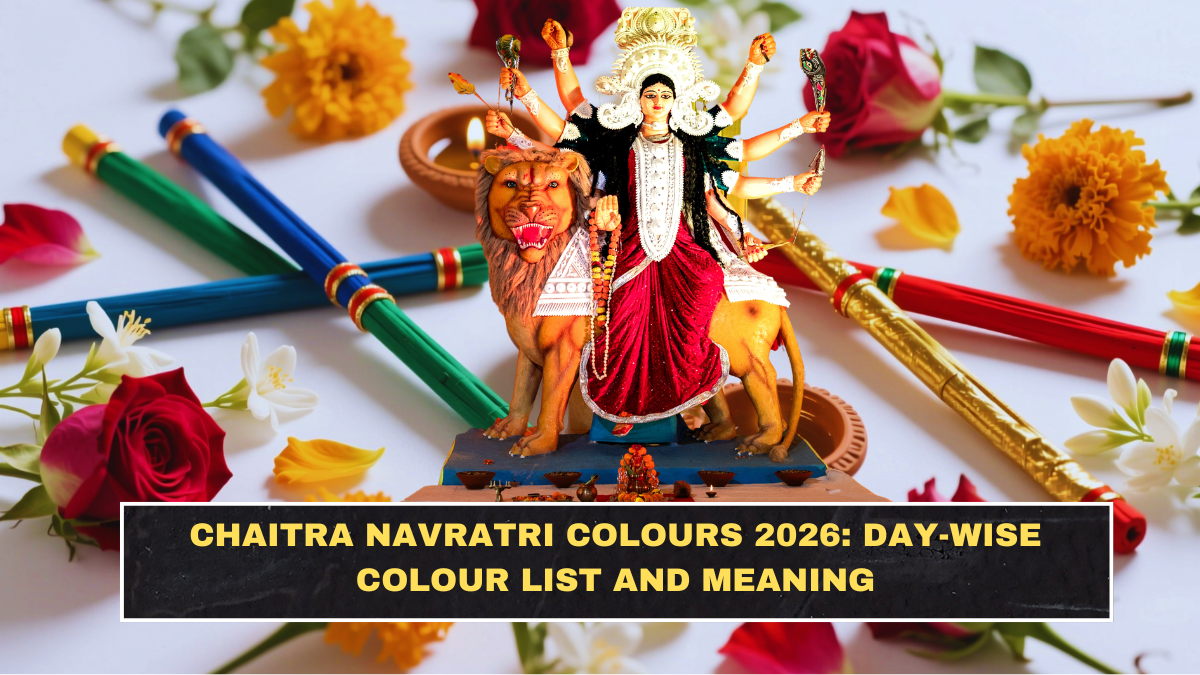
Chaitra Navratri colours trend every year because people actively follow day-wise rituals and colour traditions during the nine-day festival. In 2026, search interest has increased due to confirmed festival dates, auspicious timings, and the structured colour list associated with each day.
Unlike generic festival content, this topic is highly practical—people want exact dates, colours, and meanings to follow during the festival.
Chaitra Navratri 2026: Dates and Key Timings
Chaitra Navratri in 2026 begins on Thursday, March 19, 2026, and ends on Friday, March 27, 2026. The ninth day is observed as Ram Navami, marking the birth of Lord Rama.
According to Drik Panchang data:
-
Ghatasthapana Muhurat: 6:52 AM to 7:43 AM on March 19, 2026
This timing is considered auspicious for starting the Navratri rituals.
Day-Wise Navratri Colours 2026 (With Dates & Significance)
Here is the verified, data-based table with exact dates, goddess forms, and meanings:
| Day | Date (2026) | Tithi | Goddess | Colour | Significance |
|---|---|---|---|---|---|
| 1 | March 19 (Thu) | Pratipada | Shailputri | Yellow | Purity, peace, serenity |
| 2 | March 20 (Fri) | Dwitiya | Brahmacharini | Green | Passion, love, strength |
| 3 | March 21 (Sat) | Tritiya | Chandraghanta | Grey | Calmness, divine grace |
| 4 | March 22 (Sun) | Chaturthi | Kushmanda | Orange | Joy, knowledge, positivity |
| 5 | March 23 (Mon) | Panchami | Skandamata | White | Growth, fertility, harmony |
| 6 | March 24 (Tue) | Shashthi | Katyayani | Red | Balance, stability, maturity |
| 7 | March 25 (Wed) | Saptami | Kalaratri | Royal Blue | Energy, creativity, strength |
| 8 | March 26 (Thu) | Ashtami | Mahagauri | Pink | Individuality, beauty, renewal |
| 9 | March 27 (Fri) | Navami | Siddhidatri | Purple | Optimism, divine grace |
This is the actual structured dataset people are searching for—not random colour lists floating online.
What These Colours Represent
Each Navratri colour is linked to the energy of a specific form of Goddess Shakti. The symbolism is not decorative—it reflects spiritual meaning tied to each day’s पूजा (worship).
For example:
-
Yellow (Day 1) → Associated with new beginnings and purity
-
Red (Day 6) → Represents power and strength
-
White (Day 5) → Symbolizes peace and balance
These meanings are rooted in traditional interpretations followed across Hindu rituals.
Why People Follow Navratri Colours
Let’s be clear—this is not a mandatory religious rule. It is a widely followed cultural practice that has grown due to:
-
Temple traditions and rituals
-
Community celebrations (garba, पूजा, gatherings)
-
Social media participation (daily colour-based posts)
People follow it to stay aligned with the spiritual theme of each day—not because of any enforcement.
Practical Way to Follow Navratri Colours
If you’re planning to follow the colours, keep it realistic:
-
You don’t need a full outfit—small elements (dupatta, accessories) work
-
Exact shade matching is unnecessary
-
Consistency matters more than perfection
Most people overcomplicate this. The tradition is simple—follow the colour, not fashion pressure.
Key Festival Insight Most People Miss
Here’s the part people ignore:
Navratri is not about colours—it’s about daily worship of different forms of Shakti.
Colours are just a symbolic layer added for cultural expression. If you focus only on outfits and ignore the meaning, you’re missing the actual purpose of the festival.
Conclusion
Chaitra Navratri Colours 2026 are trending because people want a clear, date-wise, practical guide to follow during the festival.
The 2026 calendar is now confirmed, including Ghatasthapana timing and Ram Navami date, making this information highly relevant.
If you follow the colour system, do it with understanding—not blindly copying lists online. The meaning behind each day is what actually matters.
FAQs
When does Chaitra Navratri 2026 start and end?
It starts on March 19, 2026, and ends on March 27, 2026, with Ram Navami on the last day.
What is the Ghatasthapana Muhurat in 2026?
The auspicious time is between 6:52 AM and 7:43 AM on March 19, 2026.
Are Navratri colours fixed every year?
The sequence may vary slightly depending on sources, but widely accepted lists like this are followed by many devotees.
Is it necessary to wear Navratri colours?
No, it is a cultural practice and not a compulsory religious rule.
Click here to know more.