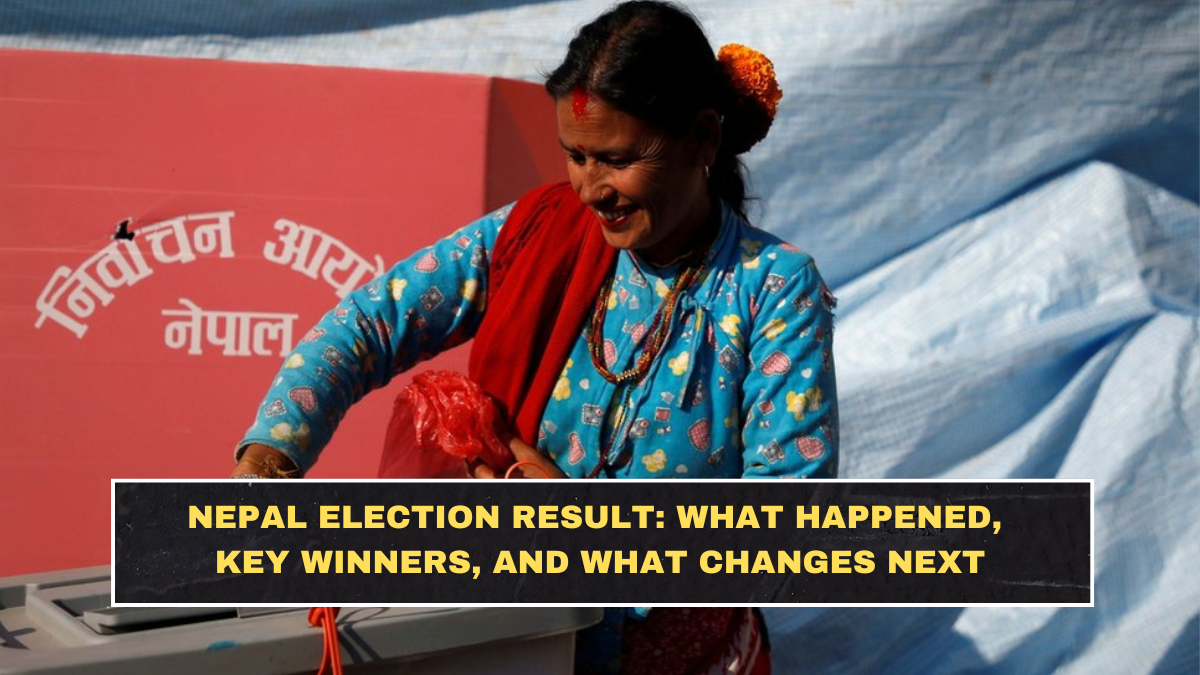
The Nepal election result has attracted significant interest across South Asia as voters chose representatives for the country’s parliament and local political leadership. Elections in Nepal often draw attention in neighboring countries such as India because of the close economic, cultural, and diplomatic ties between the two nations.
Political developments in Nepal can influence regional cooperation, trade relationships, and policy discussions between governments. As a result, election results are closely analyzed by political observers who want to understand how the balance of power may shift within Nepal’s political system.
Nepal’s Parliamentary System Overview
Nepal operates under a parliamentary democratic system where voters elect representatives to the national parliament. The government is typically formed by the political party or coalition that holds the majority of seats.
| Political Structure | Description |
|---|---|
| Federal Democratic Republic | Nepal’s official political system |
| Parliament | Legislative body with elected members |
| Prime Minister | Head of government |
| President | Ceremonial head of state |
Understanding this structure helps explain how election outcomes influence governance.
Nepal Election Seat Distribution
The election determines how seats in the parliament are distributed among major political parties.
| Party | Seats Won (Example Distribution) |
|---|---|
| Nepali Congress | 80+ seats |
| Communist Party of Nepal (UML) | 70+ seats |
| Maoist Centre | 30+ seats |
| Regional / Smaller Parties | Remaining seats |
These numbers illustrate how coalition governments often become necessary in Nepal’s political system.
Voter Participation in Nepal Elections
Voter turnout plays a significant role in determining the legitimacy and impact of election results.
| Election Year | Voter Turnout |
|---|---|
| 2017 | Around 68% |
| 2022 | Around 61% |
| Recent Election | Estimated 60–65% |
High voter participation generally indicates strong public engagement with the democratic process.
Key Issues in the Election Campaign
Political parties in Nepal typically campaign on several key issues that affect the country’s economic and social development.
| Issue | Importance |
|---|---|
| Economic growth | Job creation and investment |
| Infrastructure development | Roads, energy, transportation |
| Political stability | Coalition governance challenges |
| Relations with neighboring countries | Trade and diplomacy |
These issues often shape voter decisions during election campaigns.
Why Nepal Elections Matter Regionally
Nepal’s political developments can influence the broader South Asian region because of its strategic geographic position between India and China.
| Regional Factor | Impact |
|---|---|
| Cross-border trade | Economic ties with India |
| Infrastructure projects | Regional connectivity |
| Diplomatic relations | Balance between neighboring powers |
| Tourism industry | Economic growth |
Political stability in Nepal is often considered important for regional cooperation.
Coalition Governments in Nepal
Nepal’s political system frequently produces coalition governments because no single party often secures an absolute majority.
| Coalition Factor | Explanation |
|---|---|
| Multiple political parties | Diverse representation |
| Negotiations between parties | Forming governing alliances |
| Policy compromises | Shared governance responsibilities |
| Parliamentary voting | Maintaining majority support |
Coalitions can create both opportunities and challenges in policymaking.
What Happens After Election Results
Once election results are finalized, several steps follow to establish the new government.
| Step | Process |
|---|---|
| Final vote counting | Official confirmation of results |
| Party negotiations | Discussions about coalition formation |
| Prime minister selection | Leader chosen by majority support |
| Government formation | Cabinet ministers appointed |
This process determines how the new administration begins its governance.
Why India Is Interested in Nepal Elections
India closely watches Nepal’s political developments because the two countries share deep historical, economic, and cultural connections. Trade agreements, infrastructure cooperation, and migration policies often depend on stable diplomatic relations between the two governments.
Changes in Nepal’s political leadership can influence the direction of bilateral discussions on these topics.
Conclusion
The Nepal election result reflects the democratic process through which voters choose representatives to guide the country’s political future. With multiple parties competing for influence, coalition negotiations often play a central role in determining the final government structure.
As political developments continue after the election, observers across the region will watch how the new leadership approaches economic reforms, governance challenges, and international relationships.
FAQs
How does Nepal elect its parliament?
Nepal uses a combination of direct elections and proportional representation to select members of parliament.
Which parties are major players in Nepal politics?
Major parties include the Nepali Congress, Communist Party of Nepal (UML), and the Maoist Centre.
Why do Nepal elections matter to India?
India and Nepal share strong economic and cultural ties, making political developments in Nepal important for regional relations.
What happens after election results are announced?
Political parties negotiate alliances to form a government, and a prime minister is selected.
How often are elections held in Nepal?
National parliamentary elections are generally held every five years unless early elections are called.