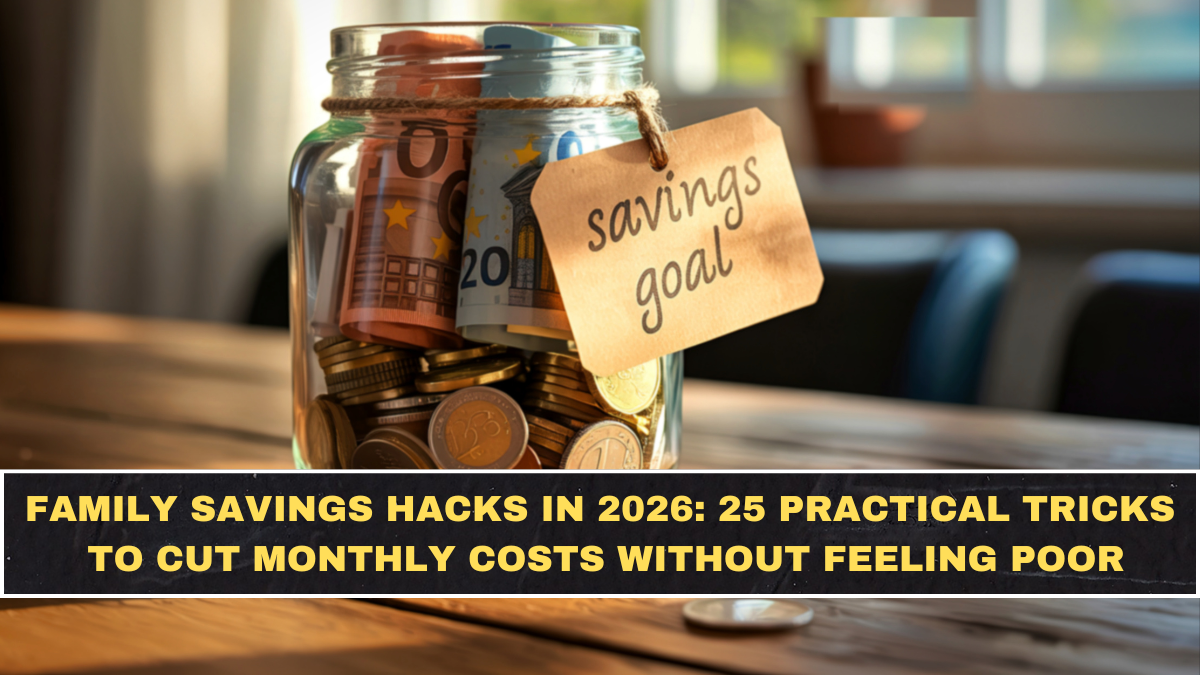
Managing household expenses has become more challenging as living costs continue to rise. A practical savings hacks for families approach helps households reduce monthly expenses without sacrificing comfort or quality of life. Smart financial habits, better spending awareness, and strategic cost-cutting can significantly improve long-term financial stability.
Many families try to save money through strict budgeting or lifestyle cuts, but extreme restrictions rarely work long term. Sustainable savings come from eliminating waste, negotiating expenses, and optimizing everyday spending. Small improvements across multiple areas create meaningful financial impact.
A structured savings strategy helps families control expenses while maintaining a comfortable lifestyle.

Why Family Savings Planning Matters in 2026
Household expenses now include digital services, education costs, healthcare expenses, and rising utility bills. Without careful planning, these costs reduce savings potential. The savings hacks for families strategy helps households manage financial pressure effectively.
This approach helps families:
-
Reduce monthly financial stress
-
Increase household savings
-
Improve long-term financial security
-
Control unnecessary spending
-
Build stronger financial discipline
Systematic cost management improves financial stability.
Audit Monthly Household Expenses First
Effective savings begin with understanding where money is being spent.
Expense audit includes:
-
Listing all monthly expenses
-
Identifying recurring payments
-
Checking bill increases
-
Reviewing discretionary spending
Expense awareness reveals saving opportunities.
Smart Grocery Saving Strategies
Food expenses form a major portion of household spending. Efficient grocery planning can reduce costs significantly.
Practical grocery tactics include:
-
Planning weekly meal schedules
-
Buying in bulk for essential items
-
Comparing prices across stores
-
Avoiding impulse purchases
-
Using seasonal produce
Structured shopping reduces waste and spending.
Negotiate Utility Bills and Service Charges
Many households pay higher bills simply because they never negotiate service costs.
Negotiation opportunities include:
-
Broadband and mobile plans
-
Electricity tariffs
-
Maintenance charges
-
Service subscriptions
Requesting better plans or discounts often reduces expenses.
Reduce Subscription and Digital Service Costs
Digital subscriptions create silent monthly expenses that often go unnoticed.
Savings actions include:
-
Canceling unused services
-
Sharing family plans where allowed
-
Reviewing automatic renewals
-
Limiting entertainment subscriptions
Subscription cleanup improves monthly cash flow.
Optimize Electricity and Energy Usage
Energy efficiency directly reduces household expenses.
Energy-saving practices include:
-
Using energy-efficient appliances
-
Switching off unused devices
-
Optimizing air conditioning usage
-
Using natural lighting
Small behavioral changes reduce electricity costs.
Plan Major Purchases Strategically
Unplanned purchases increase financial pressure and reduce savings.
Smart purchase planning includes:
-
Comparing prices before buying
-
Waiting before major purchases
-
Using discounts or offers wisely
-
Avoiding impulse buying
Planned spending improves financial control.
Use Budgeting System for Household Expenses
A structured budget helps allocate money efficiently.
Budgeting benefits include:
-
Clear spending limits
-
Controlled discretionary expenses
-
Better savings allocation
-
Improved financial discipline
Budgeting creates financial structure.
Reduce Dining and Food Delivery Expenses
Frequent dining out increases household spending significantly.
Cost-saving actions include:
-
Limiting restaurant visits
-
Preparing meals at home
-
Planning special dining occasions
-
Tracking food delivery spending
Controlled dining improves savings.
Lower Transportation Costs
Transportation expenses can be optimized through better planning.
Savings strategies include:
-
Using public transport when practical
-
Carpooling
-
Planning travel routes efficiently
-
Maintaining vehicles regularly
Efficient transportation reduces monthly expenses.
Review Insurance and Financial Commitments
Insurance and financial products should be reviewed regularly to avoid unnecessary costs.
Review areas include:
-
Insurance premium comparison
-
Removing unnecessary riders
-
Reviewing loan interest rates
-
Checking renewal costs
Financial optimization increases savings.
Build Family Saving Habits
Savings improve when all family members participate in financial discipline.
Family habits include:
-
Discussing financial goals
-
Encouraging responsible spending
-
Tracking household expenses together
-
Teaching children financial awareness
Shared responsibility improves results.
Use Automation to Improve Savings
Automation helps families save consistently without manual effort.
Automation methods include:
-
Automatic savings transfers
-
Scheduled bill payments
-
Automatic investment contributions
Automation improves financial consistency.
Common Mistakes Families Make While Saving
Incorrect practices reduce effectiveness of cost-cutting efforts.
Common mistakes include:
-
Extreme lifestyle cuts
-
Ignoring small recurring expenses
-
Lack of budget planning
-
Inconsistent saving habits
-
Poor financial tracking
Balanced strategies produce sustainable savings.
How Small Changes Create Big Savings
Minor adjustments across multiple expense areas create meaningful long-term financial benefits.
Examples include:
-
Reduced grocery waste
-
Lower utility usage
-
Eliminated subscriptions
-
Optimized spending habits
Small changes compound into large financial improvements.
Long-Term Benefits of Household Savings Discipline
Consistent savings improve financial security and future planning.
Key benefits include:
-
Emergency preparedness
-
Reduced financial stress
-
Better wealth creation
-
Stronger financial independence
Savings discipline strengthens family finances.
Conclusion
A structured savings hacks for families approach helps households reduce expenses, increase savings, and improve financial stability without sacrificing lifestyle quality. Expense audits, smarter spending habits, and consistent financial discipline create sustainable savings.
By eliminating financial waste, negotiating costs, and adopting efficient household habits, families can strengthen long-term financial security and build a stable financial future.
FAQs
How can families reduce monthly expenses easily?
Families can audit expenses, reduce subscriptions, plan groceries, and manage utility usage efficiently.
What is the biggest household expense to optimize?
Food, utilities, subscriptions, and discretionary spending offer major saving opportunities.
Do small savings habits really make a difference?
Yes. Small cost reductions across multiple areas create significant long-term savings.
How can families build saving discipline?
Budget planning, financial discussions, and automated savings improve discipline.
Is extreme budgeting necessary for saving money?
No. Sustainable savings come from efficient spending and eliminating financial waste.