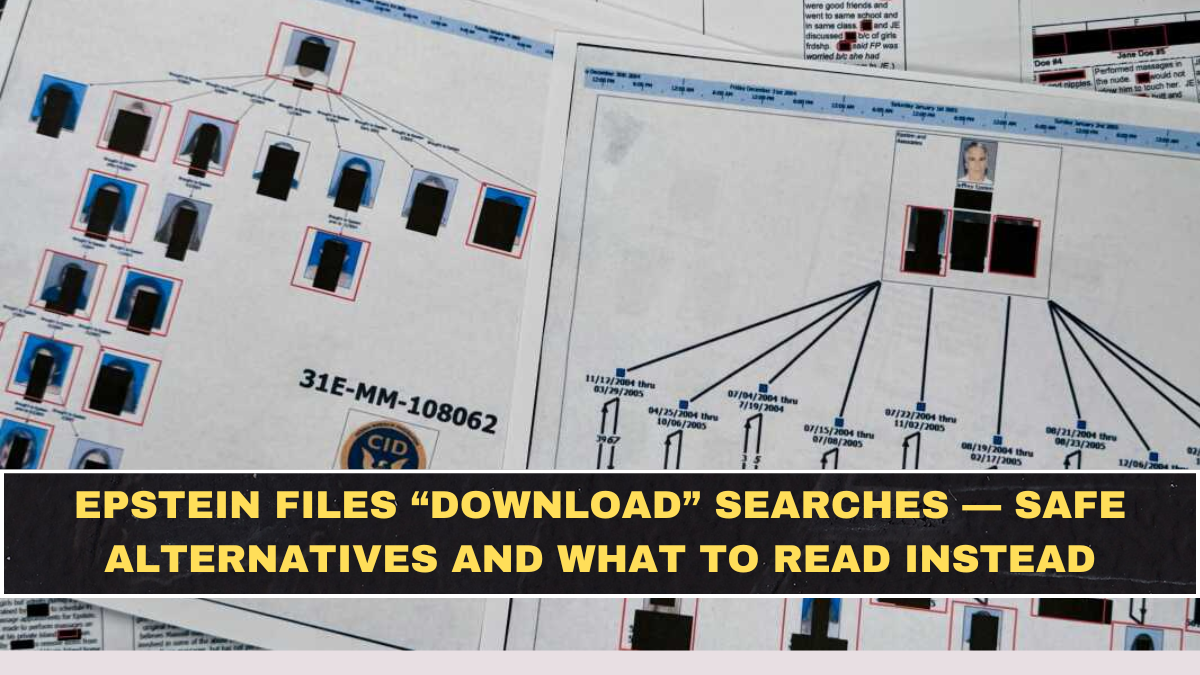
Searches for “Epstein files download” surge whenever the topic trends, and that spike is rarely driven by new official releases. Most people searching are not trying to sensationalize; they are trying to understand what exists, where to find reliable material, and how to avoid being misled or exposed to malware. Unfortunately, this search intent is also heavily exploited by bad actors.
This guide explains what is actually available to the public, what claims are misleading or outright fake, and how to read legal documents safely and responsibly. The aim is clarity and protection, not speculation or amplification of rumors.
Why “Epstein Files Download” Searches Spike
These searches usually rise after viral posts suggest that new documents have been released or that a “full file” is now available. In reality, most spikes are triggered by recycled claims, edited screenshots, or misinterpretation of limited-access developments. The phrase “download” implies a single package, which does not reflect how legal records work.
The gap between public curiosity and legal reality creates confusion. People assume that if something is trending, there must be a downloadable archive. That assumption is what misinformation relies on.
What Is Legitimately Available to the Public
There is no official, complete, downloadable bundle called the Epstein files. What exists are individual legal records that became public through formal court processes over time. These include filings, transcripts, and exhibits released in specific cases.
Legitimate access means viewing documents in their original legal context, not downloading compiled lists or unofficial PDFs. Public records are typically released as individual documents, not curated collections.
What Is Fake or Misleading Online
Many websites and posts claim to offer a “full download,” “complete list,” or “unredacted archive.” These claims are misleading at best and dangerous at worst. Some links lead to edited PDFs that mix genuine text with fabricated additions. Others redirect users to unrelated content or malware.
A major red flag is any claim that promises definitive answers or comprehensive exposure in a single file. Legal records do not work that way, and neither do legitimate disclosures.
Why Compiled Lists Are Especially Unreliable
Compiled lists are often presented as summaries or shortcuts, but they are usually built by merging unrelated mentions from different documents. Names appear without context, purpose, or legal meaning, creating the illusion of confirmation where none exists.
These compilations remove timelines, procedural background, and the reason a name appears. Treating them as official documents is one of the most common ways misinformation spreads.
How to Safely Read Epstein-Related Documents
Safe reading starts with understanding the document type. Is it a court filing, a deposition transcript, or a procedural order? Each serves a different purpose and carries different weight. Reading without knowing this leads to false conclusions.
It is also important to read full documents rather than excerpts. Context often explains why a name or event is mentioned. Skipping that context creates misunderstanding and unnecessary harm.
What “Unredacted” Does and Does Not Mean
The word “unredacted” is frequently misused online. In legal settings, it often refers to restricted access granted to authorized parties, not public release. Even when documents are less redacted, privacy protections still apply.
Claims that everything is now unredacted and downloadable are inaccurate. Legal boundaries remain, particularly around victim protection and third-party privacy.
Legal and Ethical Risks of Sharing Fake Files
Sharing fake or edited documents can have real consequences. It can spread defamation, retraumatize victims, and expose sharers to legal risk. Even unintentional sharing contributes to harm when misinformation travels unchecked.
Ethically, responsible reading means resisting the urge to forward sensational material without verification. Curiosity does not justify spreading falsehoods.
Why There Will Never Be a “One-Click Download”
The idea of a single downloadable archive conflicts with how legal transparency works. Courts release documents case by case, subject to review and redaction rules. There is no mechanism for bundling everything into one public file.
Expecting a one-click download sets people up to be misled. Understanding this limitation helps reset expectations and reduces vulnerability to hoaxes.
How to Tell If a Claim Is Likely False
If a post promises total exposure, instant clarity, or a definitive list, it is likely false. If it relies on screenshots without explanation, it is unreliable. If it urges urgency or secrecy, it is manipulative.
Legitimate legal material is boring by design. It uses formal language, clear structure, and cautious phrasing. Anything that reads like a dramatic reveal deserves skepticism.
Why Responsible Reading Matters in 2026
In 2026, misinformation spreads faster than ever, and high-interest topics are prime targets. Reading responsibly is not about protecting institutions; it is about protecting truth, fairness, and people who are not part of online spectacle.
The Epstein files will continue to be discussed. How they are discussed determines whether the conversation informs or harms.
Conclusion: Curiosity Needs Guardrails
Searching for information is reasonable. Falling for fake downloads is not inevitable if expectations are grounded. There is no hidden archive waiting to be unlocked, and claims suggesting otherwise are designed to mislead.
The safest approach is slow, contextual reading rather than chasing shortcuts. When it comes to sensitive legal material, how you read matters as much as what you read.
FAQs
Is there an official Epstein files download available?
No. There is no single official downloadable archive of Epstein-related files.
Are websites offering “full Epstein files” trustworthy?
No. Such claims are misleading and often unsafe.
What kind of documents are publicly available?
Individual legal records released through formal court processes.
Why do fake downloads spread so easily?
They exploit curiosity and misunderstanding about how legal records work.
Is it illegal to share edited or fake documents?
Sharing false material can carry legal and ethical risks.
How should I approach Epstein-related documents safely?
Read full documents, understand context, and avoid sensational shortcuts.