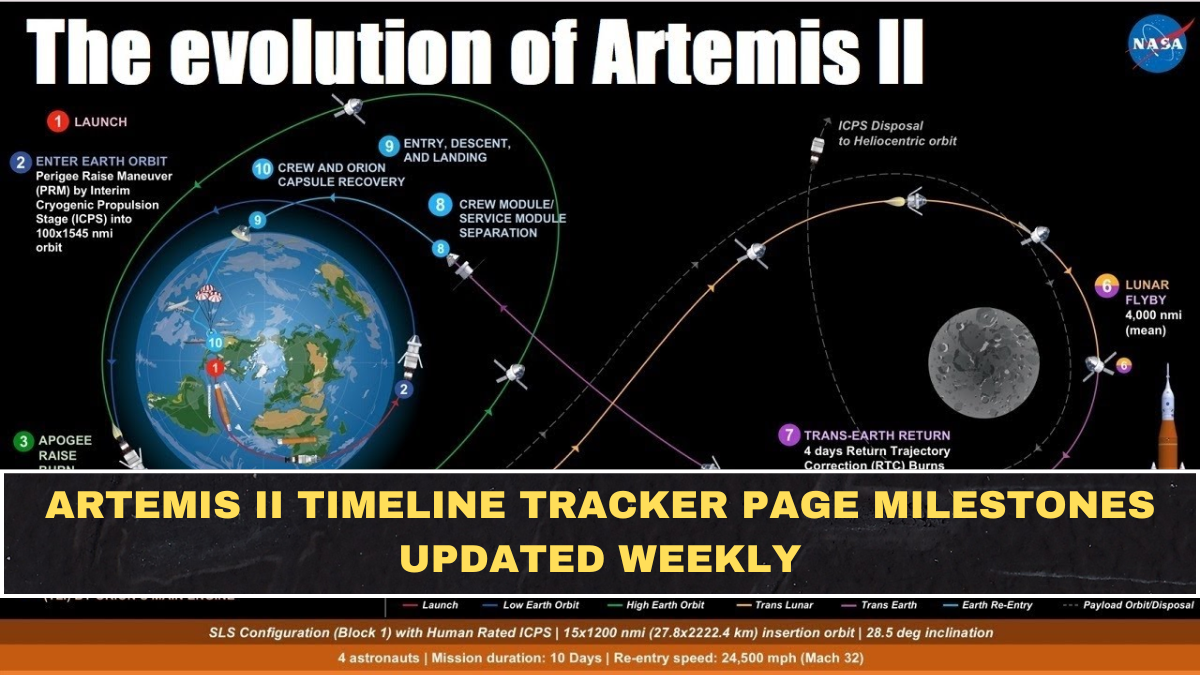
Artemis II is not a single launch date you circle on a calendar and forget. It is a long, methodical sequence of milestones where each completed step quietly determines whether the next one can even happen. That is why many people feel confused when they hear phrases like “no earlier than” or see timelines shift without dramatic announcements. The mission advances through readiness, not hype.
This tracker-style explainer is designed to give clarity. Instead of guessing or reacting to rumors, it lays out what Artemis II requires before launch, which milestones are already locked in, and which stages still decide whether the mission moves forward in 2026. Understanding the process makes timeline changes easier to interpret and far less frustrating.
What Artemis II Is Trying to Prove Before Launch
Artemis II is the first crewed mission of NASA’s modern lunar program, and that alone raises the safety bar significantly. Unlike uncrewed test flights, every system must be validated not just to work, but to work safely with humans onboard. This includes propulsion, life support, navigation, and emergency systems.
The mission’s purpose is verification, not speed. Each milestone exists to eliminate unknowns that could put astronauts at risk. Until these unknowns are resolved, the launch date remains flexible by design.
Major Hardware Milestones That Must Be Completed
The core hardware for Artemis II includes the Space Launch System rocket and the Orion spacecraft. Before launch, both must pass integrated testing that confirms they function as a single system rather than separate components. This stage is critical because failures often emerge only when systems interact.
Thermal protection, guidance software, and structural integrity checks are part of this phase. Completion of these tests is non-negotiable, and delays here ripple through the entire timeline.
Crew Readiness and Training Phases
Astronaut training for Artemis II runs in parallel with hardware testing, but it is equally decisive. The crew must demonstrate readiness across launch operations, deep-space navigation, and contingency scenarios that cannot be improvised in flight.
Training simulations increase in realism as the mission approaches. Any unresolved issue discovered during these simulations can trigger additional review cycles, which is why training milestones influence launch timing as much as engineering ones.
Wet Dress Rehearsal and Why It Matters
One of the most watched milestones is the wet dress rehearsal. This is when the rocket is fully fueled and run through countdown procedures without launching. It is designed to surface last-minute issues under real conditions.
Historically, this step often reveals problems that do not appear in earlier tests. A successful wet dress rehearsal significantly increases confidence, while issues found here almost always result in schedule adjustments.
What “No Earlier Than” Really Signals
When NASA uses the phrase “no earlier than,” it is not a promise or a delay announcement. It is a boundary that reflects current readiness while acknowledging remaining unknowns. The date can move forward only if all milestones clear cleanly.
This language is intentional. It protects safety margins and prevents artificial deadlines from driving risky decisions. In Artemis II’s case, it signals discipline rather than uncertainty.
Why Timeline Shifts Are Normal, Not Alarming
Timeline shifts in spaceflight are not signs of failure. They are signs of active problem-solving. Artemis II involves systems that operate under extreme conditions, and discovering issues on the ground is a success, not a setback.
Most adjustments happen quietly because they are technical, not political. Understanding this helps separate genuine concern from routine schedule refinement.
Key Milestones Still Ahead
Several critical steps remain before launch readiness is declared. These include final integrated system reviews, completion of crew emergency simulations, and confirmation that all safety criteria are met without unresolved waivers.
Each milestone acts as a gate. Until all gates open, the mission does not proceed, regardless of calendar pressure.
How Often the Timeline Is Reassessed
The Artemis II timeline is reviewed continuously, not monthly or quarterly. Engineers and mission planners reassess readiness as data comes in, which is why updates can feel irregular to the public.
This rolling evaluation ensures that decisions reflect real conditions rather than outdated assumptions. It is also why sudden changes often follow long periods of silence.
What to Watch for That Actually Signals Progress
The most meaningful signals are not date announcements but completed tests. Successful rehearsals, cleared reviews, and closed technical issues indicate forward momentum. These events matter more than headline-friendly dates.
When multiple milestones close without new findings, confidence increases rapidly. That is when launch windows become more reliable.
Why Artemis II’s Timing Matters Beyond This Mission
Artemis II sets the pace for all subsequent lunar missions. Its success determines how quickly NASA can move from testing to sustained exploration. A rushed mission risks setbacks that could slow the entire program.
In that sense, patience now protects momentum later. The timeline exists to serve the mission, not the other way around.
Conclusion: Follow the Milestones, Not the Noise
Artemis II is best understood as a checklist, not a countdown. Each completed milestone reduces uncertainty and brings the mission closer to launch readiness. Dates will shift, but progress is measured in resolved risks, not calendar days.
By tracking milestones instead of rumors, followers can stay informed without frustration. Artemis II will launch when it is ready, and every step before that matters.
FAQs
Is Artemis II definitely launching in 2026?
It is planned for 2026, but final timing depends on milestone completion.
What does “no earlier than” mean for launch dates?
It indicates the earliest possible window, not a fixed launch commitment.
Why do space missions face timeline changes?
Because safety-critical testing often reveals issues that must be resolved before flight.
What is the wet dress rehearsal?
A full countdown and fueling test without launch to validate systems.
Are delays a bad sign for Artemis II?
No. They usually indicate careful testing rather than failure.
What’s the best way to track real progress?
Follow confirmed milestone completions, not speculative launch dates.