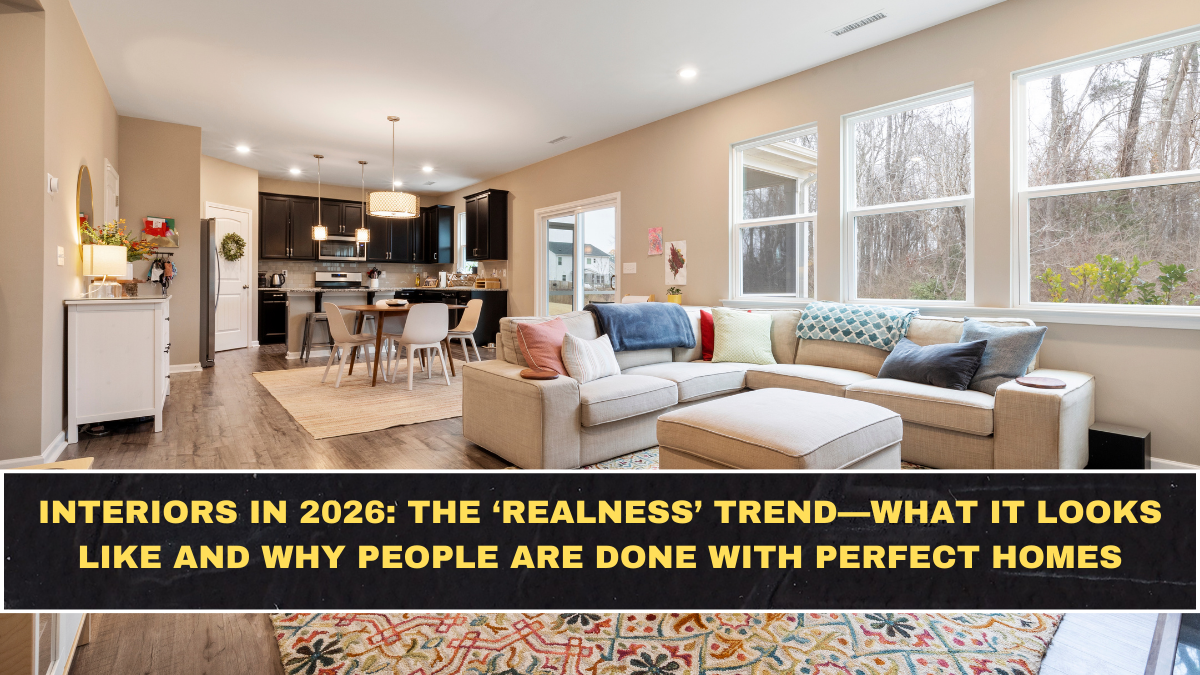
In 2026, interior design is undergoing a quiet but meaningful reset. People are no longer chasing homes that look flawless, symmetrical, or endlessly curated for photos. Instead, they are gravitating toward spaces that feel lived-in, honest, and adaptable to real daily routines. This shift, often described as the “realness” trend, reflects fatigue with perfection and a growing desire for comfort over performance.
The realness trend is not anti-design or anti-aesthetic. It is a rejection of rigidity. Homes are being designed to support actual life, including mess, movement, aging materials, and changing needs. In 2026, a home’s value is judged less by how it photographs and more by how it feels at the end of a long day.
Why People Are Tired of Perfect Homes
Perfect interiors demand constant maintenance. White sofas, pristine surfaces, and showroom layouts create anxiety rather than comfort. People feel pressure to preserve appearances instead of enjoying their space.
Social media amplified this exhaustion. Homes became stages instead of shelters. In 2026, many homeowners consciously step away from visual perfection to reclaim ease and authenticity.
The desire for realness grows directly out of burnout.
What “Realness” Actually Means in Interior Design
Realness does not mean messy or careless. It means accepting wear, texture, and irregularity as part of beauty.
Scratches, patina, and handmade imperfections signal use and history. These elements make spaces feel grounded rather than frozen in time.
In 2026, interiors tell stories instead of hiding them.
Materials That Define the Realness Trend
Natural and forgiving materials dominate. Wood with visible grain, stone with variation, and fabrics that soften over time are preferred.
Synthetic perfection feels cold and disposable. People choose materials that age rather than degrade.
This shift also aligns with sustainability, but comfort is the primary driver.
Color Palettes Move Away From Sterility
Ultra-neutral palettes are giving way to warmer, earthier tones. Colors that hide wear and create emotional warmth feel safer and more human.
Muted greens, clay tones, soft browns, and imperfect whites replace stark contrast.
In 2026, color supports mood rather than trends.
Furniture That Prioritizes Use Over Display
Furniture is selected for comfort and adaptability. Modular seating, movable tables, and mixed styles replace fixed “statement” pieces.
Homes evolve instead of staying locked in one layout. Flexibility matters more than symmetry.
Realness values function without sacrificing character.
Why Imperfect Layouts Are Being Embraced
Homes are no longer arranged for visual balance alone. Corners, overlaps, and unconventional spacing reflect real use patterns.
People design around how they move, work, and rest rather than how rooms look in photos.
In 2026, flow replaces formality.
The Role of Personal Objects and Memory
Personal items return to visible spaces. Books, art, souvenirs, and everyday objects are no longer hidden away.
These elements ground spaces emotionally. They make homes feel owned rather than styled.
Realness thrives on personal narrative.
Lighting Shifts From Drama to Comfort
Harsh, dramatic lighting is replaced by layered, softer illumination. Warm light supports relaxation rather than spectacle.
Lighting becomes functional and emotional, not theatrical.
In 2026, lighting is designed for evenings, not photoshoots.
How This Trend Changes Renovation Choices
Renovations focus on longevity instead of instant impact. People invest in durable finishes and repairable materials.
Trends are filtered through practicality. If it cannot age well, it is avoided.
Realness values long-term satisfaction over novelty.
Why “Real” Homes Photograph Poorly but Feel Better
Real homes are less optimized for images. They include shadows, variation, and clutter.
Yet they feel better to live in. Comfort outweighs online validation.
In 2026, many accept that not everything needs to be shareable.
How Designers Are Adapting to the Shift
Designers move from directors to collaborators. They listen more and prescribe less.
Clients want spaces that reflect life stages, not ideals.
Design becomes service-oriented rather than performative.
Conclusion: Realness Is About Permission, Not Style
The realness trend in interiors is not about rejecting beauty. It is about redefining it. In 2026, people give themselves permission to live fully in their homes without constantly correcting or curating them.
A real home supports rest, creativity, and imperfection. It adapts as life changes and carries visible traces of use. This shift signals a deeper cultural move away from performance toward presence. Homes are no longer designed to impress strangers, but to serve the people who live inside them.
FAQs
What is the realness trend in interior design?
It focuses on lived-in, comfortable spaces that embrace imperfection and use.
Does realness mean messy homes?
No, it means functional, honest spaces rather than staged perfection.
Which materials fit the realness trend best?
Natural materials that age well, like wood, stone, and textured fabrics.
Are neutral colors going out of style?
They are evolving into warmer, more forgiving tones.
Is this trend anti-luxury?
No, it redefines luxury as comfort, longevity, and ease.
Will realness remain relevant beyond 2026?
Yes, because it reflects long-term lifestyle and emotional shifts.