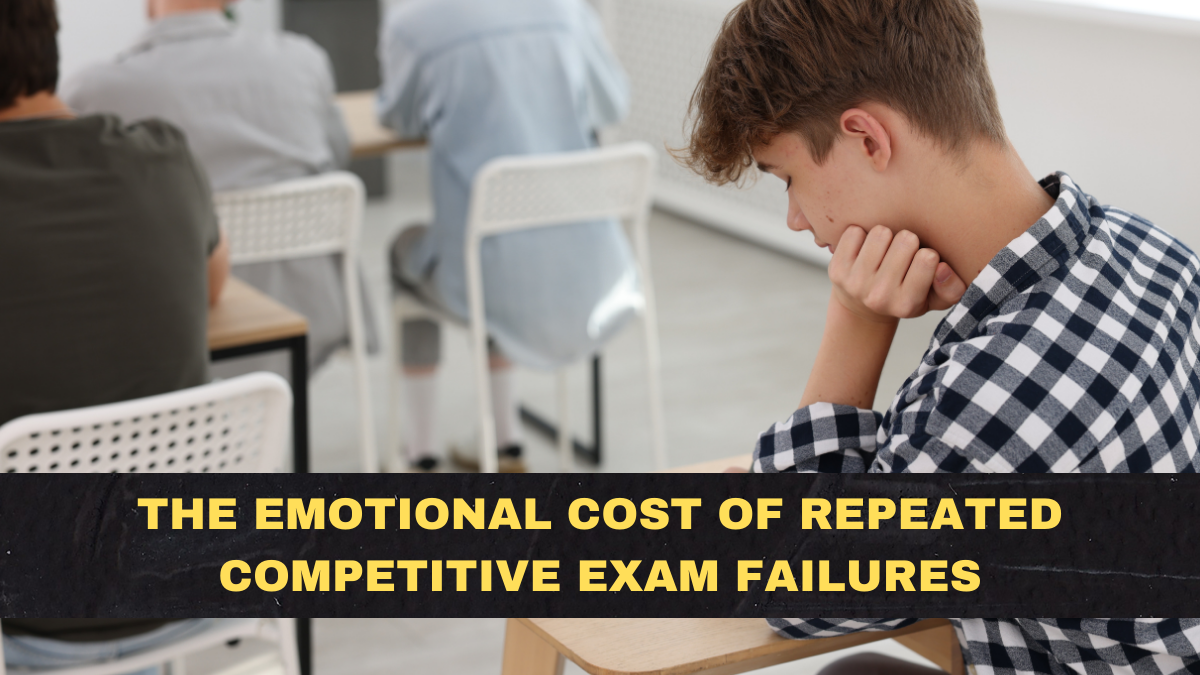
Competitive exams in India have always been emotionally demanding, but in 2026 the psychological cost of repeated failure has become impossible to ignore. For many aspirants, these exams are not just tests of knowledge; they are symbols of validation, stability, and social respect. When attempts end in failure again and again, the impact goes far beyond academic disappointment.
What makes this struggle particularly heavy is how quietly it unfolds. Students continue preparing, often for years, while absorbing pressure from family, society, and their own expectations. The emotional damage accumulates slowly, creating a cycle of hope, failure, self-doubt, and exhaustion that few openly talk about.
Why Competitive Exam Failure Hurts So Deeply
Competitive exams are tied to identity and worth in India. Success is celebrated publicly, while failure is often treated as personal inadequacy.
Students internalize results as judgments on intelligence and capability. This makes failure feel humiliating rather than situational.
In 2026, exam outcomes carry emotional weight far beyond marks.
The Cycle of Hope and Disappointment
Each attempt begins with renewed optimism. Students convince themselves that this time will be different.
When results disappoint, the emotional crash is intense. Confidence drops sharply, but preparation resumes out of necessity.
This repetitive cycle drains mental resilience over time.
Social Pressure Intensifies the Emotional Burden
Family expectations, peer comparison, and societal narratives magnify failure.
Questions from relatives and friends reopen wounds repeatedly. Silence becomes a defense mechanism.
In 2026, social pressure often hurts more than the exam itself.
Why Students Keep Attempting Despite Burnout
Sunk-cost thinking plays a major role. Years invested feel impossible to abandon.
Fear of regret keeps students trapped, even when motivation fades.
Many continue not because they want to, but because they feel they have no alternative.
Loss of Self-Worth After Repeated Failures
Repeated failure slowly reshapes self-image. Students begin to doubt their intelligence and potential.
Achievements outside exams feel meaningless. Identity narrows around one outcome.
This erosion of self-worth is one of the most damaging consequences.
How Exam Failure Affects Mental Health
Anxiety, depression, sleep issues, and emotional numbness are common among long-term aspirants.
Many suppress emotions to keep going, delaying support.
In 2026, competitive exam failure is a significant mental health risk.
Why Coaching Culture Worsens the Pain
Coaching environments emphasize rank and comparison relentlessly.
Success stories are highlighted, while struggles remain invisible. This creates distorted expectations.
Students blame themselves when results fall short.
The Fear of Starting Over in Another Path
Switching careers feels like admitting defeat. Students fear judgment and wasted years.
This fear keeps them locked into repeated attempts even when prospects dim.
In 2026, fear of transition traps many aspirants emotionally.
How Failure Impacts Long-Term Career Confidence
Even when students eventually move on, the emotional scars linger.
Fear of failure affects interviews, job performance, and risk-taking.
Exam failure shapes confidence long after preparation ends.
Why Quitting Feels Harder Than Continuing
Continuing feels familiar, even if painful. Quitting demands redefining identity.
Students cling to preparation because it provides structure and purpose.
Breaking away requires emotional courage, not just logic.
What Helps Break the Failure Cycle
Reframing failure as redirection rather than defeat helps restore perspective.
Exploring parallel paths reduces emotional dependence on one outcome.
Support systems and honest conversations make recovery possible.
Conclusion: Exam Failure Is an Experience, Not a Verdict
Repeated competitive exam failure hurts because it becomes personal, public, and prolonged.
In 2026, acknowledging the emotional cost is essential for healthier decisions.
Failure does not define ability or future success. Recognizing when to pivot, heal, and move forward is a strength, not a weakness.
FAQs
Why do competitive exam failures affect mental health so strongly?
Because exams are tied to identity, social respect, and long-term security.
Is it normal to feel depressed after repeated failures?
Yes, prolonged preparation and disappointment often lead to emotional exhaustion.
Why do students keep attempting exams despite burnout?
Sunk-cost thinking, fear of regret, and lack of alternatives trap many aspirants.
Does coaching culture increase exam pressure?
Yes, constant comparison and rank obsession intensify emotional stress.
Can exam failure affect future career confidence?
Yes, repeated failure can reduce self-belief even beyond exams.
What is the healthiest way to respond to repeated failure?
Reframing goals, exploring alternatives, and seeking emotional support.