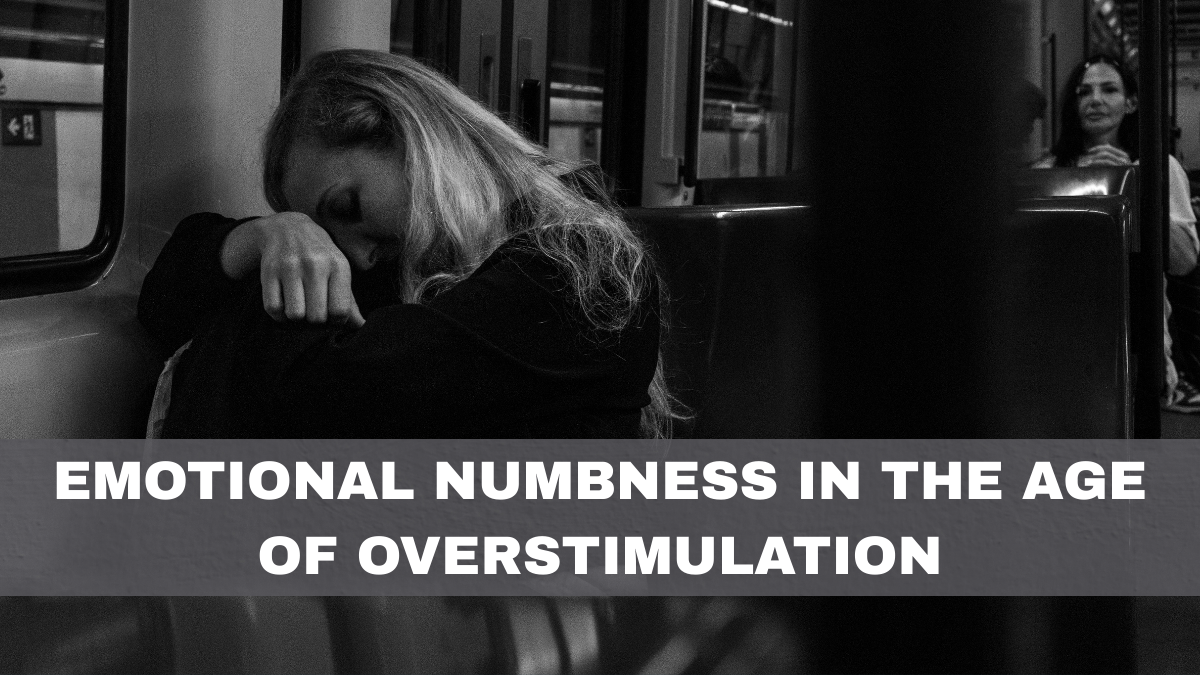
Many people aren’t feeling deeply sad—or deeply happy—anymore. Instead, they feel flat. Life continues, responsibilities are met, but emotions feel muted. This experience is becoming increasingly common and is best described as emotional numbness. It’s not depression in the traditional sense. It’s the quiet result of living in a world of constant stimulation.
When the brain is exposed to nonstop input—notifications, content, noise, pressure—it adapts by dampening emotional response. Overstimulation effects don’t create chaos. They create dullness.
What Emotional Numbness Actually Is
Emotional numbness is reduced emotional responsiveness.
It shows up as:
• Feeling detached
• Limited emotional highs or lows
• Difficulty feeling excitement or sadness
• Indifference toward events that once mattered
This is the nervous system protecting itself from overload.
Why Overstimulation Leads to Numbness
The brain regulates intensity.
When stimulation is constant:
• Emotional spikes become exhausting
• The brain lowers sensitivity
• Emotional range compresses
Overstimulation effects flatten experience to preserve energy.
The Role of Constant Input
Modern environments rarely allow emotional rest.
Input comes from:
• Screens
• News cycles
• Social comparison
• Background media
Without recovery time, emotional systems disengage.
Why Numbness Feels Safer Than Feeling
Strong emotions require energy.
Numbness:
• Reduces vulnerability
• Lowers emotional effort
• Prevents overwhelm
It’s a survival response—not a failure.
How Dopamine Overload Affects Emotion
Dopamine-heavy stimulation distorts reward systems.
It causes:
• Blunted pleasure response
• Reduced anticipation
• Emotional fatigue
When reward pathways are overstimulated, joy feels harder to access.
The Difference Between Calm and Numb
Calm is regulated presence. Numbness is withdrawal.
Calm includes:
• Awareness
• Engagement
Numbness includes:
• Detachment
• Disconnection
They feel similar—but function very differently.
Why Emotional Numbness Goes Unnoticed
Numbness doesn’t disrupt productivity immediately.
People still:
• Work
• Socialize
• Function
But emotional richness quietly fades.
How Overstimulation Affects Empathy
Empathy requires emotional availability.
Overstimulation reduces:
• Sensitivity to others
• Emotional resonance
• Patience
This contributes to social disconnection.
Why Pleasure Feels Muted
Pleasure requires contrast.
When stimulation never stops:
• Baseline excitement rises
• Pleasure feels ordinary
• Satisfaction fades quickly
The brain needs quiet to feel joy again.
The Role of Emotional Avoidance
Numbness avoids discomfort.
People unconsciously:
• Distract constantly
• Avoid stillness
• Suppress feelings
Avoidance deepens emotional flattening.
Why Emotional Numbness Isn’t Permanent
The brain is adaptable.
With reduced stimulation:
• Sensitivity returns
• Emotions resurface
• Engagement increases
Numbness reverses when overload decreases.
How to Reconnect Emotionally
Reconnection isn’t dramatic—it’s gradual.
Helpful shifts include:
• Reducing input
• Allowing boredom
• Practicing presence
• Sitting with mild discomfort
Emotions return when space exists.
Why Naming Emotional Numbness Matters
Naming creates awareness.
Awareness:
• Reduces self-blame
• Reveals patterns
• Enables change
Unseen numbness persists.
Conclusion
Emotional numbness isn’t indifference—it’s adaptation. Overstimulation effects train the nervous system to dampen feeling as a form of protection. In a world that never stops, numbness becomes the brain’s way of coping.
Reclaiming emotion doesn’t require intensity. It requires space. When stimulation decreases, emotional range slowly returns. Feeling deeply again begins not with more input—but with less.
FAQs
What causes emotional numbness?
Chronic overstimulation, stress, and emotional overload.
Is emotional numbness a mental illness?
Not necessarily. It’s often a stress response rather than a diagnosis.
Can overstimulation effects be reversed?
Yes. Reducing input and restoring emotional space helps recovery.
How do I know if I’m emotionally numb?
If emotions feel flat, muted, or distant for extended periods.
How can I feel emotions again?
By slowing down, reducing stimulation, and allowing emotional presence.