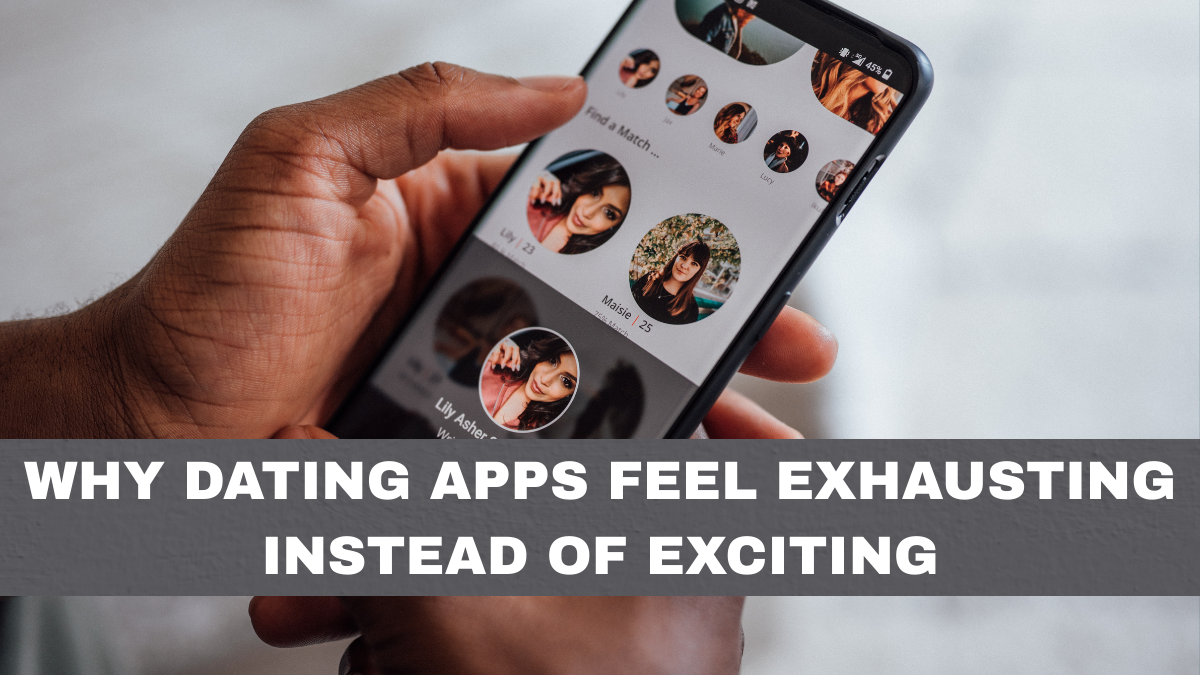
Dating apps were supposed to make finding connection easier. More options, smarter matches, faster conversations. Yet for many people, the experience feels draining rather than hopeful. Swiping becomes tedious. Conversations feel disposable. Genuine excitement fades quickly. This isn’t personal failure—it’s the predictable result of choice overload dating.
When options become endless, connection becomes harder. Dating apps psychology shows that too many choices don’t increase satisfaction. They increase anxiety, indecision, and emotional fatigue. What was designed to simplify dating has quietly made it more exhausting.
How Dating Apps Changed the Nature of Choice
Before apps, dating involved limited pools and slower pacing.
Apps introduced:
• Infinite profiles
• Instant access
• Continuous comparison
Choice overload dating begins when selection never ends.
Why More Options Don’t Lead to Better Matches
Psychology consistently shows that excess choice reduces satisfaction.
More options cause:
• Difficulty committing
• Fear of better alternatives
• Lower confidence in decisions
Instead of feeling lucky, people feel uncertain.
The Paradox of Choice in Modern Dating
The paradox is simple: more choice feels empowering but weakens commitment.
People think:
• “I can always find someone better”
• “This might not be the best option”
As a result, connections remain shallow.
Dating Apps Psychology and Decision Fatigue
Every swipe is a decision.
Over time, this leads to:
• Emotional exhaustion
• Reduced empathy
• Faster dismissals
Decision fatigue makes people less patient and more critical.
Why Conversations Feel Disposable
When options feel endless, people feel replaceable.
This leads to:
• Ghosting
• Low investment
• Short attention spans
Dating apps psychology shows that abundance lowers perceived value.
How Comparison Kills Attraction
Continuous comparison erodes satisfaction.
People unconsciously compare:
• Looks
• Careers
• Personalities
This turns dating into evaluation, not exploration.
Why Emotional Burnout Happens So Quickly
Burnout doesn’t require rejection—it requires repetition.
Dating app burnout comes from:
• Repeating the same conversations
• Restarting emotional openness
• Managing expectations constantly
Connection becomes labor.
The Illusion of Control in Swiping
Swiping feels empowering.
But real outcomes depend on:
• Timing
• Mutual interest
• Emotional readiness
Control is limited, but effort remains high.
Why People Feel Less Seen
Algorithms prioritize engagement, not understanding.
This leads to:
• Superficial matching
• Reduced nuance
• Simplified identity
People feel processed, not perceived.
The Impact on Self-Worth
Repeated micro-rejections affect confidence.
Over time:
• Self-doubt increases
• Validation becomes externalized
• Dating feels performative
Choice overload dating amplifies insecurity.
Why Dating Apps Feel Like Work
The structure mirrors productivity systems.
Users must:
• Optimize profiles
• Maintain responses
• Track matches
Romance becomes management.
What Dating Apps Do Well—and Poorly
They’re good at:
• Introducing people
• Expanding access
They struggle with:
• Sustaining connection
• Encouraging depth
Technology excels at access, not intimacy.
How to Reduce Dating App Exhaustion
Exhaustion isn’t inevitable.
Helpful shifts include:
• Limiting swipe time
• Prioritizing fewer matches
• Slowing conversation pace
• Taking breaks
Reducing choice restores clarity.
Why Fewer Options Can Feel Better
Scarcity increases appreciation.
With fewer choices:
• Attention deepens
• Investment increases
• Decisions feel clearer
Connection thrives in constraint.
Conclusion
Dating apps feel exhausting because choice overload dating overwhelms the human decision-making system. Dating apps psychology shows that endless options don’t create better relationships—they create fatigue, detachment, and doubt. When every connection feels replaceable, none feel meaningful.
Dating doesn’t need infinite choice—it needs presence. Reducing overload doesn’t reduce opportunity. It restores the conditions where connection can actually grow.
FAQs
What is choice overload dating?
It’s when too many dating options reduce satisfaction and increase exhaustion.
Why do dating apps cause burnout?
Because constant decisions, comparisons, and repeated conversations drain emotional energy.
Does having more matches improve dating success?
Not necessarily. Fewer, more intentional connections often lead to better outcomes.
Why do dating apps feel like work?
They require constant management, decision-making, and emotional effort.
How can I make dating apps less exhausting?
By limiting choices, slowing interactions, and prioritizing depth over volume.