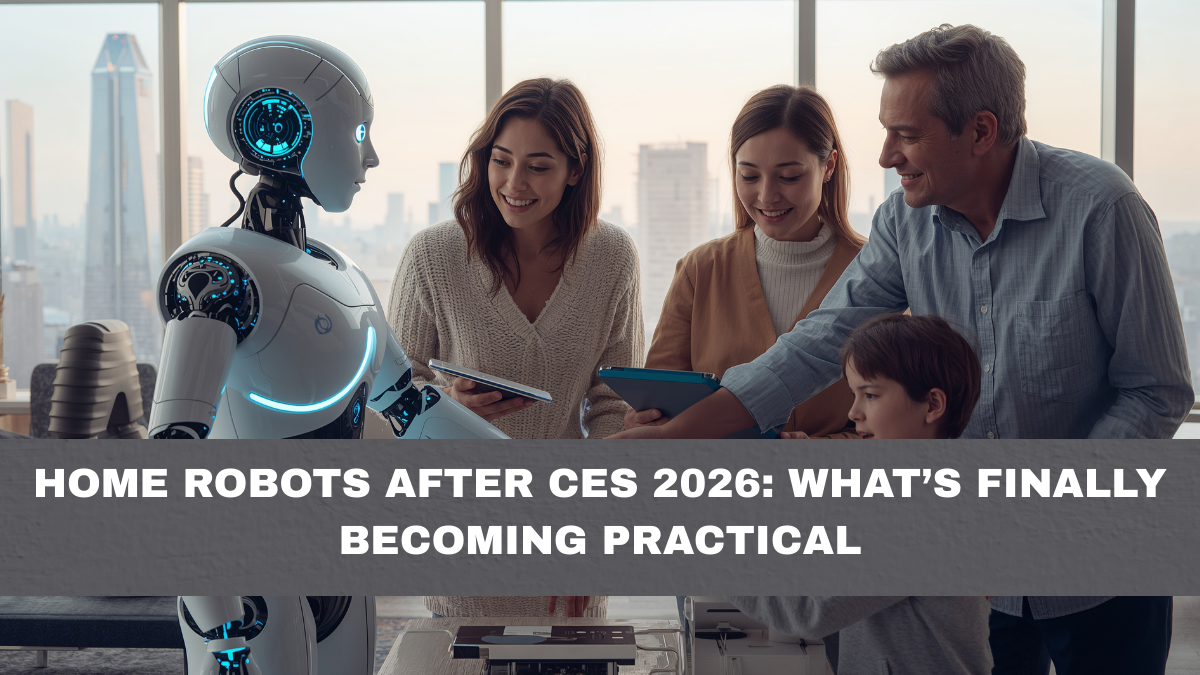
For years, home robots at CES looked impressive—and stayed useless. Flashy demos, scripted movements, and concepts that never made it past trade-show floors. CES 2026 robotics at home marked a real shift. Not because robots suddenly became humanoid or cheap, but because companies finally stopped chasing spectacle and started solving small, boring, everyday problems.
This is the year home robots quietly crossed from “interesting” to practically useful.

Why CES 2026 Felt Different for Home Robotics
The tone changed noticeably.
Instead of:
-
Humanoid showpieces
-
Overpromised general-purpose robots
-
Vague AI claims
CES 2026 focused on:
-
Narrow, repeatable tasks
-
Clear in-home use cases
-
Integration with existing smart homes
That’s why CES 2026 robotics at home mattered more than previous years.
Earlier generations tried to think too much. Newer ones just do.
Practical robots now focus on:
-
Monitoring spaces
-
Moving objects short distances
-
Performing scheduled routines
-
Acting as physical extensions of apps
Less intelligence. More reliability.
Where Home Robots Are Actually Useful Now
The strongest progress is in limited-scope roles.
Use cases gaining traction:
-
Night-time home monitoring
-
Elder check-ins and reminders
-
Pet interaction and observation
-
Basic household automation triggers
These home robots don’t replace humans—they support routines.
Companionship: Subtle, Not Emotional
CES 2026 avoided overhyping robot emotions.
Instead of “friends,” robots now offer:
-
Presence
-
Interaction
-
Predictable responses
This light-touch companionship works better than forced personality—and feels less uncomfortable.
Why Household Automation Finally Makes Sense
Robots are no longer standalone gadgets.
They now:
-
Sync with smart lights and locks
-
Respond to automation rules
-
Trigger actions based on movement or time
This makes household automation physical, not just digital.
What Robots Still Cannot Do Well
Reality check matters.
Robots still struggle with:
-
Complex navigation in cluttered homes
-
Multi-step decision-making
-
Handling fragile or varied objects
-
Deep conversational interaction
They work best in controlled, repetitive scenarios.
The Price Barrier Is Lower—but Not Cheap
Affordability improved, not collapsed.
What changed:
-
Modular designs
-
Subscription-based features
-
Fewer moving parts
Entry-level utility robots are now plausible for early adopters—but not impulse buys.
Why These Robots Will Actually Be Used
The biggest change isn’t hardware—it’s expectation.
Users now accept:
-
One function done well
-
Limited interaction
-
Predictable behavior
That’s why post–CES 2026 robotics at home products have higher retention potential.
Who Benefits Most From These Robots
Practical value shows up fastest for:
-
Elderly households
-
Pet owners
-
Busy professionals
-
Smart-home power users
These groups already value routine automation.
What to Ignore in Robot Marketing
Still ignore:
-
“General intelligence” claims
-
Overly human designs
-
Unscripted demo promises
If the robot can’t explain its core task in one sentence, it’s not ready.
How Home Robots Will Enter Homes Gradually
Robots won’t arrive as replacements—but as helpers.
Adoption path:
-
Start as monitoring tools
-
Expand into automation triggers
-
Add optional interaction features
This slow entry reduces friction and disappointment.
Why 2026 Is a Real Inflection Point
Not a revolution—but a transition.
CES 2026 showed:
-
Feasible manufacturing
-
Realistic use cases
-
Software maturity
That combination makes CES 2026 robotics at home the most credible step forward so far.
Conclusion
Home robots after CES 2026 aren’t magical—and that’s why they might finally succeed. By focusing on narrow tasks, light companionship, and household automation, robotics is becoming useful instead of theatrical. These robots won’t transform homes overnight, but they will quietly integrate into routines where predictability beats intelligence. In 2026, that’s real progress.
FAQs
Are home robots actually useful after CES 2026?
Yes—for specific, limited tasks like monitoring, reminders, and automation support.
Do these robots replace smart speakers or apps?
No. They extend them into the physical space.
Is robot companionship real or just marketing?
It’s minimal and practical—not emotional bonding.
Are home robots affordable now?
More accessible than before, but still targeted at early adopters.
What’s the biggest mistake buyers make?
Expecting general-purpose intelligence instead of task-focused usefulness.