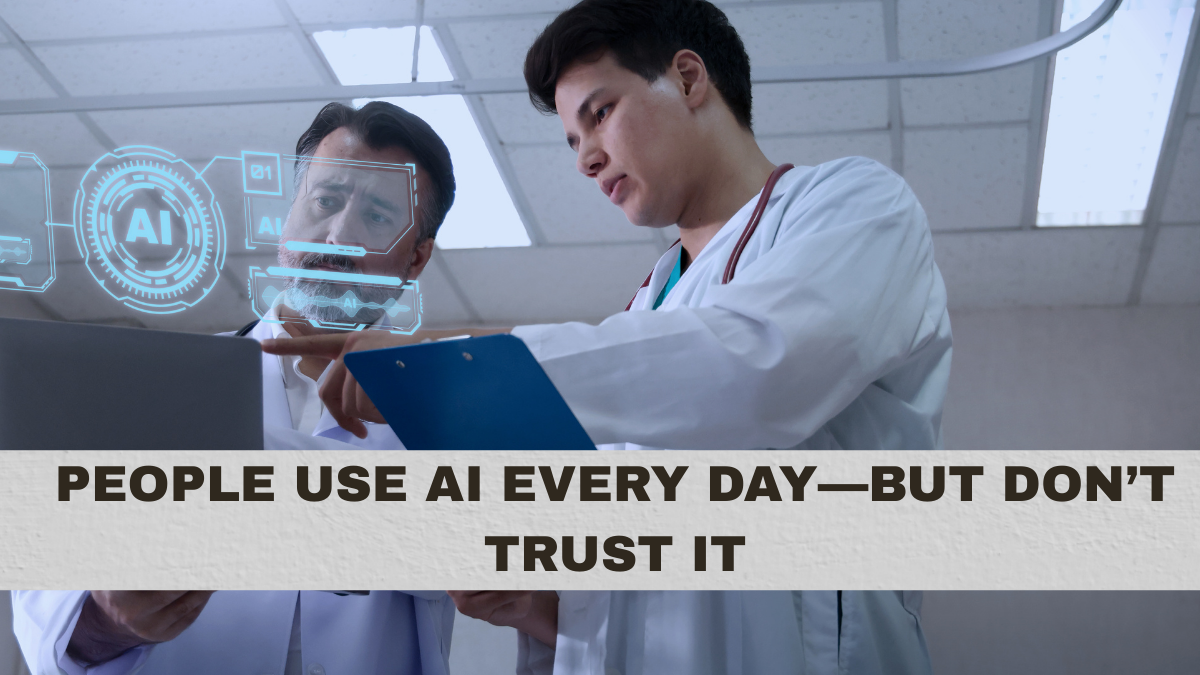
In 2026, AI is everywhere. It writes emails, suggests routes, filters resumes, answers questions, and powers customer support. Yet something feels off. Despite daily usage, people don’t trust it. The AI trust gap—the distance between reliance and belief—is widening fast.
People aren’t rejecting AI. They’re using it with suspicion.
What the AI Trust Gap Actually Means
Trust isn’t usage. Trust is confidence.
The AI trust gap shows up when:
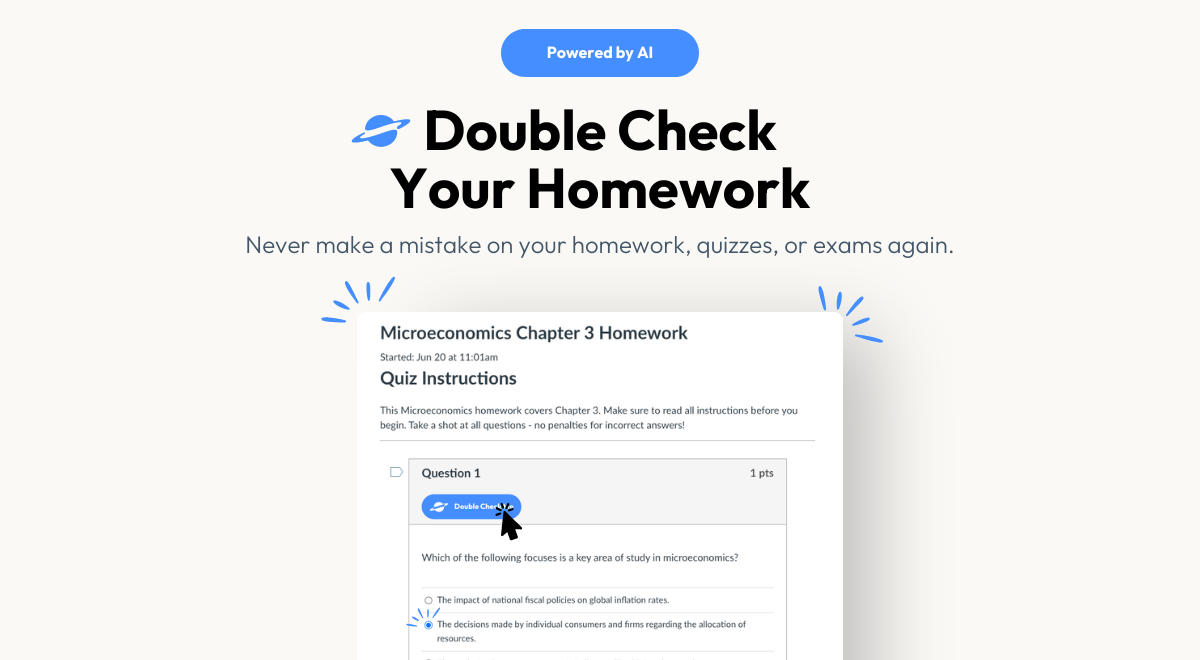
• People double-check AI answers
• Outputs are used but not believed
• Responsibility is pushed back to humans
• AI is blamed quickly when things go wrong
AI is treated like a powerful intern—useful, but never fully reliable.
Why Adoption Outpaced Trust
AI tools spread faster than understanding.
Reasons include:
• Workplace mandates
• Platform defaults turning AI “on”
• Competitive pressure to keep up
• Fear of being left behind
People adopted AI before they were comfortable with it—creating the AI trust gap.
Hallucinations Damaged Credibility Early
Trust broke before it formed.
Users encountered:
• Confident but wrong answers
• Fake citations
• Fabricated facts
• Inconsistent responses
Once users see AI hallucinate, skepticism becomes permanent.
Why Transparency Hasn’t Fixed the Problem
Disclaimers don’t build trust.
Saying:
• “AI may be wrong”
• “Verify outputs”
• “This is experimental”
doesn’t reassure users—it shifts risk onto them. The AI trust gap remains.
The Control Problem: Who’s Accountable When AI Fails
Trust requires accountability.
Right now:
• Users are blamed for misuse
• Companies avoid responsibility
• AI vendors hide behind complexity
When no one owns mistakes, trust can’t form.
Why Professionals Distrust AI More Than Consumers
Experts see the cracks.
Professionals distrust AI because:
• They understand edge cases
• They see bias and errors
• They know what’s missing
• They’re liable for outcomes
The more you know, the larger the AI trust gap feels.
Automation Without Explanation Increases Resistance
Black boxes breed fear.
When AI:
• Gives answers without reasoning
• Hides decision logic
• Can’t explain trade-offs
users disengage. Adoption stalls even as usage continues.
Why People Still Use AI Despite Distrust
Convenience beats comfort.
People keep using AI because:
• It’s faster than alternatives
• It’s already integrated
• Opting out is costly
• Everyone else uses it
The AI trust gap coexists with dependency.
What Actually Builds Trust in AI Systems
Trust grows slowly and locally.
Effective trust builders include:
• Explainable outputs
• Clear confidence levels
• Human override options
• Visible correction mechanisms
Reliability matters more than intelligence.
Why Overhyping AI Made Trust Worse
Marketing promised magic.
When reality delivered:
• Limitations
• Errors
• Constraints
disappointment followed. The gap between promise and performance widened the AI trust gap.
How This Trust Gap Affects Long-Term Adoption
Distrust changes behavior.
Consequences include:
• AI used only for low-risk tasks
• Critical decisions kept human-only
• Slower rollout in sensitive domains
• Increased regulation pressure
Trust—not capability—now limits progress.
What Closing the AI Trust Gap Requires
It’s not better models alone.
Closing the AI trust gap needs:
• Accountability frameworks
• Honest capability limits
• Human-centered design
• Slower, safer deployment
Trust is earned, not scaled.
Conclusion
The AI trust gap defines 2026. People use AI constantly—but cautiously. Until systems become more transparent, accountable, and predictable, trust will lag behind capability.
AI doesn’t need to be smarter. It needs to be worthy.
FAQs
What is the AI trust gap?
The disconnect between widespread AI use and low confidence in its reliability.
Why don’t people trust AI yet?
Hallucinations, lack of accountability, and opaque decision-making.
Does distrust slow AI adoption?
Yes, especially in high-stakes environments.
Can transparency fix the trust gap?
Only if paired with accountability and explainability.
Will the AI trust gap close over time?
Only if trust is prioritized over speed and hype.
Click here to know more.