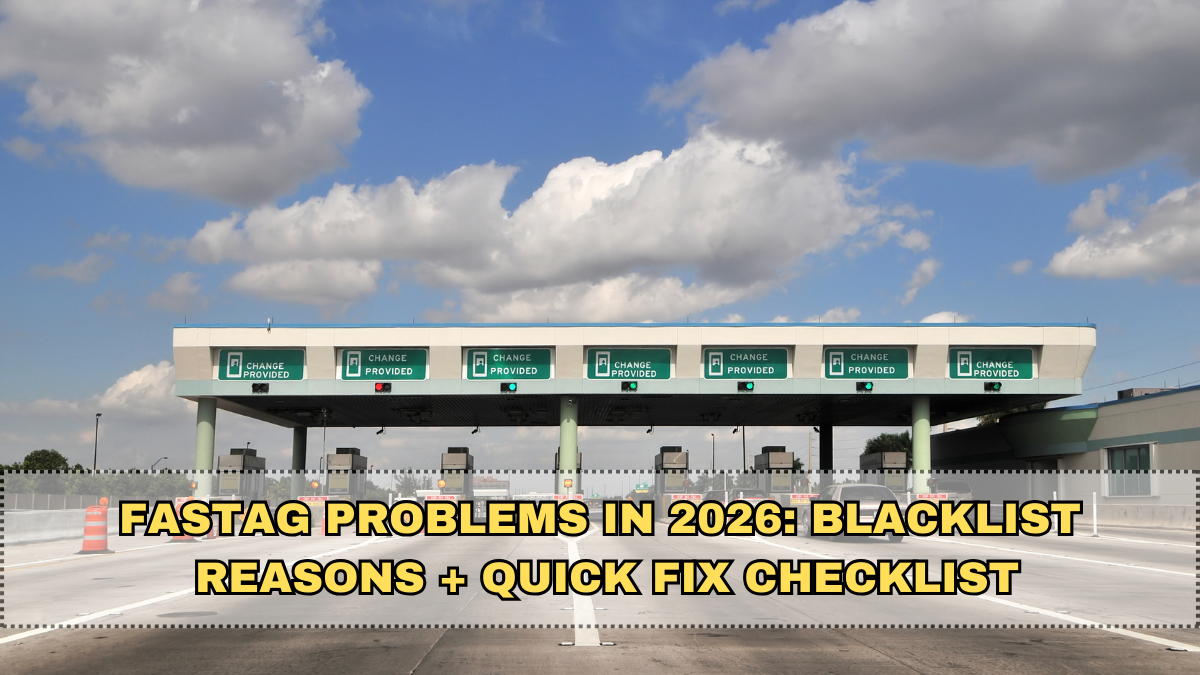
FASTag was meant to make toll payments frictionless. In 2026, it mostly does—but when it fails, it fails publicly and expensively. Cars get stopped, queues form, penalties are charged, and drivers are left arguing at toll booths with no clear explanation. Most of these issues are not random. They are predictable, preventable, and fixable if you understand the FASTag updates 2026 properly.
This guide explains why FASTags get blacklisted, why recharges sometimes don’t reflect, what errors actually mean, and how to fix problems quickly without guesswork.
Why FASTag Problems Are Increasing in 2026
The FASTag network is handling more vehicles, more banks, and more automated checks than ever before. With tighter compliance, small lapses—like delayed recharges or KYC issues—trigger blocks faster.
In short, FASTag is stricter now. It rewards discipline and punishes neglect.
What “FASTag Blacklisted” Actually Means
A blacklisted FASTag is not broken—it is disabled by the system. When this happens, toll plazas treat your vehicle as non-compliant, even if money is sitting in your linked bank account.
Blacklisting usually happens due to administrative or compliance reasons, not technical faults at the toll gate.
Most Common Reasons FASTag Gets Blacklisted
In 2026, the most frequent triggers are incomplete KYC, repeated low-balance crossings, or mismatched vehicle details. Tags linked to closed bank accounts or inactive wallets are also flagged quickly.
Another silent trigger is repeated toll violations where the system detects misuse or non-standard mounting of the tag.
Recharge Issues: Why Balance Doesn’t Update
Many drivers assume recharge equals instant activation. That’s not always true.
Recharge failures usually happen due to banking delays, app syncing issues, or wrong vehicle mapping. Sometimes the payment is successful, but the FASTag backend doesn’t refresh immediately—especially during peak travel hours.
The mistake people make is recharging repeatedly, which creates confusion instead of resolution.
How to Check FASTag Status Properly
Checking only wallet balance is not enough. You must verify FASTag status—active, low balance, or blacklisted—through the issuing bank or official FASTag portal.
In FASTag updates 2026, status checks matter more than balance checks.
What to Do If Your FASTag Is Blacklisted
The fix depends on the reason.
If KYC is pending, updating documents usually restores the tag. If balance issues caused the block, a proper recharge followed by status refresh is required. For vehicle-detail mismatches, re-verification with the issuing bank is necessary.
At toll booths, arguing doesn’t help. Resolution happens only at the backend level.
Penalty Charges at Toll Plazas
When FASTag fails, toll operators may charge double toll or cash penalty. This is legal under FASTag rules.
Paying the penalty doesn’t fix the tag—it only lets you pass. Many drivers confuse temporary passage with issue resolution and get blocked again at the next toll.
Why FASTag Recharge Timing Matters
Recharging five minutes before a highway trip is risky. Delays happen.
Best practice in 2026 is to maintain a buffer balance well before travel. Treat FASTag like fuel—never run it to zero.
Multiple FASTags on One Vehicle: A Hidden Problem
Some vehicles unknowingly have more than one FASTag linked in the system. This creates conflicts and automatic blacklisting.
Only one active FASTag should be linked per vehicle registration number. Duplicate tags almost always cause trouble.
FASTag for New Vehicles vs Old Vehicles
New vehicles usually have smoother FASTag activation. Older vehicles face more issues due to outdated RC data or previous tag history.
If you bought a used car, FASTag verification is mandatory. Ignoring this is a common cause of repeated blocks.
How Long Does FASTag Reactivation Take
Simple issues like balance or KYC updates can be resolved within hours. More complex issues—like duplicate tags or RC mismatches—may take days.
Planning matters. Don’t expect instant fixes during long journeys.
When You Should Replace Your FASTag
Not every issue needs replacement. But if your tag is physically damaged, peeling, or repeatedly failing to scan, replacement is smarter than repeated complaints.
In FASTag updates 2026, scanners are less forgiving of poor tag placement or condition.
Best Practices to Avoid FASTag Problems
Keep your FASTag boring. Maintain balance, update KYC promptly, avoid last-minute recharges, and never tamper with placement.
Most problems happen because drivers stop paying attention once the tag is installed.
The One FASTag Myth That Causes Trouble
Many believe FASTag is fully automated and self-correcting. It’s not. Human discipline is still required.
FASTag works perfectly—until you ignore it.
Conclusion
Understanding FASTag updates 2026 is essential for anyone who uses highways regularly. Blacklisting, recharge delays, and scan failures are not random errors—they are signals that something in your setup is wrong. Fixing FASTag issues early saves time, money, and roadside frustration.
Treat FASTag like an essential vehicle document, not a background app—and it will work exactly as intended.
FAQs
Why does my FASTag show balance but still not work?
Because status matters more than balance. Your tag may be blacklisted or inactive.
How do I remove FASTag blacklist status?
Identify the reason first—KYC, balance, or vehicle mismatch—then fix it through the issuing bank.
Can I travel immediately after recharging FASTag?
It’s safer to wait until status shows active, especially before long trips.
Is double toll charging legal if FASTag fails?
Yes. Toll operators are allowed to charge penalties for FASTag non-compliance.
Should I replace my FASTag if problems repeat?
Yes, if physical damage or repeated scan failures occur.