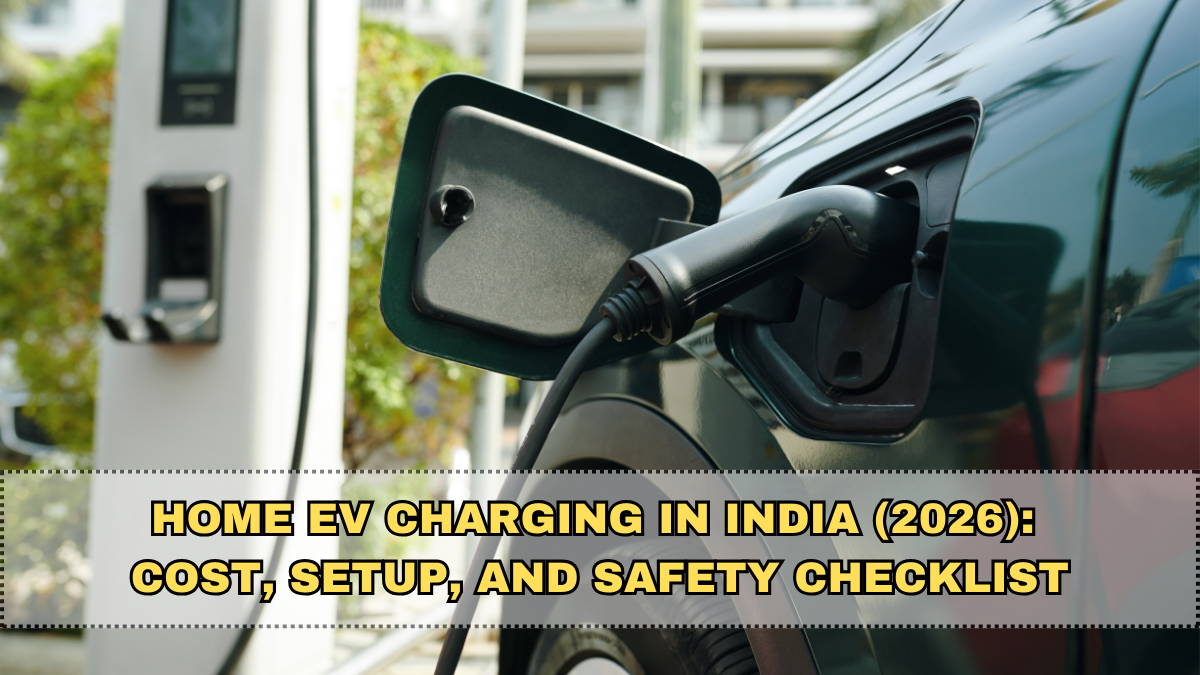
Electric vehicles are no longer the “future experiment” they once were. In 2026, the real question isn’t whether to buy an EV, but whether your home is actually ready to charge one safely. EV charging at home India 2026 is where most owners make costly mistakes—either by underestimating electrical requirements or by cutting corners on safety.
Home charging is convenient, cheaper than public charging, and better for battery health—but only when it’s installed correctly. This guide explains realistic costs, charger types, electrical setup, and the safety rules you should not ignore.
Why Home Charging Matters More Than Public Charging
Public chargers are useful, but they’re not a daily solution. Queues, downtime, app issues, and inconsistent availability make them unreliable for routine use. Home charging, on the other hand, gives you overnight charging, predictable costs, and zero waiting time.
In EV charging at home India 2026, most EV owners rely on home charging for over 80% of their usage. That makes the quality of your setup more important than the brand of your car.
Types of Home EV Chargers in India
Not all chargers are equal, and choosing the wrong one leads to slow charging or electrical risk.
A standard portable charger (usually provided with the car) works with a normal 15A socket. It is slow but sufficient for daily city usage if you drive limited kilometres. Wall-mounted AC chargers are faster and designed for regular long-term use. These require proper wiring and dedicated protection.
Fast DC chargers are not meant for homes. They demand high power loads and industrial infrastructure, making them unsafe and impractical for residential use.
Charging Speed vs Daily Driving Reality
Many buyers panic about charging speed without understanding their own usage. If your daily driving is under 40–50 km, even a slow charger can fully replenish the battery overnight. Faster chargers are useful for higher daily usage, but they also increase installation cost and electrical load.
The smartest EV charging at home India 2026 setups match charger speed with actual driving needs—not anxiety.
Electrical Load and Wiring: Where Most Mistakes Happen
This is the most ignored—and most dangerous—part of home charging.
An EV charger draws continuous high current for hours. Old wiring, loose connections, or overloaded circuits can lead to overheating and fire risk. Before installation, your home must be checked for wiring quality, earthing, and sanctioned load capacity.
Most wall chargers require a dedicated circuit with proper MCB and RCCB protection. Extension boards, shared sockets, and temporary wiring are serious safety hazards.
Cost of Home EV Charging Setup in 2026
The cost is more than just the charger.
Typical expenses include the charger itself, electrical wiring upgrades, protective devices, labour, and sometimes meter or load enhancement charges. For apartment residents, additional approvals and shared infrastructure costs may apply.
While upfront costs may feel high, the long-term savings compared to petrol or diesel make home charging financially sensible within a few years.
Monthly Electricity Cost vs Fuel Cost
One of the biggest advantages of EV charging at home India 2026 is predictable running cost. Charging at home is significantly cheaper per kilometre than petrol or diesel, especially if you charge during off-peak hours.
Many owners are surprised to find that even with higher electricity bills, overall monthly transport costs drop sharply.
Safety Rules You Should Never Ignore
Home EV charging is safe only when treated like a permanent electrical installation, not a temporary gadget.
Charging should always be done through dedicated wiring with proper earthing. Water exposure, damaged cables, and loose sockets must be avoided at all costs. Charging areas should be well-ventilated, especially in enclosed parking spaces.
Never modify chargers or bypass safety devices to “make it work.” Shortcuts here are expensive later.
Apartment and Society Charging Challenges
Apartment dwellers face additional hurdles. Shared parking, power source access, billing clarity, and society permissions are common friction points.
In 2026, many housing societies are more EV-friendly, but clarity is still essential. A separate meter or sub-meter helps avoid billing disputes. Proper cable routing prevents safety and aesthetic issues.
Good communication with the society reduces long-term problems.
Subsidies and Policy Support in 2026
Some state governments and local bodies offer incentives or simplified approvals for home EV charging. These can include reduced load enhancement charges or support for shared infrastructure in apartments.
However, subsidies should not dictate your setup quality. Safety and compliance matter more than saving a few thousand rupees.
Battery Health and Home Charging
Home charging is gentler on batteries than frequent fast charging. Slow, overnight charging reduces heat stress and improves long-term battery life.
This makes EV charging at home India 2026 not just cheaper, but better for the car itself.
Common Home Charging Mistakes to Avoid
Many first-time EV owners repeat the same errors: using extension cords, ignoring earthing, charging from old sockets, or skipping professional inspection. These mistakes don’t show immediate problems—but they create long-term risk.
EV charging should be boring and uneventful. If you’re constantly checking cables or sockets, something is wrong.
How to Decide the Right Home Charging Setup
The right setup depends on your daily driving distance, parking arrangement, electrical capacity, and budget. There is no universal “best charger.” There is only the safest and most appropriate one for your situation.
A professional inspection before installation saves money and anxiety later.
Conclusion
EV charging at home India 2026 is not just about convenience—it’s about safety, cost control, and battery longevity. With the right charger, proper wiring, and disciplined usage, home charging becomes effortless and reliable. Cutting corners, however, turns a simple daily routine into a serious risk.
Treat home EV charging like a permanent electrical upgrade, not an accessory—and it will reward you for years.
FAQs
Is home EV charging safe in India?
Yes, when installed with proper wiring, earthing, and protective devices.
How much does it cost to install a home EV charger in 2026?
Costs vary based on charger type, wiring upgrades, and home layout, but it’s a one-time investment.
Can I charge an EV from a normal plug?
Yes for low daily usage, but it must be a dedicated, high-quality socket with proper protection.
Do apartments allow EV charging?
Most do, but you’ll need society approval and a clear billing method.
Does home charging affect battery life?
Yes—in a positive way. Slow home charging is better for battery health than frequent fast charging.