As the world faces rising population numbers, shrinking farmland, and increasing climate instability, new agricultural technologies are becoming essential for sustaining future food supplies. Among these emerging solutions, underwater farming innovations are gaining attention for their ability to utilize the untouched potential of marine environments. These cutting-edge methods explore how oceans, lakes, and coastal ecosystems can become productive food sources while reducing the strain on traditional agriculture. With growing concerns about the sustainability of current practices, these technologies may dramatically reshape the direction of global food production.
The idea of farming underwater may sound futuristic, but early experiments and successful pilot projects already show promising results. These marine-based farming systems can withstand extreme weather, operate without freshwater or soil, and produce nutrient-rich crops with minimal environmental impact. As underwater farming innovations continue to evolve, they may become a powerful tool in solving global hunger, boosting economic stability, and transforming agriculture in regions struggling with limited land resources. Their relevance to global food production will only strengthen in the years ahead.
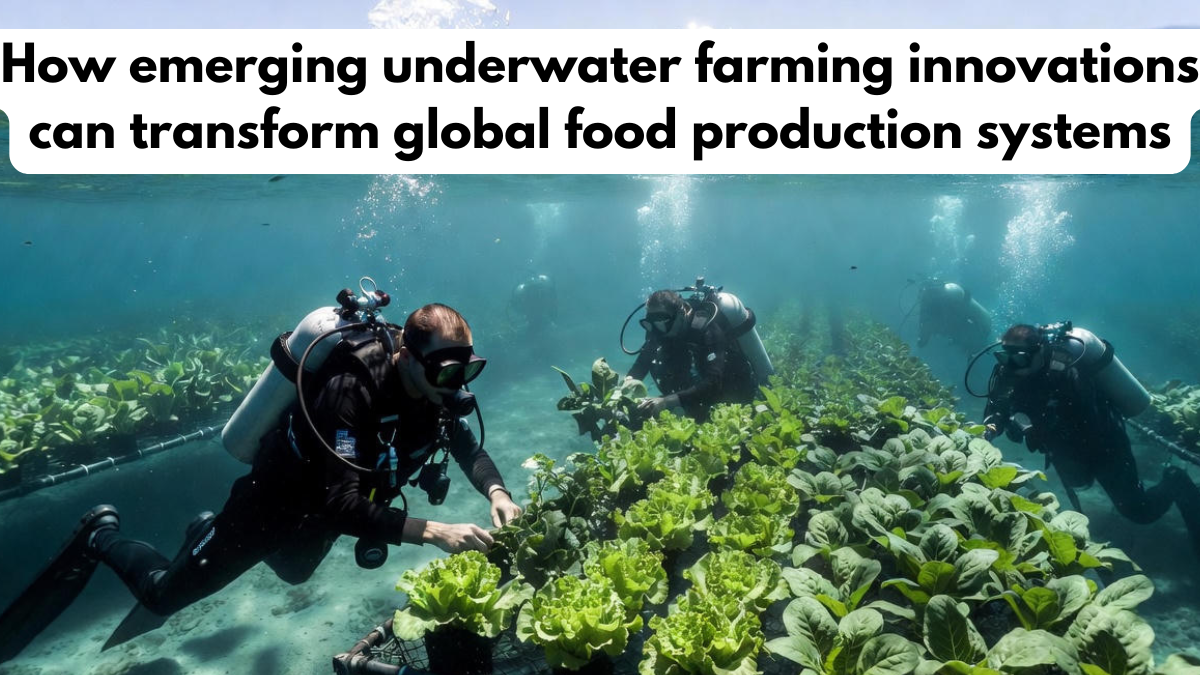
Why Underwater Farming Matters for Future Food Systems
One of the primary reasons underwater farming innovations hold great potential is their ability to function independently of traditional farming limitations. Land-based agriculture consumes vast amounts of water, land, and energy. As deserts expand, storms intensify, and fresh water becomes scarce, food production faces increasing risks. Underwater farms, however, rely on natural ocean nutrients, stable temperatures, and the buoyancy of water to grow crops efficiently. These features offer a fresh approach to strengthening global food production without competing for valuable land resources.
Underwater farming also protects crops from pests and diseases commonly found on land, reducing the need for pesticides and harmful chemicals. This natural resilience makes aquatic farming an attractive option for sustainable agriculture. Furthermore, these systems can be established near coastal communities, reducing transportation costs and supporting local economies. Such advantages clearly demonstrate how underwater farming innovations are uniquely positioned to address long-term challenges in global food production.
Types of Underwater Farming Systems and Their Benefits
Researchers and entrepreneurs are exploring various underwater farming models, each offering unique strengths. For example, underwater dome farms are sealed structures placed below the ocean surface where crops can grow in controlled conditions. Seaweed and algae farms, another form of underwater farming innovations, have gained widespread interest because they grow rapidly, absorb carbon dioxide, and require minimal maintenance. These marine crops are also becoming major contributors to global food production, as they are used in food products, biofuels, animal feed, and pharmaceuticals.
Shellfish aquaculture represents another underwater solution. Oysters, mussels, and clams naturally filter water, improving marine ecosystem health while serving as nutritious food sources. These underwater operations also create sustainable jobs and reduce overfishing pressure. The versatility of underwater farming systems plays an integral role in reshaping global food production, appealing to both environmentalists and agricultural experts.
Table: Comparison of Traditional Farming vs Underwater Farming
| Feature | Traditional Farming | Underwater Farming |
|---|---|---|
| Water Usage | High consumption | Minimal to none |
| Land Requirement | Requires large fertile land | No land required |
| Climate Impact | Sensitive to weather changes | Stable underwater environment |
| Pest Control | Requires pesticides | Natural protection |
| Sustainability | Moderate | High sustainability potential |
This comparison highlights why underwater farming innovations are increasingly recognized as viable supplements to traditional methods, especially in areas where global food production faces environmental challenges.
How Underwater Farming Supports Environmental Sustainability
Beyond addressing food security issues, underwater farming innovations offer remarkable environmental benefits. Seaweed and algae, for instance, absorb carbon dioxide at high rates, helping mitigate climate change. Some underwater farms are designed to restore damaged marine ecosystems by providing habitat for fish and supporting biodiversity. These systems can also help reduce ocean acidification by absorbing excess nutrients.
In contrast to conventional farming practices, underwater farms require no fertilizers, irrigation, or freshwater. This significantly reduces pollution and waste. By placing less pressure on land and freshwater sources, such systems contribute positively to global food production without harming natural ecosystems. As environmental challenges become more pressing, underwater farms present a sustainable alternative that aligns with global conservation goals.
Economic Opportunities and Future Applications
The economic impact of underwater farming innovations is equally promising. As global demand for sustainable food increases, countries investing in marine agriculture may gain new economic advantages. Coastal communities, in particular, stand to benefit from job creation, improved food security, and new export opportunities. Seaweed products, for example, have a rapidly growing market in food, cosmetics, medicine, and renewable energy. This growth has the potential to stimulate local and global economies while strengthening global food production networks.
Researchers are also exploring advanced technologies such as underwater robotics, automated monitoring systems, and AI-powered growth tracking. These tools can optimize harvest cycles, improve crop quality, and reduce labor demands. As technology advances, the underwater farming innovations of today may become the mainstream agriculture of tomorrow, providing a reliable source of food even in the face of climate uncertainty.
Conclusion
The growing interest in underwater farming innovations signals an exciting shift in how the world views agriculture and sustainability. With the ability to grow food without land, freshwater, or harmful chemicals, underwater farming opens new pathways for strengthening global food production. From seaweed cultivation to underwater domes and shellfish aquaculture, these emerging systems demonstrate how oceans can responsibly support humanity’s growing food needs.
As research expands and technology evolves, underwater farming will play an increasingly vital role in feeding future generations. Its environmental, economic, and practical advantages make it one of the most promising innovations for addressing global food challenges. Ultimately, the success of underwater farming innovations may redefine what sustainable agriculture looks like in the 21st century.
FAQs
How can underwater farming help global food production?
Underwater farming systems reduce pressure on land and water resources, offering a sustainable way to increase global food production.
What types of crops can be grown underwater?
Common underwater crops include seaweed, algae, herbs in underwater domes, and shellfish such as oysters and mussels.
Is underwater farming environmentally friendly?
Yes, underwater farming is highly sustainable and supports marine ecosystems by reducing carbon emissions and improving water quality.
Will underwater farming become a mainstream agricultural method?
As technology advances and food demands grow, underwater farming is expected to play a larger role in future food systems.
Click here to know more.